PORTUGUESE CONNECTION: Oak Island Team Uncovers Templar “Goose Paw” and Rare 14th-Century Silver in the Azores

The quest for the world’s most elusive treasure has shifted its focus from the muddy depths of Nova Scotia to the volcanic shores of the Azores. In a high-stakes expedition documented in the latest chapter of The Curse of Oak Island, Rick Lagina and his team have uncovered startling physical links between the Knights Templar, the Order of Christ, and the legendary Money Pit.
The Goose Paw of the Order
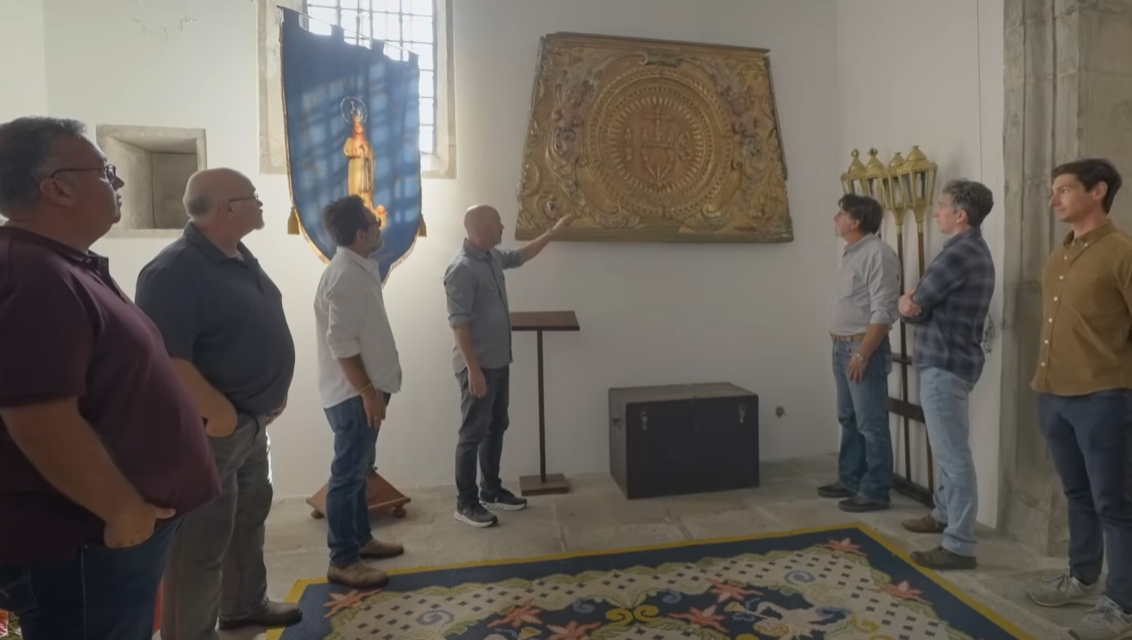
The team, accompanied by local historian Francisco Nogueira, arrived at the 15th-century church of Nossa Senhora da Conceição (Our Lady of the Conception). Founded around 1474, the site is a nexus for the Order of Christ—the Portuguese successor to the Knights Templar after their suppression in the 14th century.
Upon entering the church, the team identified a “Goose Paw” carving (the pé de ganso), a cryptic symbol utilized by Templar stone masons to mark locations of sacred importance. The discovery mirrors similar carvings found by the team in Italy and, crucially, in Liverpool, Nova Scotia—less than 50 miles from Oak Island.
“The symbology is endless,” remarked Rick Lagina, noting that the carving also featured an elongated cross reminiscent of “Nolan’s Cross,” the massive stone cruciform monument on Oak Island. The team theorizes that the Azores served as a strategic “waystation,” where sacred artifacts from the Holy Land were safeguarded before being transported further west to the North American wilderness.
The “Missing” Silver of King Ferdinand I
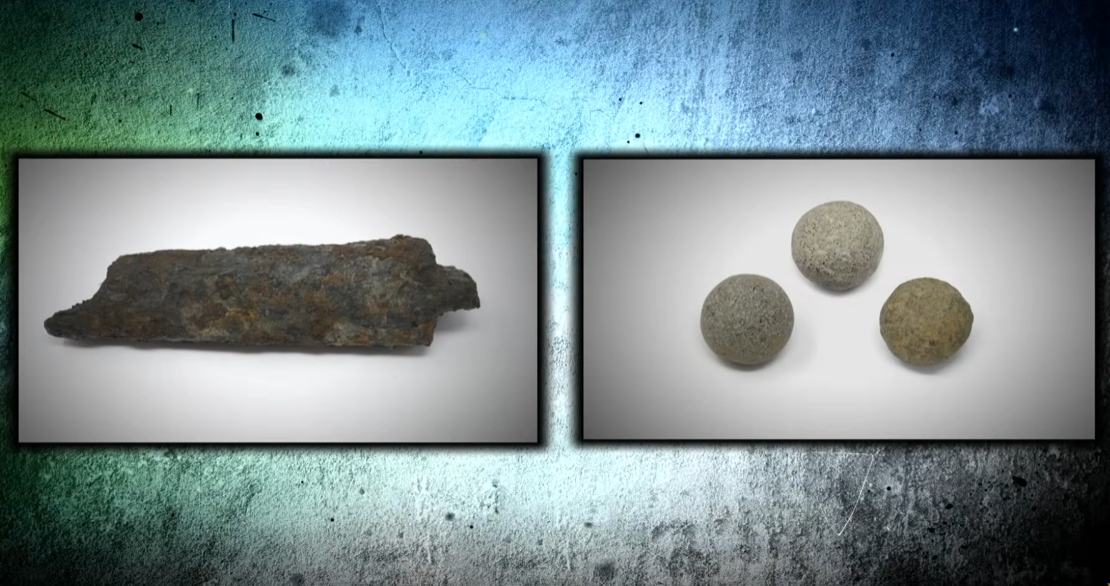
While the carvings provided a spiritual link, a meeting at the Angra do Heroísmo Public Library provided the economic proof. The team consulted with world-class numismatist Alberto Silva to analyze the “Pit Coin”—a silver specimen reportedly extracted from the Oak Island Money Pit in 1849.
Silva’s analysis provided a breakthrough in the timeline. He identified the coin as being minted in Lisbon between 1369 and 1371, during the reign of King Ferdinand I. The coin was produced during the Ferdinand Wars with Castile, a period of economic instability that nearly bankrupted the Royal Treasury.
The “Smoking Gun” of Circulation
The most impactful revelation came from the coin’s rarity. Despite thousands originally being minted to fund Ferdinand’s wars, only about 100 exist in the world today. This led the team to a provocative conclusion: If a massive hoard of these coins had ever been found and spent, they would be in common circulation.
“If the treasure had been found, there would be more than 100 in circulation,” a team member noted. “That means if it was part of the treasure, it is still in the ground.”
This theory is bolstered by recent water sample testing in the Money Pit, which has consistently shown high concentrations of dissolved silver in the depths. The team believes the “Pit Coin” found in 1849 was merely a stray from a much larger, uncirculated cache belonging to the Order of Christ.
Return to the Money Pit
The expedition concluded with a renewed sense of urgency. The corroboration between Portuguese history, the rare silver specimen, and the “Goose Paw” symbology has provided the Laginas with their most concrete roadmap to date.
As the team prepares to return to Nova Scotia to resume large-scale caisson drilling, the message from the Azores is clear: The treasure was not just a myth—it was a strategic military and religious asset that, according to the evidence, remains buried in the confines of the Money Pit.