Mysterious Gold, Ancient Artifacts, and an Intriguing Discovery: The Latest Developments on The Curse of Oak Island
The search for treasure on The Curse of Oak Island has taken yet another dramatic turn, as Rick and Marty Lagina, along with their dedicated team, inch closer to solving the island’s 226-year-old mystery. In the latest chapter of their treasure hunt, the team has uncovered several promising clues, including traces of gold and mysterious artifacts that could provide crucial insight into the island’s history. From high-tech testing revealing gold in unexpected places to the discovery of centuries-old pottery, the team is more convinced than ever that they are on the verge of a breakthrough.
A Golden Discovery in the Money Pit Area
The day started with a buzz of excitement as the team was poised to conduct a critical drilling operation in the Money Pit area, hoping to uncover more evidence of the fabled treasure vault. Rick, Marty, and their partner Craig Tester, along with members of their team, were looking to confirm a promising theory. The area had already shown signs of rich mineral deposits, and they were eager to drill deeper into the site.
The first breakthrough came after a mysterious piece of metal was discovered in borehole D2, an area of significant interest to the team. When geoscientist Dr. Ian Spooner analyzed the sample using an X-ray fluorescence (XRF) device, the results were astonishing. “There it is,” said Rick Lagina, as the results came in. The metal contained gold—a significant find that indicated the metal might either be in close contact with gold or, even more intriguingly, that the metals themselves contained gold.
Rick was quick to point out that this discovery was incredibly important. If the metal itself contained gold, it would suggest the presence of a valuable item—a discovery that would undoubtedly bring them closer to solving the puzzle of Oak Island’s treasure. This exciting find prompted the team to adjust their focus, honing in on an area known as the C1 cluster. Recent tests had already shown high levels of gold and silver in the water samples taken from boreholes in this cluster. With this new evidence, the team began drilling in borehole B4, just 14 feet from D2, in the hopes of confirming the presence of gold-rich materials and potentially uncovering the treasure vault.
The Garden Shaft and Air Bubbles: A Possible Connection to Tunnels
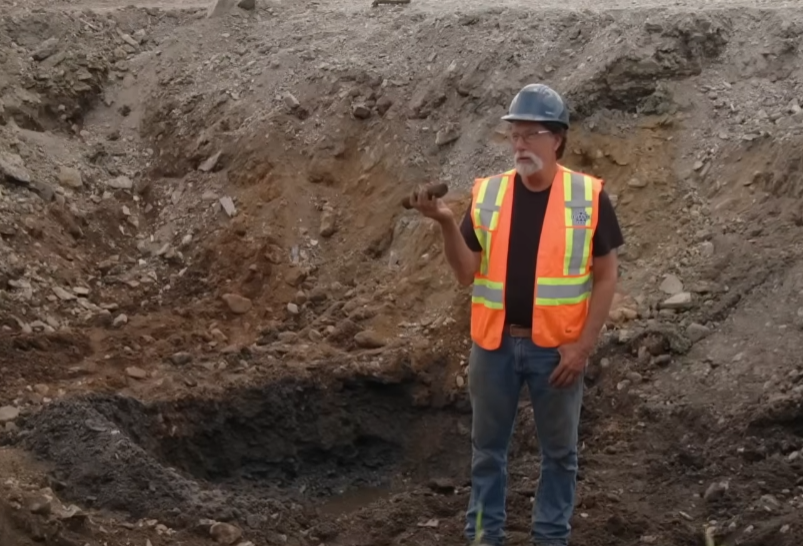
In addition to the gold discovery, another area of intrigue is the Garden Shaft. For years, this shaft has been a central point of interest for the team, and recent developments have reignited their excitement. During their drilling in the area, the team encountered air bubbles emanating from the garden shaft—a discovery that could provide critical evidence of an underground tunnel system.
The presence of air bubbles is significant. It suggests that there may be a void or a tunnel beneath the shaft, a potential link to the treasure vault they have been searching for all these years. “We’re getting air bubbles in the garden, and that’s not something we’ve seen before,” explained Rick. “It means there could be a void down there, and we need to explore it further.”
As the team continued their investigation, they made another startling discovery: a potential connection to an ancient tunnel system. Previous drilling had suggested the existence of tunnels beneath the Money Pit area, and now, with the evidence of air bubbles, the team believes they may have found a way to access these hidden passages. “We could be on the verge of something big here,” said Craig Tester. “If these tunnels connect to the treasure, we could finally be on the right track.”
The team’s excitement grew as they collected more data and analyzed the core samples. The possibility of discovering hidden chambers or even the treasure itself was becoming more tangible. However, the team remained cautious, knowing that the path to uncovering the truth is fraught with uncertainty.
The Discovery of Ancient Pottery and a Potential Portuguese Connection
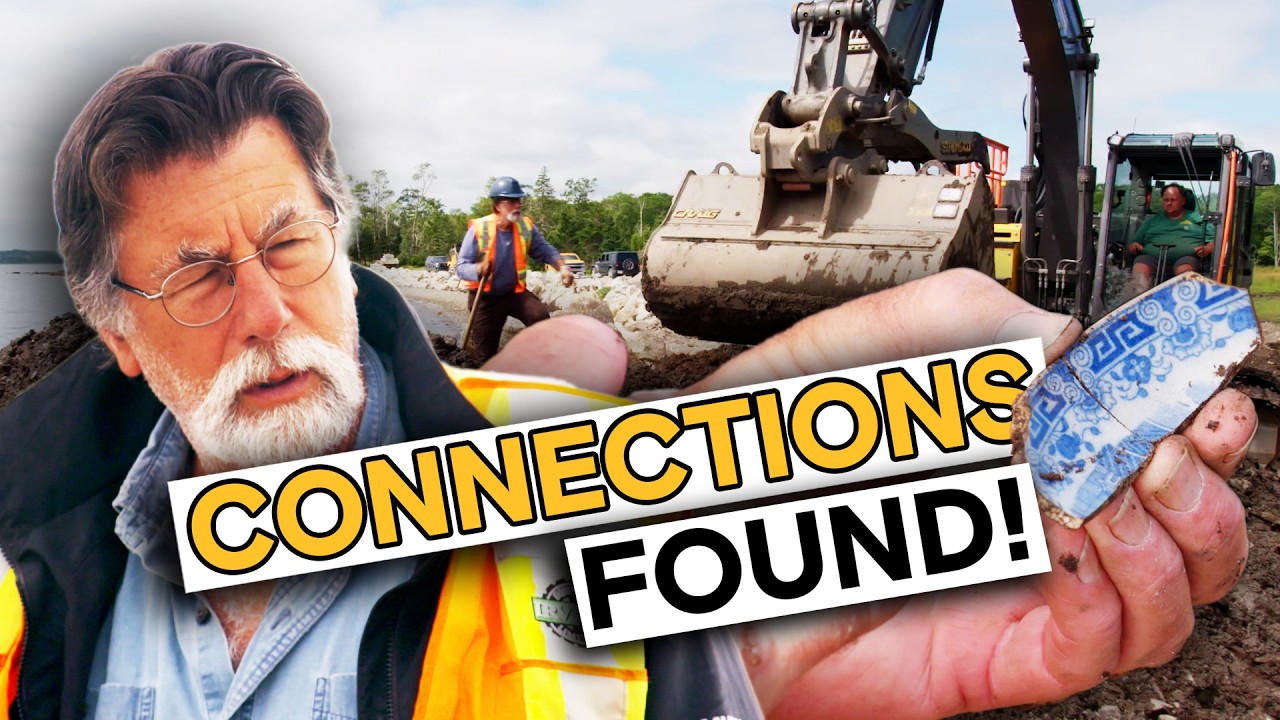
In addition to the scientific breakthroughs, the team also made several significant cultural discoveries during their excavations. While searching near the stone road in the Oak Island swamp, Gary Drayton and the team unearthed several pieces of ancient pottery, including Chinese porcelain that could date back centuries. These pieces may offer crucial insight into the historical significance of Oak Island and its potential connection to early explorers.
The pottery, which appears to be of high quality, could be linked to Portuguese explorers who made trading expeditions to China in the 16th century. According to historical records, Portuguese fleets, including those led by Vasco da Gama—who was also a member of the Portuguese sect of the Knights Templar—traded extensively with China, bringing back goods such as porcelain. The discovery of this pottery on Oak Island has led some experts, including Gary Drayton, to speculate that it could be evidence of a Portuguese connection to the island.
Gary, excited by the find, pointed out that the porcelain was highly valuable in trade during the time of the Portuguese expeditions. “This is high-end stuff,” he said. “It’s possible that this porcelain was traded through the region and made its way to Oak Island.” If the pottery is indeed linked to Portuguese explorers, it could provide further evidence of their involvement in the island’s mysterious history.
Alongside the pottery, the team also discovered a piece of footwear, possibly from the 1800s or earlier, with a distinct heel made of hobnails. This find adds another layer to the island’s story, suggesting that it was not only used by explorers but also by people who lived and worked on the island long before the treasure hunters arrived.
Moving Forward: New Drilling and Rehabilitation Plans
As the team continues to explore the possibilities of an underground treasure, the next step in their quest is the rehabilitation of the Garden Shaft. In a meeting with Dumas Contracting Limited, a mining engineering company, the team discussed plans to stabilize and refurbish the shaft so they could safely explore deeper into the Money Pit area. The goal is to reach a depth of 77 feet, allowing them to gain access to the area where they believe the treasure may be hidden.
The rehabilitation project will involve significant engineering work, including the installation of a concrete foundation, excavation with a crane and hammer grab, and the reinforcement of the shaft with waterproof timbers. Once the work is completed, the team will be able to safely descend into the shaft and explore the tunnels below, potentially uncovering new evidence of the fabled treasure.
Conclusion: A Step Closer to the Treasure
The recent discoveries on The Curse of Oak Island have brought the team closer than ever to solving the island’s 226-year-old mystery. From the tantalizing discovery of gold in the metal found in borehole D2 to the evidence of ancient pottery and air bubbles in the garden shaft, the team is steadily piecing together the puzzle.
As they move forward with their drilling operations and rehabilitation of the Garden Shaft, Rick, Marty, and the rest of the team remain hopeful that they are on the verge of a major breakthrough. The mystery of Oak Island is far from over, but with each new discovery, the team inches closer to uncovering the treasure that has eluded so many before them.