Parker and Tony spent millions of dollars to gain control of the Klondike gold mine.

The latest stretch of Gold Rush has delivered one of the most revealing chapters of the season, showing three very different versions of success in the Klondike. Tony Beets leaned on experience, old ground and family manpower to push his empire to a major total. Parker Schnabel expanded aggressively, bought fresh ground and still fell short of his target. Meanwhile, the broader lesson of the season became clear: in modern mining, gold is only one part of the equation. Equipment, water, weather, labor and timing can decide everything.
For Tony Beets, the season became a test of patience and instinct. At Paradise Hill, Indian River and several smaller side projects, Tony repeatedly turned problems into opportunities. His operation suffered costly downtime, including a major repair to the trommel punch plate, feeder issues, water management problems and heavy rain that turned pay dirt into thick, slow-moving material. Yet Tony’s strength has always been his ability to keep looking for gold where others might see only old ground or leftover tailings.
One of the most interesting parts of Tony’s season came from his renewed interest in old-timer workings. After decades on the ground, Tony began re-examining areas that earlier miners had worked by hand or with older sluicing systems. His theory was simple but powerful: if earlier miners lacked modern recovery systems, they may have left profitable gold behind. That idea paid off when tests from old tailings produced encouraging results. Even small runs through the Kiwi plant showed that missed gold could still be recovered at a profitable rate.
That old-timer strategy revealed something important about Tony’s mining philosophy. He is not only chasing untouched ground; he is also reading the history of the land. Old shafts, quartz indicators, dredge remains and tailings piles all became clues. When Tony uncovered large pieces of old dredge equipment, he immediately considered what the dredge may have avoided. If the dredge moved around certain material, there could still be virgin ground beneath or beside it. Later drilling appeared to support that possibility, with results suggesting roughly an ounce per 100 yards in one promising area.
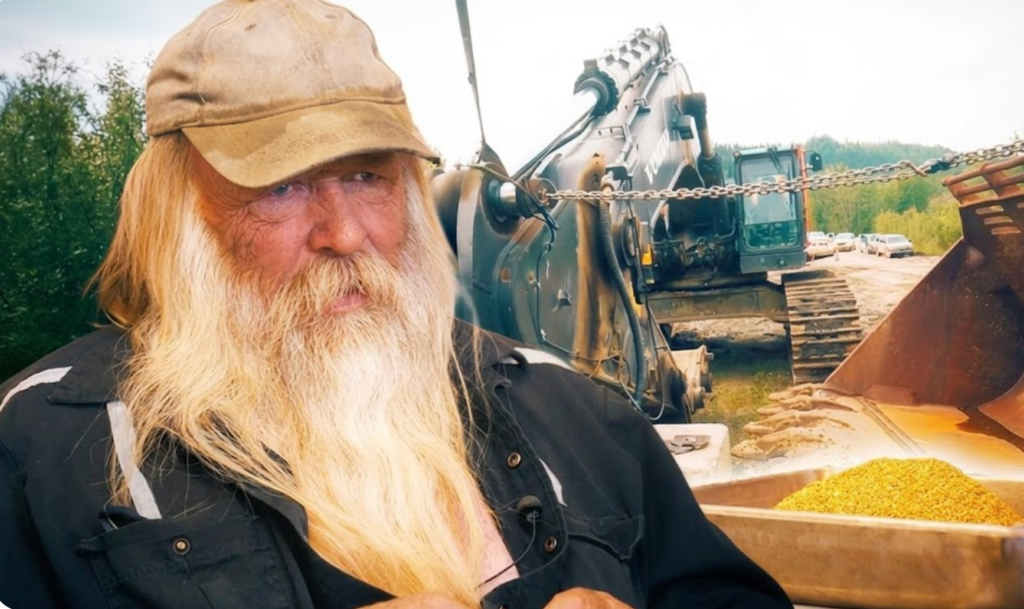
That discovery could become one of Tony’s most important storylines going forward. At today’s gold prices, ground that once looked marginal can suddenly become highly valuable. If Tony can open more of that overlooked ground, he may not need to rely only on the most obvious cuts. Instead, the Beets family could build future seasons around multiple smaller, efficient sources of gold, combining main cuts with recovered old-timer material.
Family also remained central to Tony’s season. Monica, Kevin, Mike and other members of the Beets operation all carried major responsibilities. Monica handled pressure situations, including a fast water pipe repair that kept the plant from losing more time. Kevin’s own operation also reached a meaningful milestone, producing enough gold to beat his first-year target and prove that he could stand as a mine boss in his own right. Combined, the Beets family empire reached 6,834 ounces, worth more than $18 million at record gold prices.
That total matters because it shows Tony’s operation is not just surviving. It is evolving. Even when one plant is down, another can contribute. Even when weather slows one cut, another project can help protect the season. That level of diversification may become Tony’s biggest advantage.
Parker Schnabel’s season told a different story. His operation produced a huge amount of gold in cash terms, but he still missed his production goal. Parker finished with 6,837.4 ounces, worth about $18.3 million, helped greatly by record gold prices. However, he was still more than 1,000 ounces short of his 8,000-ounce goal. For a miner who had never missed a target in 14 years as a mine boss, that result carried real weight.
The reason was not lack of ambition. Parker continued to expand, buying Gold Run and Sulfur Creek for $2.5 million, adding ground that could be central to his future. Sulfur quickly showed promise, producing 141.65 ounces in just two days of running. That early return suggested the purchase may pay for itself faster than expected. But the season also exposed the cost of rapid expansion. Parker’s crew was already stretched thin, and adding new ground increased the pressure on people, plants and logistics.
The late-season freeze made the challenge even clearer. With Big Red in pieces for winter work and Sluicifer burned out, Parker was forced to rent an old wash plant that the crew named Little Hope. It was far from ideal, running slowly and plugging with rocks, but after some field adjustments it helped keep the final pay moving. That kind of improvisation has always been part of Parker’s success, but this year it was not enough to close the gap.
Still, Parker’s final speech to the crew showed a shift in tone. He admitted the production result fell short, but he also framed the season as a learning year. His team now knows the ground better, has more ground open and has fresh claims that could become major assets next season. From an analyst’s view, that may be the real story. Parker did not hit his number, but he may have bought and prepared the foundation for a much larger campaign.

The biggest contrast between Tony and Parker this season is strategy. Tony leaned on experience, recovery, family depth and reading old ground. Parker leaned on scale, expansion and long-term positioning. Tony finished with a stronger sense of immediate success. Parker finished with more questions, but also with major new potential.
Looking ahead, Tony’s old-timer ground and dredge-related discoveries could become a rich new chapter if drilling continues to confirm strong pay. Parker, meanwhile, is likely to return with a larger plan for Gold Run and Sulfur, using this season’s lessons to avoid repeating the same bottlenecks.
In the end, this Gold Rush season was not simply about who found more gold. It was about who built the better future. Tony Beets proved that experience can still unlock hidden value in familiar ground. Parker Schnabel proved that even a difficult season can become a launchpad. In the Klondike, both lessons may matter just as much as the final weigh-in.