Jeremy Clarkson’s Diddly Squat Farm is facing renewed pressure from the local council as it is being asked to close its restaurant and cafe.
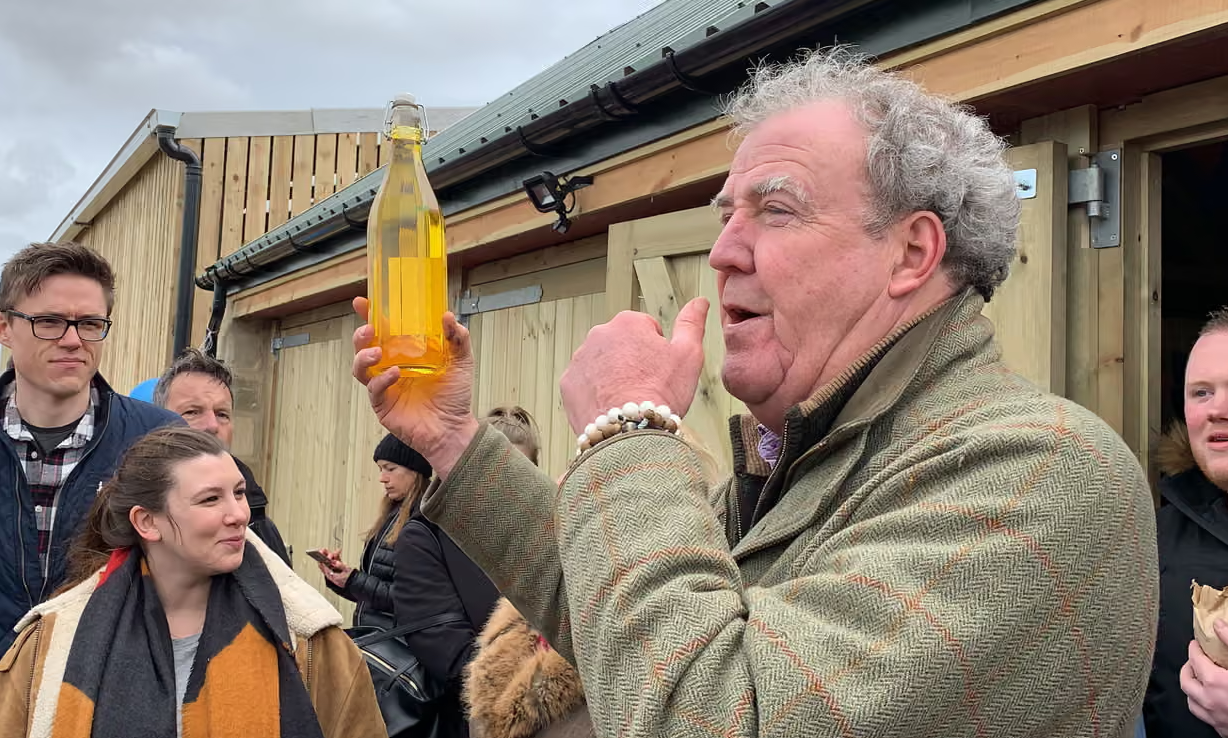
Jeremy Clarkson’s Diddly Squat Farm has once again found itself at the centre of a planning dispute, after West Oxfordshire District Council ordered the closure of a restaurant and cafe operation at the Cotswolds site. The move marked another major clash between the broadcaster-turned-farmer and local authorities, with officials arguing that the setup was unsuitable for its rural location.
The enforcement notice came less than three months after Clarkson publicly claimed he had discovered a planning loophole that allowed him to open the food operation despite previous planning setbacks. The restaurant and cafe were part of the expanding Diddly Squat brand, which has attracted large numbers of visitors since the success of Clarkson’s Farm on Prime Video.
But the council took a very different view. Officials said the development was not compatible with the open countryside setting near Chadlington in Oxfordshire. They argued that the scale, location and appearance of the setup made it harmful to the surrounding landscape, which sits within the Cotswolds Area of Outstanding Natural Beauty.
According to the council, the operation included dining facilities, parking, toilets and food service arrangements that had not been properly approved. The authority ordered Clarkson to stop running the restaurant or any food service intended for consumption on the farm. It also called for the removal of tables, chairs, parasols, picnic benches and a mobile toilet.
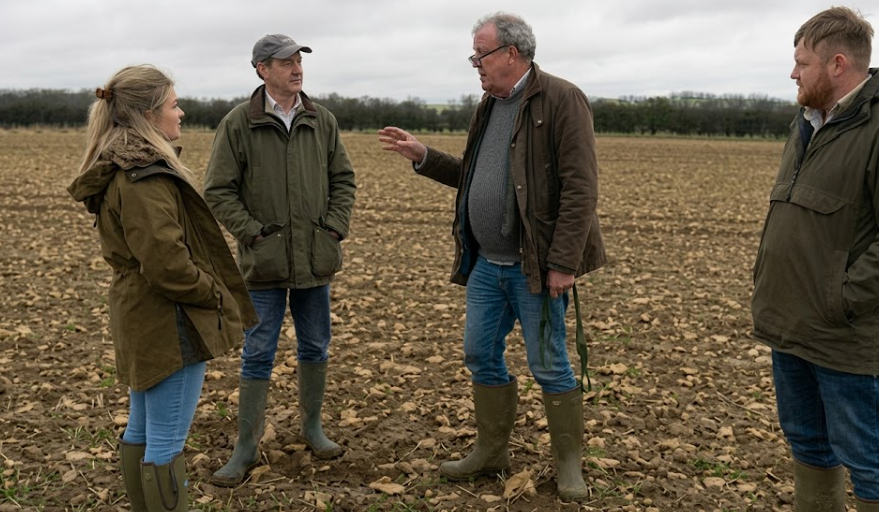
For Clarkson, the enforcement notice was another obstacle in a long-running battle over how far Diddly Squat Farm should be allowed to expand as a public-facing business. His farm shop has become a tourist attraction, drawing fans of the series and curious visitors to the area. However, that popularity has also created friction with some residents and local officials, particularly over traffic, parking and the impact on village life.
The dispute reflects a broader tension at the heart of Clarkson’s Farm. The show has built much of its appeal around the difficulty of making British farming pay. Clarkson’s attempts to diversify the business through retail, food and hospitality have been presented as part of the economic reality facing many farmers. At the same time, planning rules and countryside protections have repeatedly limited what he can do on the land.
West Oxfordshire District Council had already rejected two planning applications connected to Clarkson’s plans for the farm. The latest enforcement action suggested that officials believed the restaurant and cafe operation had gone beyond what was legally permitted.
Clarkson’s representatives challenged that interpretation. Planning agents acting on his behalf appealed against the enforcement notice, arguing that the council’s action was excessive and that no planning rules had been breached. They claimed that existing permission already allowed some use of the site for food-related activity and that the presence of tables and chairs did not amount to a significant change in land use.
The appeal also argued that the six-week deadline given by the council to remove items from the site was too short. Clarkson’s team maintained that the farm’s sale of food and use of seating were lawful, and that the enforcement notice placed an unreasonable burden on the business.
The case was passed to the Planning Inspectorate, the government body responsible for handling planning appeals. At the time, no hearing date had been set, leaving the future of the restaurant and cafe uncertain.
The situation added another layer to Clarkson’s public image as Britain’s most unexpected farmer. After a career spent largely in motoring television, Clarkson’s move into agriculture has made him one of the most visible voices in British farming. His series has highlighted unpredictable weather, rising costs, animal welfare pressures, crop failures, local bureaucracy and the narrow margins that define much of the industry.
Yet his fame has also made Diddly Squat different from a typical farm. Few farms attract the volume of visitors generated by a hit television series. That has made Clarkson’s business both commercially powerful and locally controversial.
Supporters argue that Clarkson is exposing the difficult financial position of farmers and showing why diversification is often necessary. They see the farm shop, food outlets and visitor interest as a natural extension of a farm trying to survive in a difficult market.
Critics, however, argue that rural development must still respect planning laws, local roads and protected landscapes. For them, the issue is not whether farmers should be able to diversify, but whether any business, however famous its owner, should be allowed to expand without proper approval.
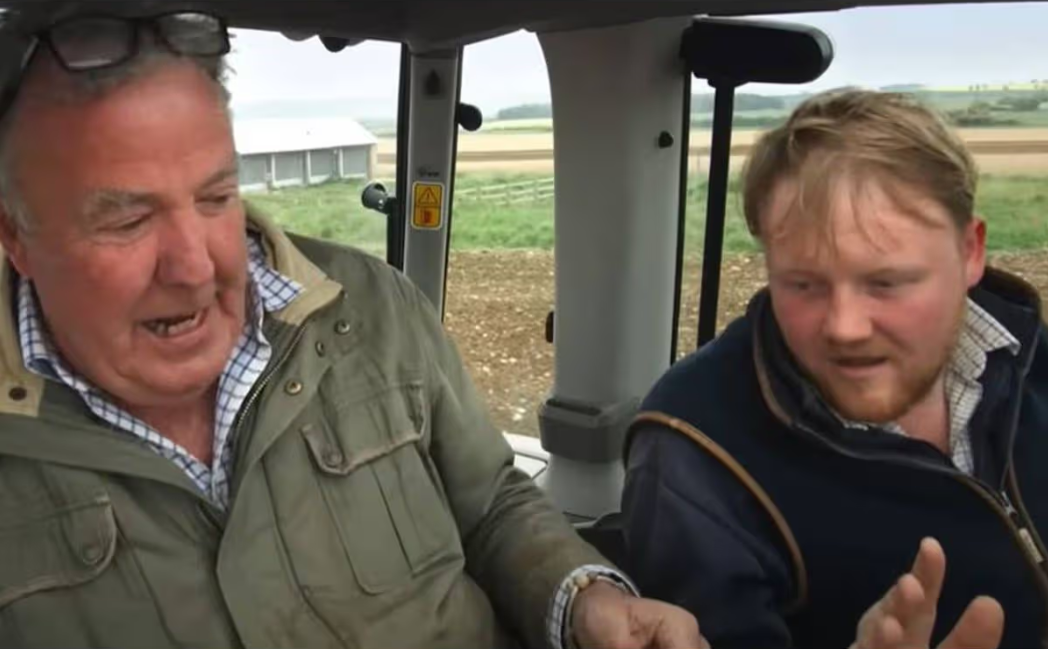
The restaurant and cafe dispute therefore became about more than one farm. It raised questions about how Britain balances rural enterprise with countryside protection. It also highlighted the challenge local councils face when a private farm becomes a national attraction almost overnight.
For Clarkson’s Farm viewers, the conflict offered another real-world storyline that echoed the themes of the series. Clarkson’s farming project has never been only about tractors, livestock and crops. It has increasingly become a case study in the tension between agriculture, business, regulation and public attention.
Whether the appeal would succeed remained unclear. But the message from the council was firm: Diddly Squat’s growing popularity did not remove the need for planning permission. For Clarkson, the fight over the restaurant and cafe became another test of whether his farming business could grow beyond the limits imposed by the local planning system.
In the end, the dispute underlined a central question facing Diddly Squat Farm: can Clarkson turn television fame into a sustainable rural business, or will planning rules continue to restrict the expansion of one of Britain’s most talked-about farms?