Rick Ness discovered a $160 million oil field in a forgotten mine!

For years, Rick Ness had been the underdog in the mining world. Once a foreman working under Parker Schnabel, Rick made the bold decision to venture out on his own, hoping to prove that he could succeed without the safety net of a well-established crew. His decision was met with skepticism. Many wondered if he was making a huge mistake, given the immense financial pressure and the brutal realities of independent mining in the unforgiving Klondike. But after years of struggling to stay afloat, battling equipment breakdowns, minimal yields, and mounting debt, Rick has finally proven his doubters wrong in the most spectacular fashion—by discovering one of the richest pockets of placer gold found in the region in decades.
This extraordinary discovery is not just a win for Rick; it’s a game-changer for the entire mining industry. The pocket of gold, located in an old, forgotten mine shaft from the 1890s, is unlike anything Rick has encountered before. With a concentration of gold so dense it defies modern understanding of placer deposits, this discovery could be worth an estimated $160 million. Rick’s perseverance and attention to detail have paid off in a way that has stunned the gold rush community, transforming him from an underdog into one of the most successful miners in the Klondike.
The Struggles of an Underdog Miner
Rick’s journey to this monumental discovery has been anything but easy. When he left Parker Schnabel’s operation to go independent, he faced steep challenges. With limited resources, Rick secured ground that had been partially mined before—far from premium claims—and worked with secondhand equipment that was often held together by his mechanical skills and sheer willpower. The first season was a struggle, and although he produced enough gold to avoid disaster, the operation ended the year deep in debt.
The following seasons were no easier. Major equipment failures, poor ground conditions, and a lack of funds put Rick in a precarious situation. By season two, he was maxing out credit cards and selling personal possessions just to keep the operation running. At one point, Rick’s accountant warned him that he was “hemorrhaging money,” and advised him to shut down if the next season didn’t yield significantly better results. But Rick wasn’t ready to give up. Despite the mounting pressure, he pushed on, vowing to learn from his mistakes and take one more shot.
A Discovery Born from Persistence and Research
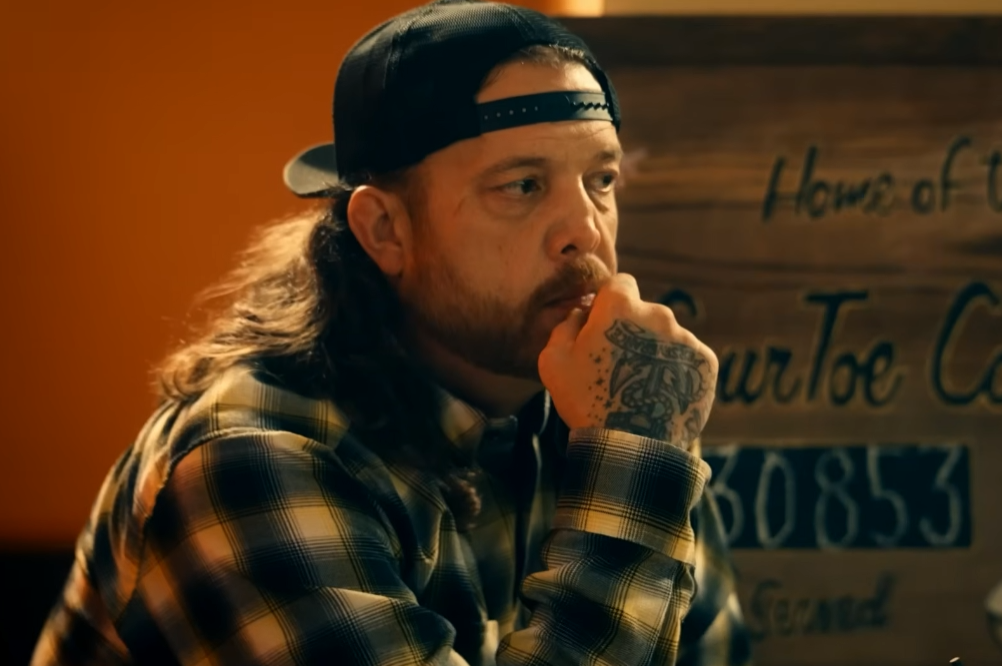
In a rare move for struggling miners, Rick didn’t just continue operating blindly. During the off-season, he took a step back to analyze his failures objectively. He realized that in his previous attempts, he had been mining conventionally, competing with better-funded operations and using the same approaches that others employed. To survive, he needed to find an edge—a way to compete without needing the capital to outspend everyone else.
That’s when Rick turned to history for inspiration. He began researching the Klondike’s mining past, particularly the original gold rush of the 1890s. Rick discovered that many mine shafts had been abandoned, not because they were devoid of gold, but because the technology of the time wasn’t advanced enough to go deeper and access harder-to-reach gold deposits. With this knowledge, Rick formulated a theory: what if the richest gold was still buried beneath the ground that the original miners had stopped working?
Rick’s theory led him to investigate old mine shafts that had been long forgotten. One shaft, in particular, caught his attention: the Henderson claim from 1894. The shaft had been abandoned after the original miners encountered “difficult ground” at a depth of 30 feet, but Rick believed that the gold had not been fully extracted. Using historical maps and modern surveying techniques, Rick’s team located the shaft, which had been lost to time and overgrowth.
The Historic Discovery: A $160 Million Gold Pocket
The decision to reopen a 130-year-old mine shaft was a risky one for Rick. It was expensive, time-consuming, and potentially dangerous, but Rick and his crew were committed. After spending weeks reinforcing the shaft and ensuring it was safe to enter, Rick’s team made an astonishing discovery. At a depth of 30 feet, they encountered a layer of cemented gravel, the very layer that had stopped the original miners. Modern drilling equipment quickly broke through, and when the first core sample was brought to the surface, it was stuttered with gold—large, coarse gold particles unlike anything Rick had seen before.
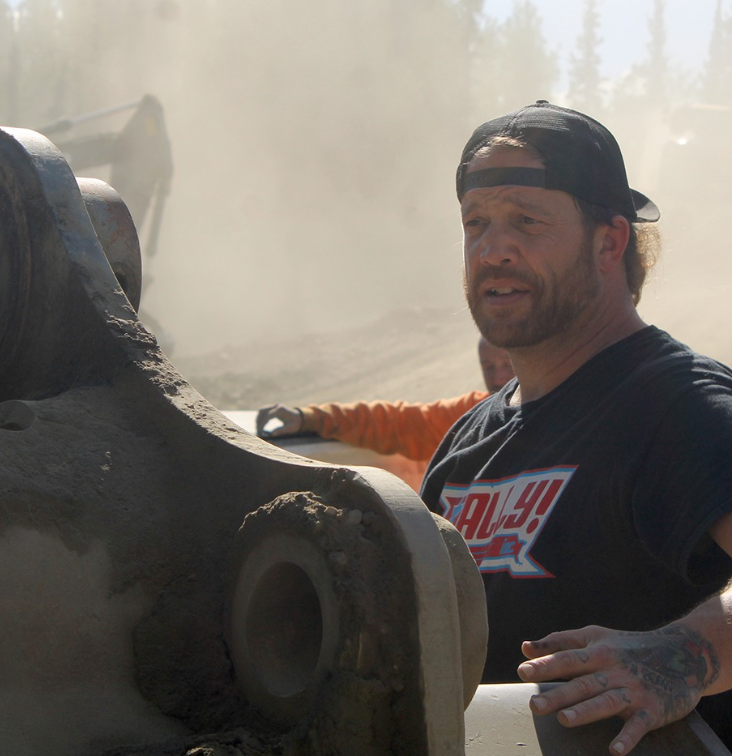
The assay results came back with shocking numbers: a gold concentration of approximately 12 ounces per cubic yard. This was unheard of for placer deposits. As Rick and his team continued to excavate deeper, they uncovered an entire pocket of gold-bearing material, with visible gold lining the walls, floor, and even the ceiling of the cavity. The first cleanup of material from the pocket produced 287 ounces from just 30 cubic yards—more than Rick’s entire operation had produced in months.
The Aftermath: A Mining Revolution
The discovery quickly gained attention throughout the Klondike, with veteran miners, including Parker Schnabel, visiting Rick’s operation to see the gold firsthand. The news spread like wildfire, and soon Rick was receiving offers to buy into his operation, endorsement deals, and even film documentary offers. But Rick remained focused on what mattered: responsibly mining his discovery and ensuring his crew shared in the success.
Over the next few months, Rick’s operation saw a complete turnaround. From producing marginal amounts of gold in previous seasons, Rick now pulled in over 400 ounces per day at peak production. By the end of the season, Rick had recovered 8,400 ounces of gold, with an estimated value of $17.3 million. More importantly, the discovery of multiple concentration zones around the original shaft meant that Rick had potentially unearthed 75,000 additional ounces, valued at $155 million. In total, Rick’s operation was now worth an estimated $160 million—a staggering achievement for a miner who had once been written off as a failure.
Rick’s story is the ultimate underdog tale. It’s a testament to the power of persistence, innovation, and the willingness to ask questions that others haven’t considered. By studying the mistakes of the past and applying his own unique approach, Rick Ness has not only turned his mining operation around but has also made one of the most significant discoveries in modern Klondike history.
As Rick himself put it, “I didn’t do anything magical. I just happened to be the one who actually did it.” In the end, his success is a reminder that sometimes, the greatest discoveries come from looking in places everyone else has overlooked.