THE COASTAL RefUGE: Leaked Oak Island Finale Reorients Billion-Dollar Hunt to Medieval Shoreline Chamber
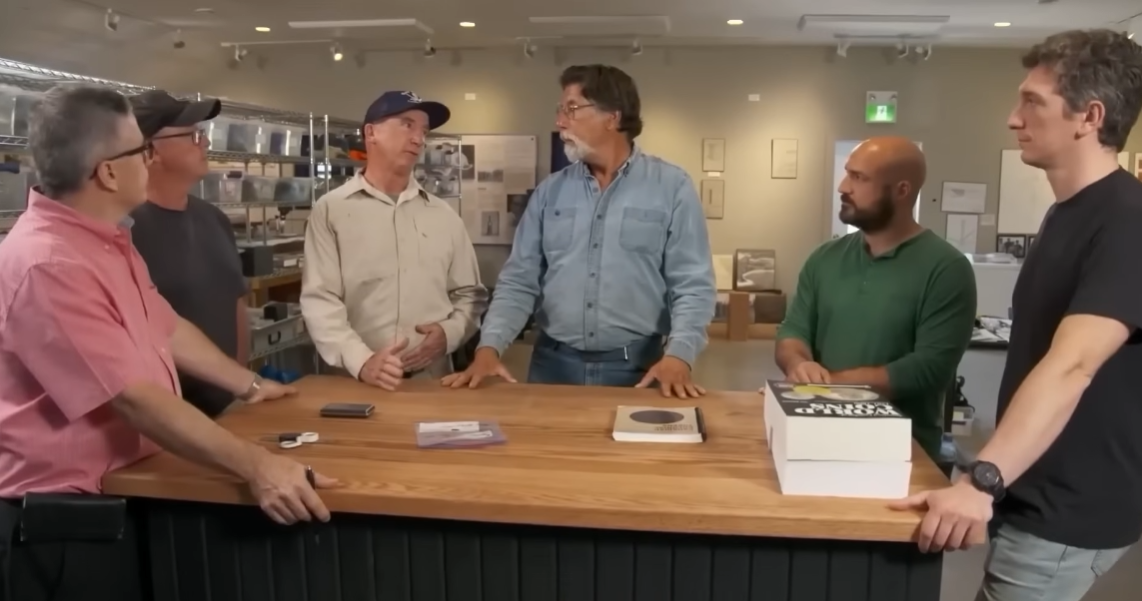
A series of high-level production leaks from the Oak Island war room suggests that the 227-year-old search for the world’s most elusive treasure has shifted focus entirely. According to insiders close to the Season 13 finale, the legendary “Money Pit” is now widely suspected to have been an elaborate, multi-million-dollar decoy designed by ancient engineers to distract future treasure hunters from the island’s true treasure vault: a perfectly intact, waterproof stone chamber buried beneath the shoreline of Lot 5.
The revelation comes at a highly critical moment for the operation led by brothers Rick and Marty Lagina. Facing severe underground structural collapses and mounting pressure from local Nova Scotia regulatory authorities, the team’s latest data pivot may fundamentally rewrite the timeline of European exploration in North America.
The Decoy Pit and the Coastal Vault
For more than two centuries, excavations have targeted the center of the island, battling catastrophic floods triggered by sophisticated hydraulic trap systems. However, the leak reveals that advanced subsurface scans conducted near the coastline have exposed a massive, mathematically symmetrical stone structure.
Unlike the porous, unstable earth of the Money Pit, this coastal structure was engineered with distinct stone walls built to withstand centuries of shifting ocean tides. Most staggering to researchers was the result of a partial breach of the structure: unlike previous digs, seawater did not immediately flood the opening. Insiders suggest the chamber has remained perfectly sealed for up to 600 years, acting as a subterranean time capsule.

Geophysicists now theorize that the island’s infamous flood tunnels were never intended as simple booby traps for the Money Pit. Instead, they appear to be part of a massive, interconnected water-diversion network designed to stabilize the subterranean geology and protect this specific shoreline vault.
The 14th-Century Timber Shift
The artifacts recovered from the periphery of Lot 5 during the final days of the season have sent shockwaves through the historical community. Carbon-dating analysis on newly recovered structural timber has reportedly returned dates pinning the wood to the 1300s and 1400s—centuries before Christopher Columbus crossed the Atlantic.
Furthermore, investigators have pulled specialized, heavy construction tools from the coastal sediment. Initial assessments suggest the tool designs match medieval engineering equipment utilized by religious military orders in 14th-century France and Scotland. The data strongly implies that Oak Island was not engineered by 18th-century pirates, but rather built as a highly sophisticated, hidden sanctuary for the Knights Templar fleeing persecution in Europe.
Disaster and the Seventh Curse
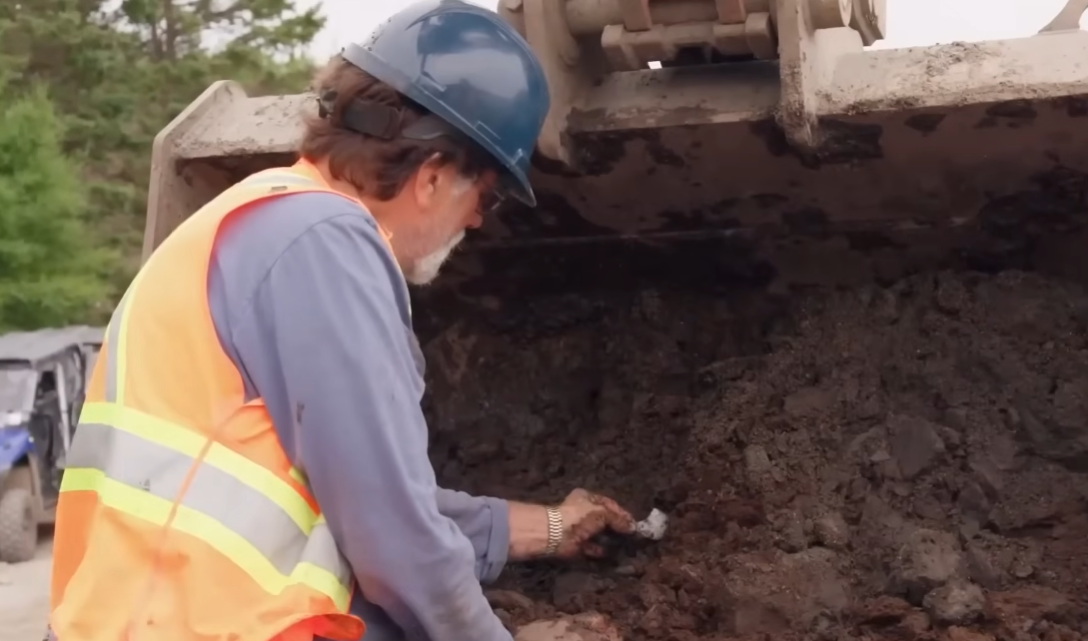
The triumph at Lot 5 was marred by a near-catastrophic failure at the traditional Money Pit site. In an aggressive final push to drain the central shaft, the team deployed massive drilling systems and heavy steel casings.
The hollow, unstable voids beneath the island fought back. A massive underground cavity gave way, triggering a violent surface collapse that nearly swallowed several large pieces of machinery and forced an immediate evacuation of the zone.
The incident has reportedly left the crew deeply shaken, reviving the dark local prophecy that seven lives must be lost before Oak Island surrenders its secrets. With six deaths currently in the history books, the close call has forced the Laginas into an impossible dilemma: do they continue to risk tearing the fragile island apart, or do they walk away at the exact moment they have come face-to-face with history?