Emma Culligan discovers a mysterious iron chain beneath the Oak Island treasure pit, sparking new theories.
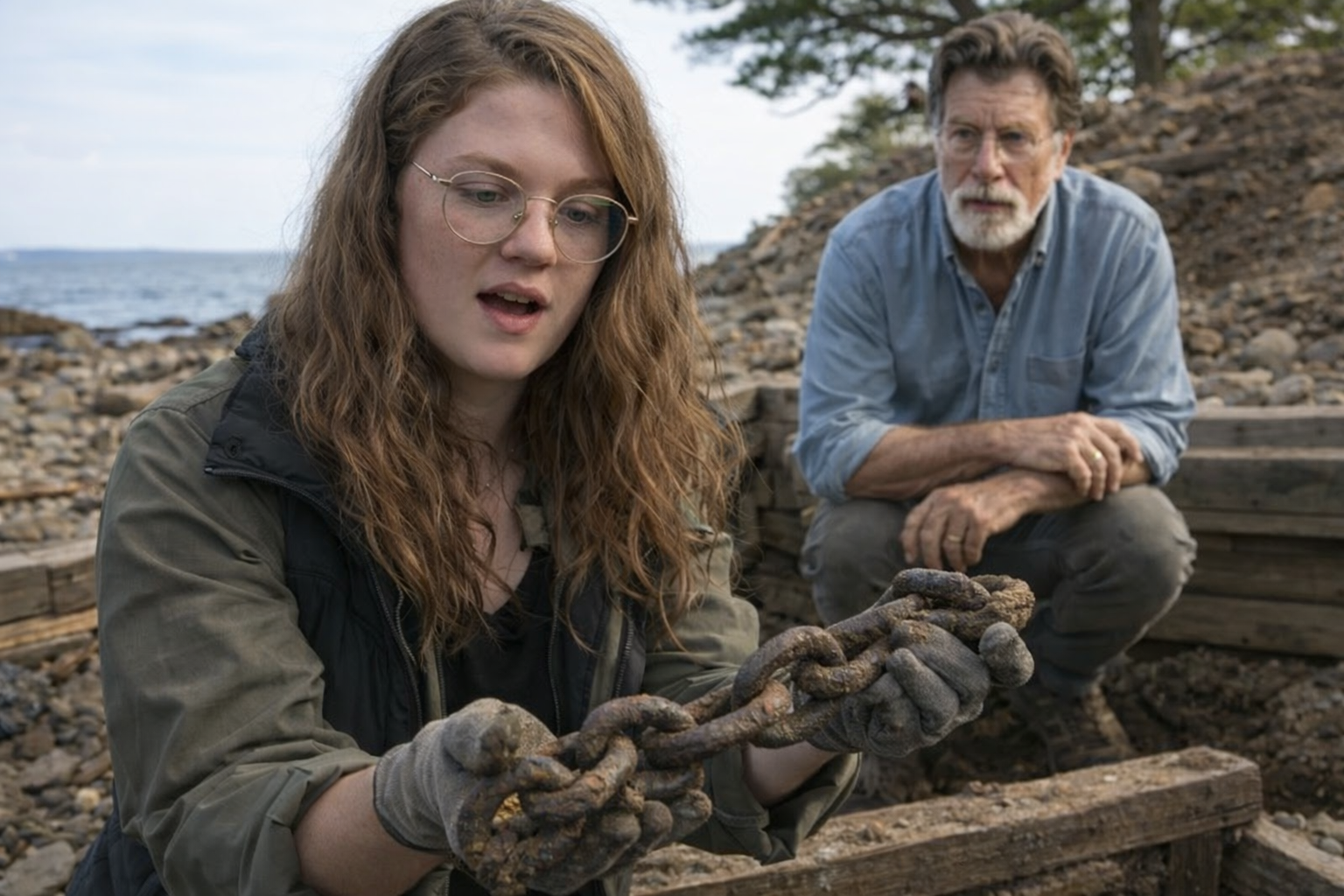
Oak Island’s mysteries continue to deepen as Emma Culligan, the series’ resident metallurgist, uncovered a previously hidden iron chain buried beneath what has long been suspected as a treasure pit. The find, while seemingly simple at first glance, could hold significant implications for the centuries-old quest to understand the island’s secretive past. For fans and analysts alike, the discovery opens a new chapter in speculation about how valuables were stored, transported, or secured, and what the chain may reveal about the engineers of this elaborate subterranean system.
The chain was located at a depth that aligns with historical accounts of man-made constructions beneath the Money Pit area. Its presence hints at intentional placement rather than incidental debris, suggesting a functional role, possibly related to anchoring or securing heavy objects. In historical mining and maritime contexts, iron chains were commonly used to stabilize structural elements, hoist containers, or secure gates within tunnels. If Oak Island’s builders employed such techniques, the chain may not only confirm sophisticated engineering practices but also indicate that high-value materials—perhaps coinage, artifacts, or precious metals—were stored or moved with extreme caution.
From an analytical perspective, the find raises immediate questions about chronology and origin. Metallurgical analysis of iron from the region can reveal the chain’s approximate age, casting light on whether it predates documented European activity on the island. Emma Culligan’s expertise allows for precise assessment of corrosion patterns and metal composition, potentially linking the chain to specific construction techniques or cultural sources. Early reports suggest the chain’s corrosion and mineral deposits are consistent with long-term submersion or contact with moist soil, reinforcing theories of intentional underground placement. The implications of such a durable object remaining intact for centuries cannot be understated: it may serve as a rare direct link to the hands of those who designed Oak Island’s enigmatic structures.

Analysts speculate that the chain could have been part of a mechanism designed to raise and lower containers in a secure shaft system. Previous discoveries on the island, including wooden platforms, pulley remnants, and stone-lined shafts, support the notion that complex engineering solutions were employed to safeguard treasures. A functional chain could suggest that the Money Pit, or adjacent tunnels, were not merely symbolic or ritualistic but were actively used to store and protect high-value items. If so, understanding its placement and orientation might help reconstruct operational methods used by the original builders, potentially revealing the scale and sophistication of their network.
Further intriguing is the possibility that the chain connects to the much-debated water management system theorized to protect the Money Pit from flooding. Oak Island’s legendary flood tunnels, which remain a central element of speculation, may have incorporated weighted devices and anchored mechanisms to control water flow or secure vaults. The newly discovered chain could provide tangible evidence supporting this hypothesis. Should analysis confirm a mechanical purpose, it would lend credence to theories suggesting the original constructors possessed advanced engineering knowledge, possibly imported from Europe, and adapted for underground security measures.
From a strategic standpoint, the discovery also has immediate operational implications for the Oak Island team. Uncovering a chain at this depth necessitates careful excavation to avoid damage to potentially connected artifacts. As the team investigates, there is an increased likelihood that additional metallic components or structural elements remain hidden nearby. This may guide further excavations, influencing both the direction of digging and the allocation of resources. Emma Culligan’s analytical insights, combined with ground-penetrating radar and historical mapping, could allow the crew to identify patterns in shaft construction, possibly leading to previously undiscovered caches.
Looking ahead, one of the most compelling questions revolves around the chain’s historical narrative. If the object can be dated reliably to the late 17th or early 18th century, it may intersect with documented treasure-hunting expeditions by privateers or naval officers operating in Nova Scotia. Some historians suggest that recovered European treasure—possibly from Spanish galleons or early French colonial shipments—was transported to Oak Island for concealment. In this context, the chain could have been a critical part of the operation, securing containers of coins or bullion against theft or environmental hazards.
Predicting the next stages of the investigation, it seems likely that the team will focus on tracing the chain’s connections and assessing whether similar iron elements exist within the surrounding pit system. If more chains or anchoring devices are found, analysts may finally piece together an operational diagram of the Money Pit, clarifying how treasures were stored, moved, and protected. Such discoveries would not only validate long-standing hypotheses but could also reshape our understanding of Oak Island’s purpose, blending engineering, strategic concealment, and historical treasure narratives into a coherent picture.
Ultimately, the unearthing of Emma Culligan’s iron chain is more than an isolated find; it is a signal that Oak Island still holds secrets capable of redefining centuries of speculation. Whether it marks the final step toward uncovering lost treasure or simply illuminates the methods of those who built the island’s underground network, the chain has reignited the analytical discourse surrounding Oak Island. For historians, engineers, and fans of the series, the discovery promises a thrilling intersection of tangible evidence and centuries-old mystery, one that could shape the team’s efforts for seasons to come.
As the Oak Island team continues its excavation, all eyes are now on the chain’s broader implications. Could it lead to more intact artifacts? Will it unlock parts of the underground system that have remained elusive for generations? And ultimately, what does this chain tell us about the minds and intentions of the island’s original constructors? Only time—and careful analysis—will tell. But one thing is certain: the journey beneath Oak Island’s surface is far from over, and Emma Culligan’s discovery has added a new, tantalizing chapter to the saga.