Treasure chest discovered at the bottom of the sea, a new finding in the quest for ancient artifacts on Oak Island
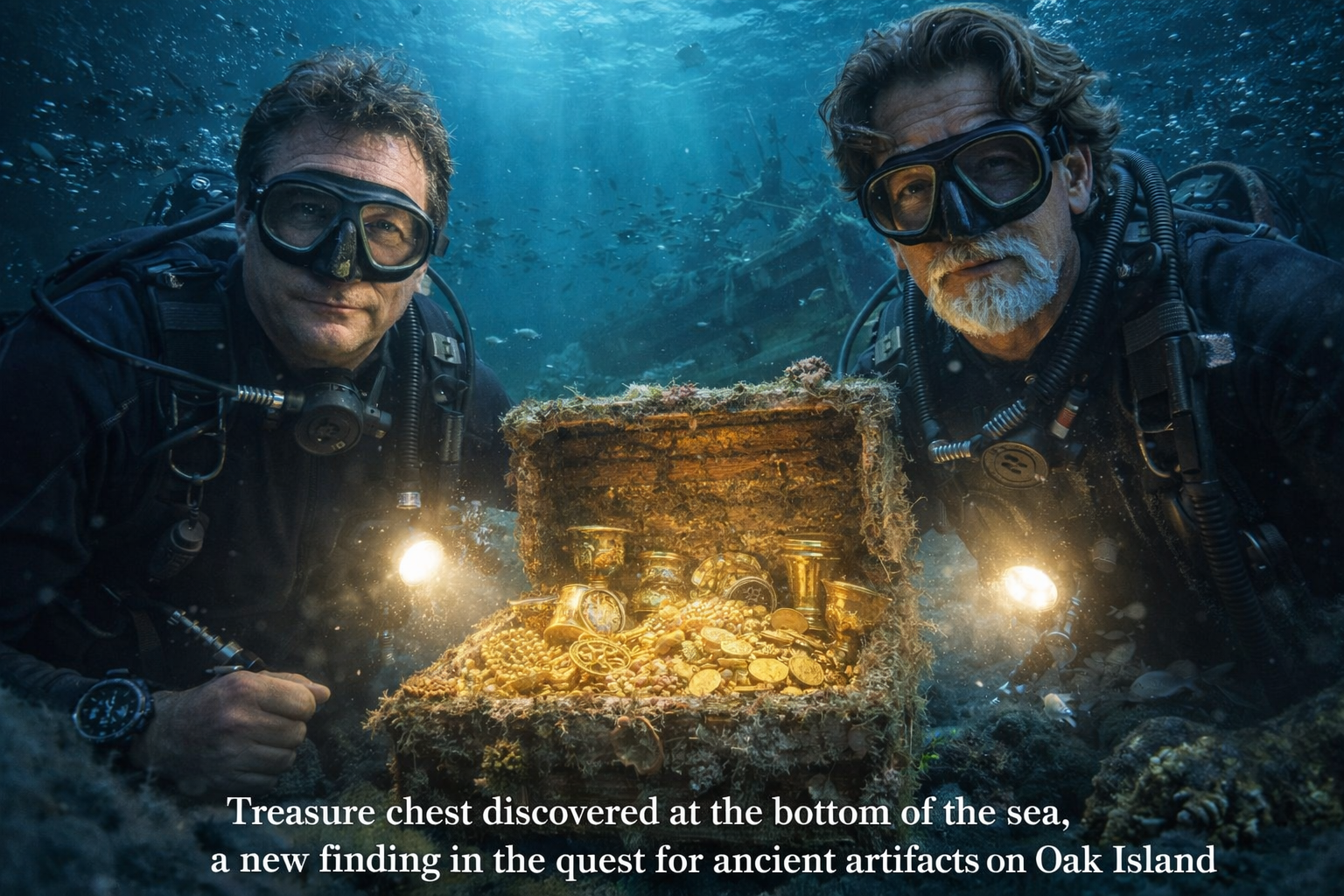
Oak Island has long captivated the imagination of historians, treasure hunters, and television audiences alike. For over two centuries, the island’s enigmatic features—the Money Pit, Smith’s Cove, and countless underground chambers—have fueled speculation about lost treasure and forgotten civilizations. In a stunning new development, the Oak Island team has unveiled a submerged treasure chest resting on the ocean floor just offshore. This discovery, made possible through a combination of advanced sonar mapping, scuba dives, and remote-operated vehicles, marks one of the most significant breakthroughs in the history of the island’s exploration.
The discovery itself is deceptively simple: a chest, partially buried in sand and encrusted with marine growth, lies in shallow waters near the historic shoreline. Yet its implications are profound. Analysis of the structure suggests it is deliberately placed, not a remnant of shipwreck debris. Early tests indicate that the chest may contain metallic objects, potentially coins or other artifacts, and possibly organic materials preserved in a saltwater environment—an unusual occurrence given the corrosive effects of seawater. If confirmed, this find could support long-standing theories that Oak Island’s treasure was not confined to the Money Pit, but was dispersed strategically along the coastline as part of a sophisticated protection system.
From a programmatic standpoint, this discovery represents a pivotal moment for The Curse of Oak Island. The series has consistently highlighted the meticulous, centuries-long attempts to hide and recover treasure. Yet until now, most breakthroughs occurred on land, often involving shafts, booby-trapped tunnels, and heavy engineering challenges. The introduction of a maritime component adds a layer of complexity that could dramatically alter the direction of the narrative in upcoming episodes. Analysts suggest that the production team may focus future investigations on linking this underwater chest to historical records of shipwrecks, 17th- and 18th-century trade routes, and accounts of Spanish, English, and possibly French treasure fleets operating in the North Atlantic.
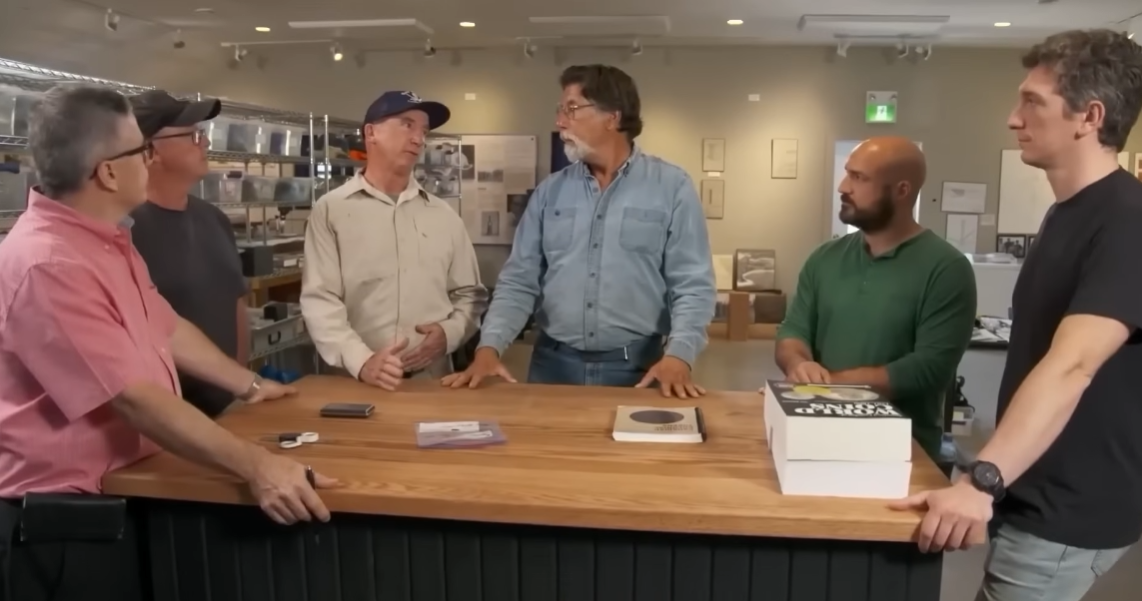
The team’s approach to the find underscores the combination of modern technology and traditional investigative techniques that has become a hallmark of Oak Island exploration. Side-scan sonar first identified anomalies along the seabed, revealing shapes consistent with a rectangular object of human manufacture. Following this, divers confirmed the presence of the chest, mapping its exact location and taking sediment samples to assess age and origin. Preliminary findings suggest that the chest’s placement was intentional, with an orientation and depth designed to withstand tidal activity. This suggests a level of planning and engineering sophistication rarely associated with pirate legends, and more consistent with organized colonial operations.
From a historical analyst’s perspective, several intriguing possibilities emerge. First, the chest may be directly connected to the Money Pit and other underground structures on the island. Theories have long posited that Oak Island functioned as a multifaceted storage system, where primary treasure caches were complemented by decoy locations and distributed hiding spots. A chest found offshore could indicate a deliberate dispersal strategy, intended to protect valuables from seizure or theft during turbulent maritime periods. Alternatively, the chest could relate to documented shipwrecks, such as the Spanish galleon Concepción, which sank in the Caribbean and has been linked via historical conjecture to Oak Island’s treasure lore. If researchers can establish provenance through metallurgical analysis or recovered artifacts, the find could provide the first definitive link between Oak Island and a specific historical treasure fleet.
The timing of the discovery also has narrative and practical implications for the show. Viewers have followed the team through seasons of slow progress, minor finds, and near misses, all of which contribute to the tension and suspense of the series. Introducing a new, high-stakes underwater element provides fresh storytelling opportunities: it challenges the crew to adapt techniques, raises questions about the depth and extent of the island’s treasure system, and creates the possibility of a multi-season arc involving maritime recovery. Analysts predict that upcoming episodes will likely focus on excavation logistics, preservation challenges, and historical investigation, blending adventure with rigorous academic inquiry.
Moreover, this find may influence the interpretation of previous discoveries. For instance, tools, coins, and structural remnants unearthed on land may now be contextualized in relation to an offshore cache. Patterns in soil composition, timber use, and artifact types could indicate coordinated engineering, suggesting that the treasure hunters of the 17th and 18th centuries were far more sophisticated than previously believed. The chest’s condition—if examined carefully—could also provide insight into the techniques used to prevent decay, looting, or accidental loss, offering a rare window into historical preservation strategies.
Looking ahead, experts anticipate a series of methodological and strategic decisions. Recovery will require careful planning to avoid damaging the chest or its contents. Saltwater immersion, sediment pressure, and potential corrosion present unique challenges that differ from the terrestrial digs traditionally conducted on Oak Island. If handled correctly, the contents could reshape the historical record, confirm or challenge long-standing theories about colonial treasure practices, and create a new benchmark for the series in terms of both excitement and scholarly contribution.

The broader implications for Oak Island enthusiasts and historians are profound. A successful recovery could finally validate theories that Oak Island’s treasure network extended beyond the Money Pit, combining land-based vaults with maritime storage solutions. It may also reignite debate about the identities of those responsible, whether pirates, colonial powers, or clandestine organizations. Each artifact retrieved will not only add material evidence but also feed the narrative that has fascinated the public for over two centuries.
In conclusion, the discovery of the submerged chest is a watershed moment in Oak Island exploration. It underscores the ingenuity of the original treasure concealers, the resilience and adaptability of the current search teams, and the ongoing appeal of The Curse of Oak Island. Analysts predict that this underwater revelation will dominate discussions for the foreseeable future, shaping both the historical discourse and the storyline of the series. As the team prepares for extraction and examination, viewers can expect a blend of careful science, daring fieldwork, and a renewed sense of anticipation: the treasure of Oak Island is no longer just buried on land—it is reaching out from the depths, challenging history and myth alike.