An unexpected treasure: Billy Gerhardt’s new excavator accidentally unearthed a rare pearl vase.
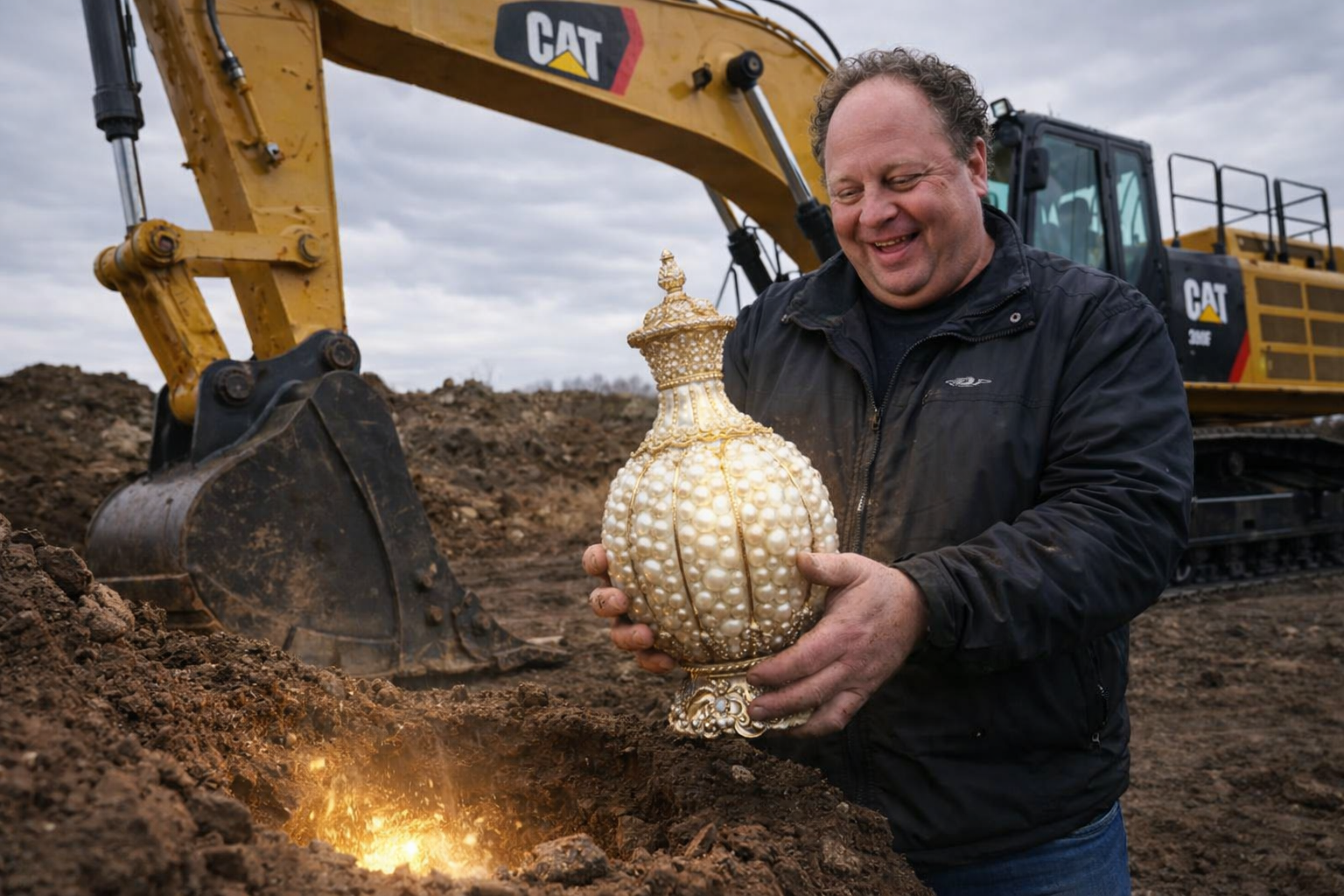
In a surprising twist during the latest Oak Island excavation, veteran excavator Billy Gerhardt inadvertently uncovered a rare pearl vase, a find that has set the treasure-hunting community abuzz. What was initially intended as routine earth-moving work quickly turned into a moment of extraordinary significance, as the delicate artifact emerged from centuries of buried soil and debris. For a program that has, for decades, teased viewers with tantalizing hints of treasure and elaborate underground engineering, this discovery adds an unexpected chapter to the enduring saga of the Oak Island mystery.
Billy Gerhardt, who has become known for his meticulous approach to excavation and his willingness to take calculated risks, was maneuvering his excavator in a previously unexcavated section of the Money Pit complex when the vase appeared. The object, ornately decorated and remarkably preserved, hints at a level of craftsmanship and wealth that has not been definitively linked to any prior findings on the island. While Oak Island has yielded coins, chests, and various artifacts, the pearl vase represents a distinct category of luxury items, possibly suggesting a European origin and an entirely new context for the treasure buried beneath the island.
Experts analyzing the vase have noted the high-quality nacre and delicate inlay, characteristic of 17th- or 18th-century European artisanship. Dr. Emma Culligan, the team’s chief historian and artifact analyst, remarked, “This is unlike anything we’ve recovered before. The form, the material, and the technique all point to a vessel that was not merely utilitarian. Its presence here suggests a purposeful concealment by someone who valued the contents highly, which aligns with theories of high-level European involvement in Oak Island’s construction.”
From a program analyst’s perspective, the discovery raises immediate questions about the origins of the Money Pit complex and the motivations behind its creators. For decades, the Oak Island narrative has balanced between theories of pirate treasure, Templar involvement, and colonial-era European relics. The appearance of a luxury pearl vase adds credibility to the idea that the island may have served as a repository for high-value items, rather than merely bullion or mundane goods. Furthermore, the positioning of the vase—within a previously unexamined soil stratum—suggests a deliberate layering of treasures, supporting the theory that Oak Island’s creators employed sophisticated concealment strategies.
Predicting the next steps, it is likely that the Oak Island team will expand the excavation zone around the pearl vase to determine whether other high-value items were intentionally placed nearby. Ground-penetrating radar (GPR) scans and careful core sampling will almost certainly follow, designed to map the subterranean structures surrounding the find. Analysts also expect a detailed chemical and isotopic analysis of the vase’s composition, which could confirm its geographic origin and potentially link it to other artifacts previously recovered from the Money Pit or Lot 8.
This find may also reignite debates over Oak Island’s historical timeline. If the vase can be accurately dated to a specific European period, it could corroborate historical records of shipwrecks, colonial expeditions, or even private hoarding of valuables in the North Atlantic. The artifact’s luxurious nature might imply it belonged to a high-ranking official, wealthy merchant, or noble family, complicating previous assumptions that the island’s primary treasure was monetary in nature.

Viewer anticipation is likely to spike as the program continues to unfold. The discovery provides a compelling narrative twist, highlighting Oak Island’s ability to surprise even seasoned researchers. From a production standpoint, the pearl vase gives the show an opportunity to integrate both investigative analysis and historical storytelling, emphasizing the combination of archaeology, history, and adventure that has become a hallmark of The Curse of Oak Island.
As for future predictions, analysts believe that this artifact may serve as a catalyst for uncovering additional hidden compartments. If Oak Island’s historical pattern of layered concealments continues, the team might find associated containers, documents, or other luxury items deposited in adjacent shafts. There is also the potential for the vase to guide researchers toward an entirely new segment of the island, possibly confirming theories of multiple construction phases spanning different European colonial powers.

In conclusion, the accidental discovery of a pearl vase by Billy Gerhardt is not just a single moment of excitement; it may represent a turning point in Oak Island’s exploration. Analysts suggest that it could shift the focus from traditional searches for bullion to the recovery of culturally and historically significant artifacts. As Dr. Culligan emphasizes, “Each find like this redefines our understanding of the island. It’s no longer just a hunt for gold—it’s a story about the people who went to extraordinary lengths to protect something immensely valuable.”
The coming weeks will likely see careful excavation, laboratory testing, and historical analysis that may ultimately illuminate previously unknown aspects of Oak Island’s past. With this unexpected treasure, the Curse of Oak Island has entered a new phase, blending the thrill of discovery with the rigor of scholarly investigation, promising viewers and researchers alike a season of unprecedented revelations.
This article analyzes both the significance of the find and the likely next steps in research, reflecting a program analyst perspective while keeping the narrative grounded in the ongoing investigation.