Members of the Tony Beets team “defected” to Parker Schnabel’s side for a higher salary.
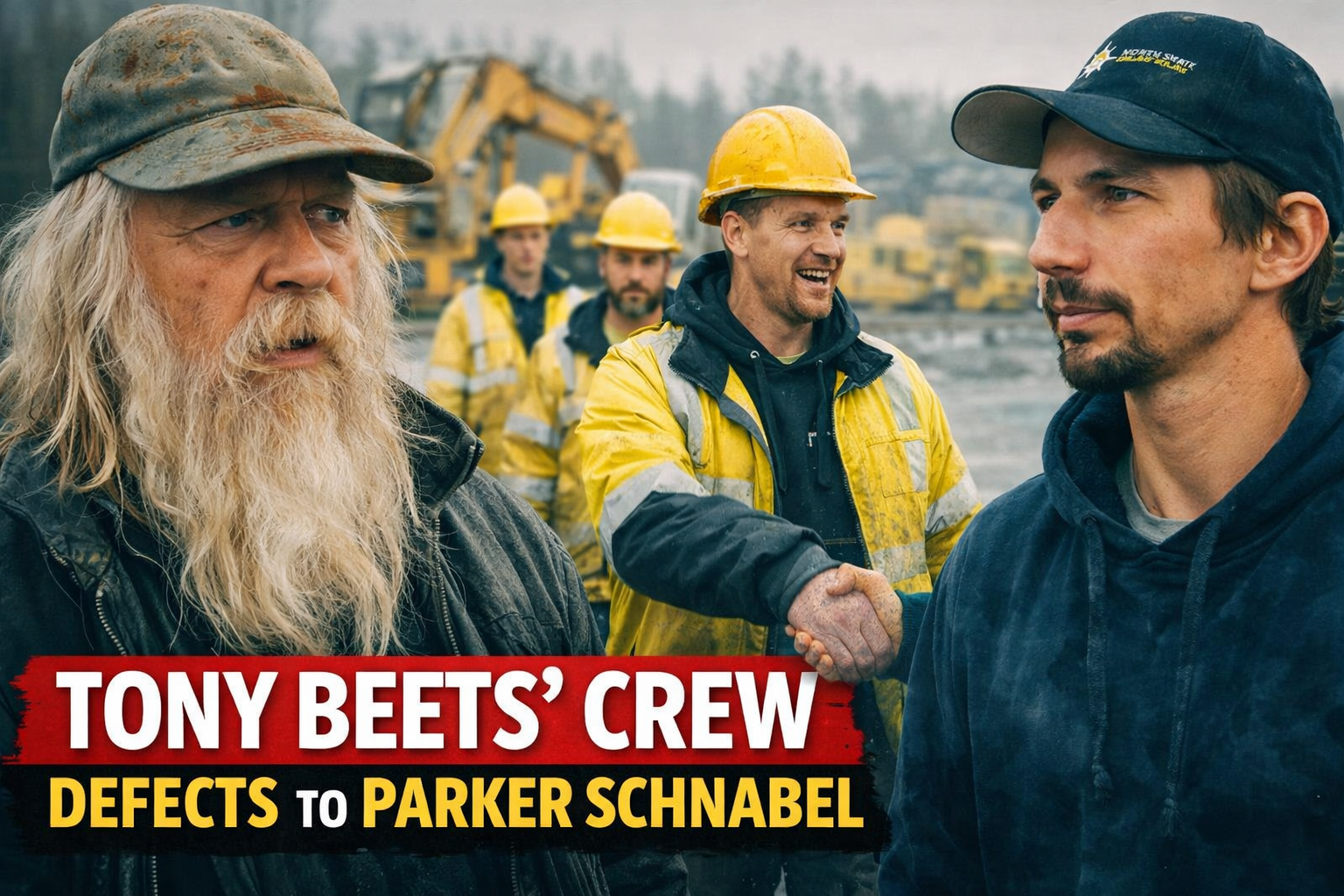
The latest season of Gold Rush has delivered a major twist that has little to do with broken machinery, difficult ground, or the freezing pressure of the Yukon. This time, one of the biggest challenges facing Tony Beets is not buried in the soil. It is inside his own workforce.
In a surprising turn early in episode 14, Tony learned that seven workers had left his crew without warning. The news came during a routine conversation with cousin Mike, when Tony asked how things were going on the claim. Instead of hearing a standard update about production, repairs, or paydirt, he was told that several experienced crew members had packed up and gone.
Among those who left was Jacob, and the departure appears to have happened quietly overnight. By morning, the workers were already gone and heading toward a new opportunity with another miner. For most mining bosses, losing seven trained workers at once would be a serious operational problem. In the Yukon, experienced labour is not easy to replace, especially in the middle of a season when every hour of running time matters.
Tony, however, responded in typical fashion. Known for his blunt leadership style and hard-edged humour, he appeared more amused than alarmed. He joked that his personality may have played a part in the workers leaving, before quickly moving on from the issue. His reaction underlined one of the core differences between Tony and his younger rival, Parker Schnabel.

For Tony, mining is a test of toughness. Workers either handle the pressure or they leave. His philosophy has long been built around endurance, hard work, and direct confrontation. If someone walks away, Tony tends to see it less as a personal setback and more as proof that they were not suited to the job.
He even suggested that if the workers had gone to Parker, then Parker could deal with them now. But behind the humour, the loss of seven crew members creates real consequences.
Gold mining operations depend on coordination. Heavy equipment must keep moving. Roads must be maintained. Paydirt must be hauled, plants must be watched, and repairs must happen quickly. When several workers leave at the same time, the remaining crew must carry more of the load. That can mean longer shifts, less rest, and a greater risk of mistakes.
Tony’s core team may be experienced, but even a strong crew has limits. The question now is whether his operation can maintain momentum while operating with fewer people. If production slows, the walkout may become more costly than Tony initially admits.
For Parker Schnabel, the situation looks very different. This season, Parker is managing one of the most ambitious operations in Gold Rush history. At only 31, he is running four wash plants across multiple claims, a scale that demands constant attention and a large, reliable workforce. His operation has already produced more than $22 million worth of gold by the fourteenth week of the season, but the pressure remains enormous.
Parker’s daily running costs are estimated at around $100,000. That means his machines cannot afford to sit idle. Every wash plant needs operators, support workers, mechanics, and haulage capacity. If one part of the system slows down, the financial impact can spread quickly across the entire operation.
That is why the arrival of experienced miners from Tony’s crew could be so valuable. These are not complete beginners who need to learn mining from scratch. They understand the rhythm of a Yukon claim, the demands of heavy machinery, and the urgency of keeping production moving. At a time when Parker’s recent gold totals have shown signs of slowing, added manpower could help stabilize his season.
But this is not simply a story about workers changing camps. It is also a story about leadership.
Some of the miners who joined Parker’s operation have reportedly noticed a different atmosphere. They describe Parker’s mine as calmer, more organized, and more professional. Small things — fair pay, clearer communication, and basic respect — appear to have made an impression. Compared with Tony’s more intense management style, Parker’s camp may feel like a place where workers can perform without constantly worrying about the next confrontation.
That does not mean Parker has always been an easy boss. He has admitted in the past that he was difficult to work with early in his career. When he became a mine boss at a young age, he pushed hard and sometimes struggled with the human side of leadership. Over time, however, he seems to have learned that a successful mining empire depends on more than ambition and equipment. It also depends on building a crew that wants to stay.
Still, the new arrivals create a fresh challenge inside Parker’s camp. Longtime crew members may not welcome the newcomers automatically. If former Tony workers are given chances to operate different machines while established Parker employees remain in the same roles, frustration could build. Managing that tension will be important.

Foreman Tyson Lee may have one of the most difficult jobs in the coming episodes. He must bring the new workers into Parker’s system quickly, safely, and without damaging morale among the existing crew. Training takes time, and Parker’s operation does not have much time to spare.
As the season continues, this workforce shift could become a key turning point in the Parker-Tony rivalry. Tony may insist that the workers who left were not worth worrying about. Parker may see them as the extra manpower he needs to keep four plants running. Both men may be partly right.
What is clear is that Gold Rush is no longer only about who has the better ground or the bigger machines. It is also about who can build the stronger team. In the Yukon, loyalty, leadership, and morale can be just as important as fuel, steel, and gold.
For Tony Beets, the walkout is a test of resilience. For Parker Schnabel, it may be an unexpected advantage at the exact moment his operation needs support most. And for viewers, it adds a new layer to one of the show’s most compelling rivalries.