GLOBAL RAIDER: From Hidden Khans to Forbidden Tombs, Gates Shatters History Across Three Continents
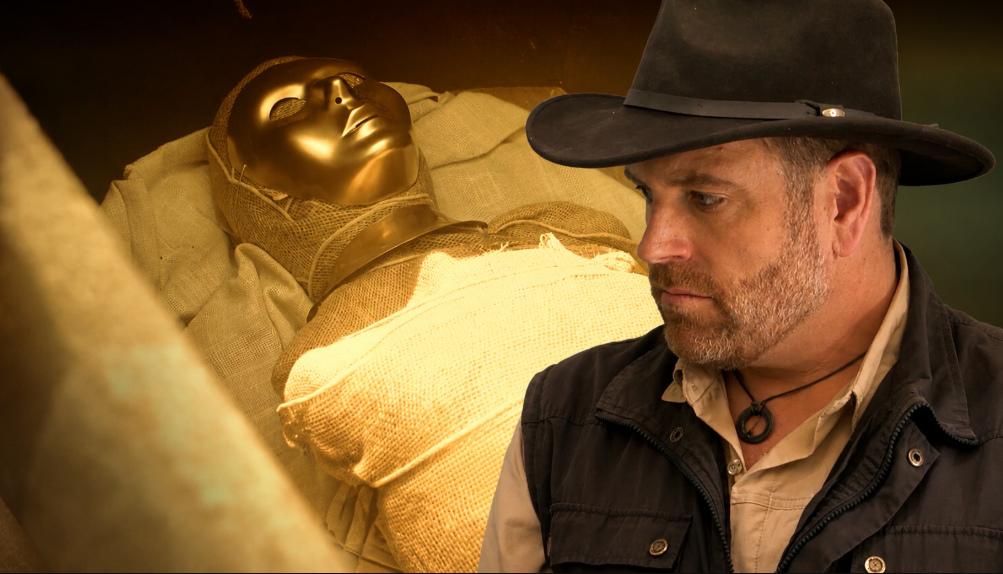
In an unprecedented global sweep spanning the rugged steppes of East Asia, the dense canopy of the Guatemalan Petén Basin, and the subterranean vaults of Saqqara, elite archaeological teams have cracked open deep history. The multi-front breakthrough has yielded everything from the lost visual lineage of Genghis Khan to the uncompromised tomb of an Egyptian premier, effectively rewriting the socio-political landscapes of the ancient world.
The Semitic Premier of Saqqara
The most immediate, paradigm-shifting discovery occurred in the shadows of the Old Kingdom pyramids at Saqqara. Descending through a tortuous, multi-tiered vertical shaft choked with thousands of loose human bones, investigators breached the raw bedrock tomb of a high-ranking New Kingdom official.
While historical names are routinely plastered across noble chambers, this specific site remained highly fragmented and structurally compromised by ancient ceiling collapses. Working alongside prominent Egyptologist Dr. Aiden Dodson, researchers systematically isolated an elite hieroglyphic cluster hidden in a pitch-black corner. The inscription reveals the tomb’s owner as “Aper-El.”
The revelation has sent profound shockwaves through theological and historical faculties alike. “Aper-El is categorically not an Egyptian name,” Dr. Dodson confirmed. “It is a Semitic name.”
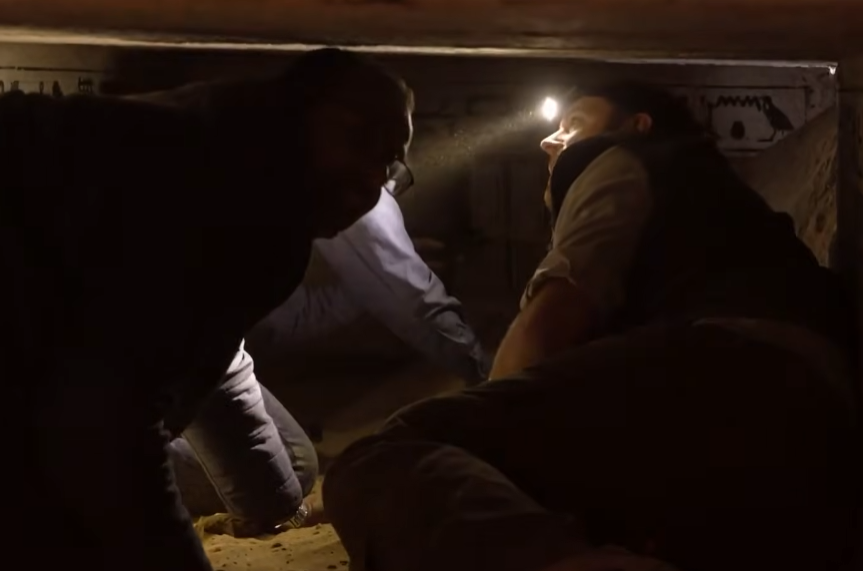
Crucially, the “El” suffix denotes the structural root for God utilized in the Hebrew Torah. Operating under the renegade monotheistic Pharaoh Akhenaten, Aper-El bore the distinct court title “Child of the Palace”—indicating he was raised directly alongside royal Egyptian heirs. The discovery provides the first immutable archaeological framework matching the exact cultural narrative of Moses in the mid-18th Dynasty court.
The Royal Icons of the Petén Basin
Simultaneously, deep within the highest density jaguar territory of Latin America, the exploration of the massive pre-classic Maya capital of El Mirador has reached a critical bottleneck. Working under the command of Dr. Richard Hansen, teams utilized specialized ground-penetrating radar (GPR) across the western architecture of the city to map the colossal Tigra Pyramid complex.
The data successfully isolated an identical, repeating structural anomaly across four separate structures, indicating a deliberate, formalized royal burial blueprint. While field technicians deployed snake-camera systems into a sequence of false cavities—caused by loosely packed structural cell blocks—a parallel surface clearing on Lot 5 yielded a monumental stone stela. The carving features the intact profile of a pre-classic ruler delineated by an elaborate ceremonial belt, marking the first localized portrait of a legendary “Snake King” ever recovered outside the primary civic center.
Hunting the Ghosts of Steppe Monarchs
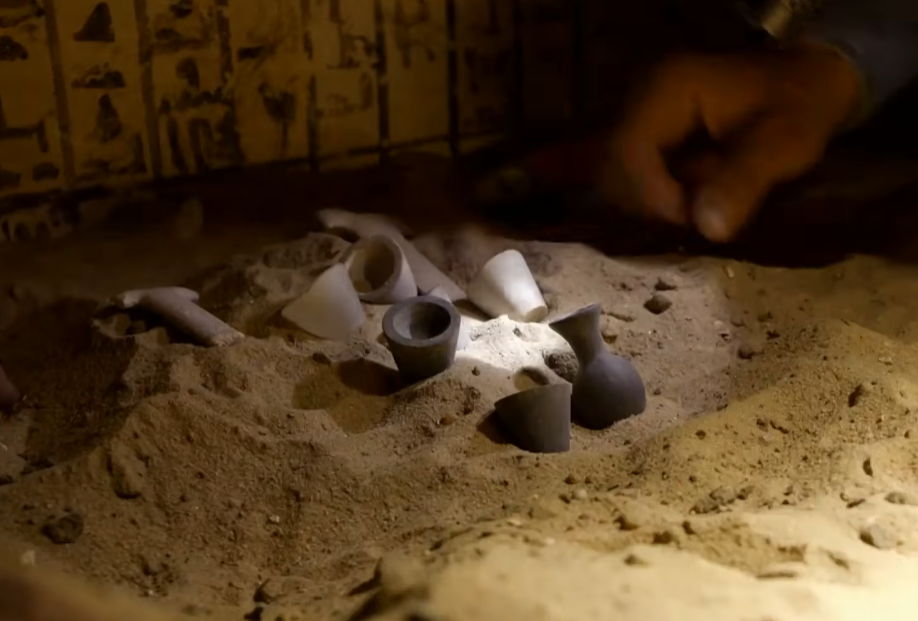
In the remote northern reaches of Mongolia’s Egg River, the hunt for the lost 1227 tomb of Genghis Khan has achieved an ancestral baseline. Partnering with Professor Miji George of Ulan Batar State University, explorers braved severe thunderstorms and deep river crossings to open a prehistoric Hunu-era mound.
The excavation recovered an intact, 4,000-year-old male skull, providing a direct genetic and architectural template for early Mongol rulers. According to George, satellite photography of the sacred, highly restricted mountain Burhan Haldun has revealed a massive, artificial square silhouette at the summit. The shape matches the evolutionary Hunu design principles that Genghis Khan explicitly ordered his funeral details to replicate to preserve his eternal secrecy.
As teams prepare to breach the inner sanctum of the Egyptian vault and mobilize heavy pack mules toward the Mongolian summits, history’s most fiercely guarded secrets are rapidly coming under the glare of modern science.