Parker Schnabel’s Crew Turns Klondike Crisis Into $2.7 Million Gold Rush Breakthrough

In the Klondike, success can arrive suddenly, but it rarely comes easily. For Parker Schnabel and his Gold Rush crew, one of the most difficult stretches of the season has now produced one of its most important victories: a historic weekly cleanup valued at around $2.7 million.
The result marks a major turning point in a season that had been defined by breakdowns, frozen ground, mounting costs and a demanding target that seemed to grow more difficult with every setback. Parker entered the year chasing a huge 10,000-ounce goal, a figure that would place his operation among the most ambitious in the Yukon. But for weeks, the numbers did not match the plan.
At Dominion Creek, the Long Cut became a serious obstacle. The ground was difficult, the conditions were unforgiving, and the crew was forced to fight through frozen material and unpredictable bedrock. For an operation that depends on constant movement, slow dirt is expensive dirt. Every hour spent fighting the ground meant less pay running through the wash plants and more pressure on Parker’s already stretched team.
The problems did not stop there. Parker’s crew was attempting to keep three major plants running at once: Big Red, Roxan and Bob. Each plant carried its own burden. A loader incident damaged a radial stacker, leading to a dangerous tire blowout and threatening to bring production to a halt. Thick mud also caused a suction basket to fail, adding another delay to an operation already operating on a thin margin.
At one stage, the crew’s weekly total fell to just 5.6 ounces, a deeply disappointing figure for a mine site built around high output. For most operations, that kind of return would be worrying. For Parker, with major machinery costs, crew wages, fuel bills and a huge seasonal goal, it was a warning sign that the season could quickly move in the wrong direction.
That pressure set the stage for one of Parker’s boldest decisions of the year. With his Indian River leases no longer providing the same security, he moved to acquire neighboring ground at Sulfur Creek in a deal worth around $2.5 million. The move was expensive, but it had a clear strategic purpose. The new ground had already been stripped, giving Parker a chance to move his reliable plant Bob into position and start processing material without losing too much time.

Still, the purchase carried obvious risk. Drill results can guide a miner, but only the sluice box tells the final truth. Parker’s investment would only make sense if Sulfur Creek delivered quickly. If the gold failed to appear in strong numbers, the purchase would become another burden in a season already full of strain.
Getting Bob moved and running was not simple. Mechanics Bill and Justin were forced into urgent repairs in rough conditions, working on broken drive shafts and custom fixes to keep belts moving. These are the moments that often define Gold Rush beyond the weigh-in table. The audience sees the gold at the end, but the real battle happens in mud, noise and pressure, where a single failed part can cost thousands of dollars in lost time.
Then came the cleanup that changed everything.
After weeks of frustration, Parker’s three-plant strategy finally produced the kind of result he had been chasing. Big Red, working the upper layer of the Bridge Cut, delivered 98.5 ounces, its strongest performance of the year. It was a reassuring result from a veteran plant that has carried Parker through many difficult campaigns.
Roxan, despite the problems at the Long Cut, brought in 222.5 ounces. That figure was especially important because it suggested the deeper ground was beginning to justify the effort. The Long Cut had tested the crew, but the gold showed that the difficult material still had value.
The biggest moment came from Bob at Sulfur Creek. In its first full week on the newly acquired ground, the plant produced a massive 346.8 ounces. For Parker, that number was more than a good cleanup. It was early proof that the expensive purchase could become the lifeline his season needed.
Combined with the wider weekly total, Parker’s crew passed 1,000 ounces for the week, with the haul valued at approximately $2.7 million. In one cleanup, the team recovered more than half of the purchase price of Sulfur Creek and turned a risky expansion into a potential season-saving move.
From an analyst’s perspective, this is the kind of moment that can reshape the entire narrative of a Gold Rush season. Parker’s operation had been under pressure not simply because of bad luck, but because of scale. Running multiple plants requires coordination, mechanical discipline and enough paydirt to keep everything fed. When one part of that system fails, the damage spreads quickly. But when all three plants begin to deliver, the scale that once looked dangerous becomes Parker’s greatest advantage.
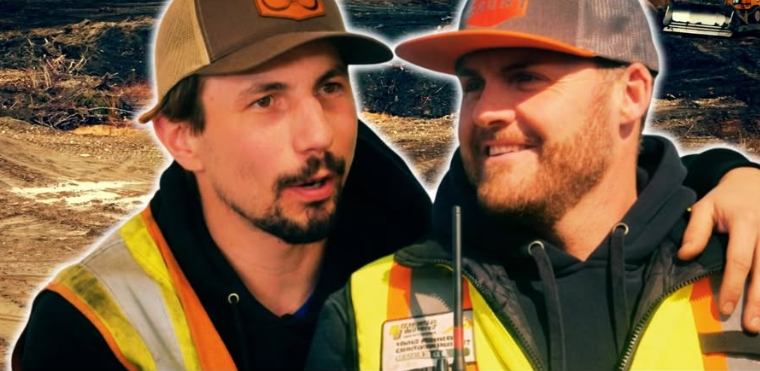
The cleanup also changes the mood of the crew. Parker had to pull people into new roles to keep up with demand, including bringing in pilot Jack Friscorn and moving operator Tatiana into the gold room to support Chris Doumitt. That kind of flexibility shows how stretched the team had become, but it also highlights one of Parker’s strongest assets: a crew capable of adapting when the operation demands more.
With more than 3,400 ounces now reportedly in the box, the path to 10,000 ounces remains steep. Parker still needs consistency, not just one spectacular week. The ground must continue to deliver, the plants must stay running, and the crew must avoid the fatigue that often follows a major push.
But the season now looks very different. What once appeared to be a costly struggle has become a story of recovery, ambition and proof under pressure. Parker Schnabel’s $2.7 million haul does not guarantee he will hit his final target, but it has given his crew something just as valuable: momentum.
In the Klondike, momentum can be the difference between a season remembered for failure and one remembered as a defining chapter. For Parker and his team, the fight is far from over. But after this historic cleanup, the 10,000-ounce dream is alive again.