Oak Island’s Latest Clue Points Far Beyond Nova Scotia: The Azores Connection That May Reshape the Oak Island Investigation
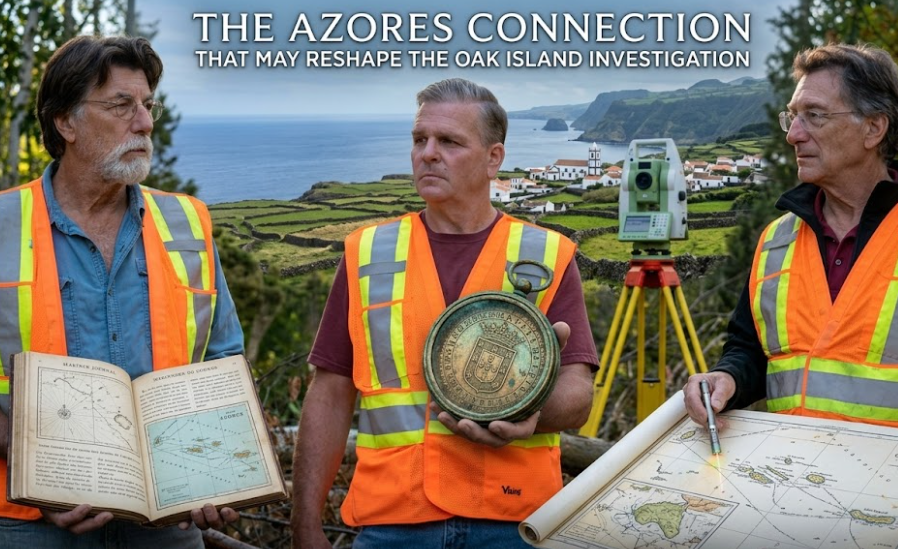
For years, The Curse of Oak Island has balanced two forms of evidence: the physical discoveries pulled from the soil of Nova Scotia, and the wider historical theories that suggest the island may be part of a much larger Atlantic story. The latest theme, centred on possible 14th-century Templar links in the Azores, could become one of the most ambitious narrative turns the series has explored.
From an analyst’s perspective, the significance of this storyline is not simply that the team may have found another distant clue. Oak Island has long operated on the idea that the Money Pit mystery may not begin in Nova Scotia. The show has repeatedly looked outward, toward Europe, the North Atlantic, medieval maritime networks, and secretive movements of people, wealth, maps and religious objects. The Azores theory strengthens that outward-looking structure by placing Oak Island within a possible transatlantic corridor rather than treating it as an isolated treasure site.
The Azores occupy a strategically important position in the Atlantic. For a medieval or early maritime group attempting to move across the ocean, the islands would have represented a valuable stopping point, navigational marker or staging area. If the Oak Island team has uncovered markings, stonework, symbols or documentary clues connected to 14th-century Templar activity in that region, the implication is clear: the mystery may involve an organized route, not a random deposit.
That would be a major shift in how viewers interpret the island. For many seasons, the central question has been what lies beneath the Money Pit. But a transatlantic trail asks a different question: who had the knowledge, resources and motivation to move something across the Atlantic and protect it with such complexity?
The Templar angle has always been one of the most compelling and controversial threads in Oak Island analysis. The Knights Templar were officially suppressed in the early 14th century, and theories about their surviving networks have become deeply embedded in alternative history. The show has often approached this area cautiously, using symbols, dates, carvings and travel routes to build possible connections without claiming certainty. The Azores material could give that theory a more geographic structure.
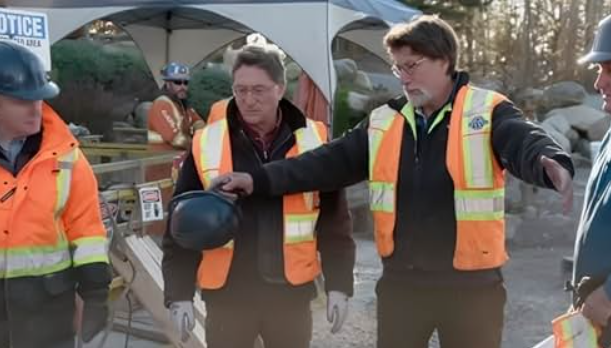
If the team can connect Azorean evidence to known Oak Island features, the storyline could become much stronger. The key will be correlation. A symbol found overseas means little unless it matches something found on the island. A stone formation in the Azores is interesting, but it becomes important if its construction style resembles features near the swamp, the stone road, the Money Pit area or Smith’s Cove. A 14th-century date is useful, but it becomes much more powerful if it aligns with material already recovered from Oak Island.
This is where the scientific team will likely become central. Viewers can expect the fellowship to focus on dating methods, material comparison and expert interpretation. If metal objects are involved, analysis may examine composition, manufacturing technique and corrosion patterns. If carved stones or inscriptions are involved, specialists may compare tool marks, language, iconography and masonry style. If the clue involves documents or maps, the show may explore whether certain routes or symbols point toward the North Atlantic.
One likely development is that the Lagina brothers will treat the Azores clue as a bridge between the European research trips and the physical search on Oak Island. In previous seasons, off-island investigations have sometimes felt separate from the digging. This storyline has the potential to connect those two halves more tightly. A discovery in the Azores could guide where the team digs next, which anomalies receive priority, or how they reinterpret older finds.
The swamp may become especially important. If the Azores theory suggests a planned maritime operation, then the swamp could be viewed not as a natural obstacle, but as part of a concealed landing, storage or construction zone. Earlier theories about the stone road, wooden features and possible ship-related material could be re-examined through this new lens. The fellowship may ask whether the swamp preserves evidence of a temporary worksite used by people arriving from across the Atlantic.
Smith’s Cove could also return to the forefront. Any theory involving ocean routes, hydraulic design or concealed construction naturally leads back to the shoreline. If the alleged Azorean clues point toward advanced water management or maritime engineering, the team may look again at the flood tunnel system. The question would not be only whether the tunnels existed, but whether their design reflects knowledge from a broader Atlantic engineering tradition.
A second possible direction involves the Garden Shaft and the C1 cluster. If the team believes the Azores connection supports a medieval construction timeline, they may intensify drilling and scanning around areas already showing signs of human activity. A 14th-century link would make any deep wood, metal traces or unusual voids more meaningful. It could also increase the importance of depth. If the original work predates later searcher activity by centuries, the team will need to separate modern disturbance from older construction with extreme care.
The biggest challenge for the show will be maintaining a clear line between possibility and proof. Oak Island theories can become powerful because they are emotionally compelling, but the strongest episodes are the ones that anchor speculation in testable evidence. A Templar route through the Azores is fascinating, but it must be supported by physical connections, credible dating and expert review. Without that, the theory risks becoming another attractive branch on an already crowded historical tree.
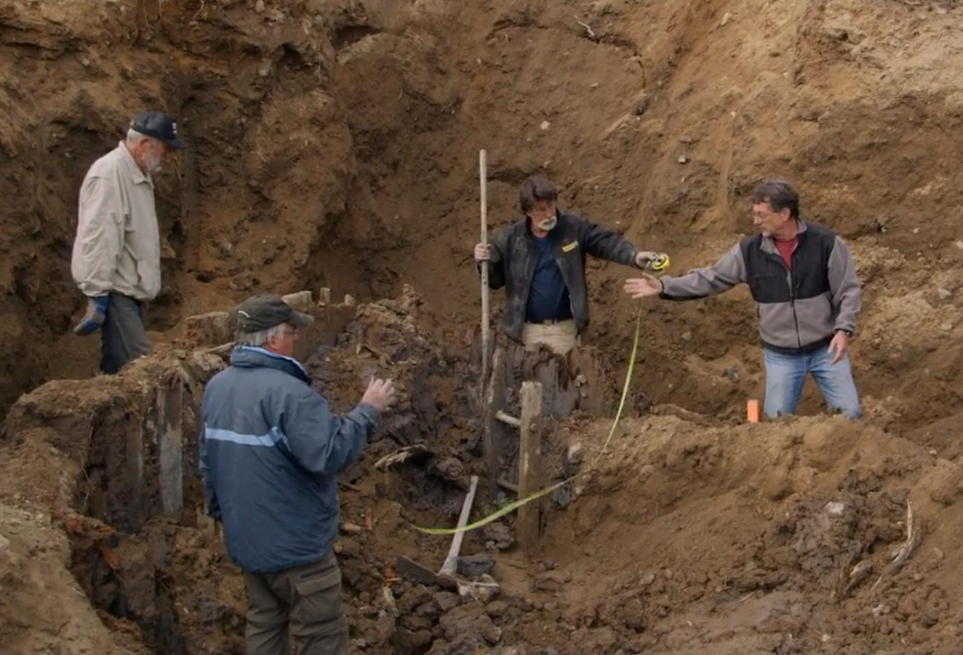
Still, as a narrative development, the Azores link gives the series fresh momentum. It expands the mystery beyond the island while still feeding back into the main search. It also gives Rick Lagina’s historical instincts and Marty Lagina’s demand for evidence a natural point of tension. Rick may see the pattern forming across centuries and oceans. Marty will likely want proof that the pattern leads back to recoverable evidence in Nova Scotia.
My prediction is that this storyline will not immediately reveal the final answer, but it could reshape the team’s search strategy. The Azores material may lead to renewed attention on shoreline engineering, swamp anomalies and symbolic connections found in earlier seasons. It may also encourage the fellowship to revisit old artifacts with new questions, particularly those involving European origin, medieval craftsmanship or unexplained transport.
The most compelling possibility is that Oak Island is not the starting point of the story, but the final stop on a carefully planned route. If the Azores evidence holds up, the team may be looking at a hidden Atlantic pathway, one that moves from medieval Europe through island waypoints and eventually to Nova Scotia.
That would not solve the Money Pit mystery overnight. But it would give the fellowship something almost as valuable: a broader map. For a show built on fragments, patterns and persistence, the discovery of a possible transatlantic trail could mark the beginning of one of its most consequential chapters.