A massive investment: Jeremy Clarkson has prepared 500 tables to welcome fans on the opening day of season 5.
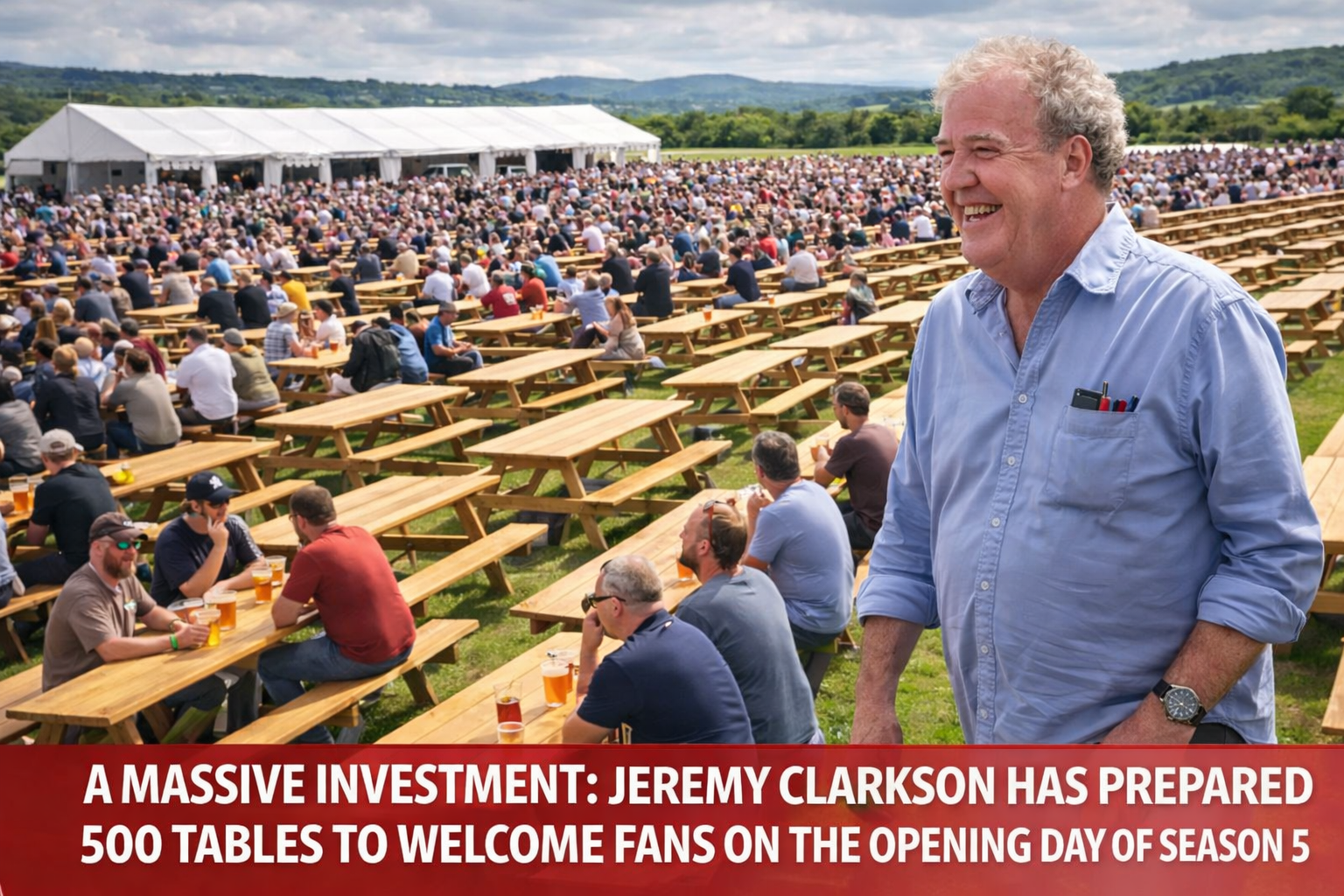
If Jeremy Clarkson is preparing 500 banquet tables to welcome fans on the first opening day connected to Clarkson’s Farm Season 5, the moment would represent far more than a simple public gathering. From a programme analyst’s perspective, it would show how far Clarkson’s Farm has moved beyond the boundaries of a television series and into something closer to a living rural brand.
Season 5 is already arriving with major expectations. Prime Video has confirmed that the new series launches globally on June 3, with episodes rolling out weekly until June 17. The season follows Clarkson as he makes major changes at Diddly Squat while dealing with the fallout from a government budget that has affected the farming world. Against that background, the idea of a large-scale fan welcome feels significant. It suggests that Clarkson’s public connection with viewers may become part of the wider story around the farm.
Clarkson’s Farm has always worked because it does not present agriculture as polished countryside entertainment. It shows mistakes, arguments, weather problems, planning restrictions, animal health worries, rising costs, and the constant uncertainty of making a farm financially viable. But over time, something unusual has happened. The audience has not simply watched Diddly Squat from home. Many have wanted to visit, buy products, stand in line, and feel part of the world they have seen on screen.
That is why a 500-table welcome would be such a powerful image. Tables imply hospitality, food, gathering, and shared experience. For a show about farming, that matters. Agriculture begins with land, but it reaches the public through food. If Clarkson is placing fans around tables, the message is clear: Diddly Squat is not only showing viewers how farming works; it is inviting them to taste, witness, and participate in the story.
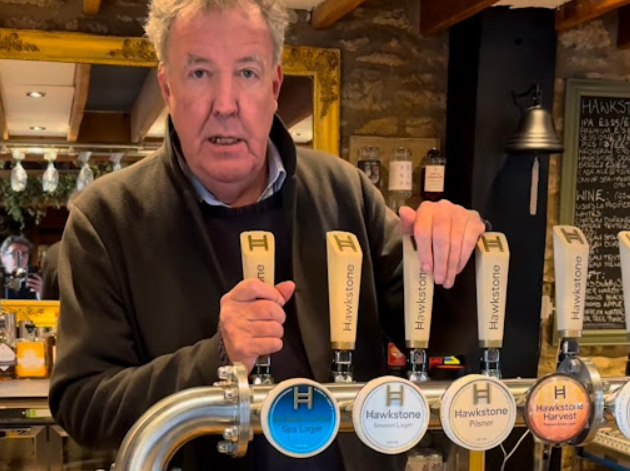
The timing could also be important. The Farmer’s Dog pub, featured around the Clarkson’s Farm world, has already become a fan destination. Amazon’s own feature on the pub highlighted its British food, dining room, beer garden, local feel, and links to farm produce. The Guardian also reported that fans travelled to the Oxfordshire pub opening in 2024, with the venue drawing hundreds of visitors and Clarkson interacting with the crowd. A 500-table event would build on that same energy, but on a larger and more symbolic scale.
From a storytelling angle, Season 5 could use this kind of opening day as a way to explore the pressure of public popularity. Clarkson is no longer just a farmer trying to make crops work. He is a television figure whose farm, shop, pub, and products attract intense attention. That creates opportunities, but it also creates logistical problems. Parking, staffing, food supply, local residents, council concerns, and crowd management can all become part of the story.
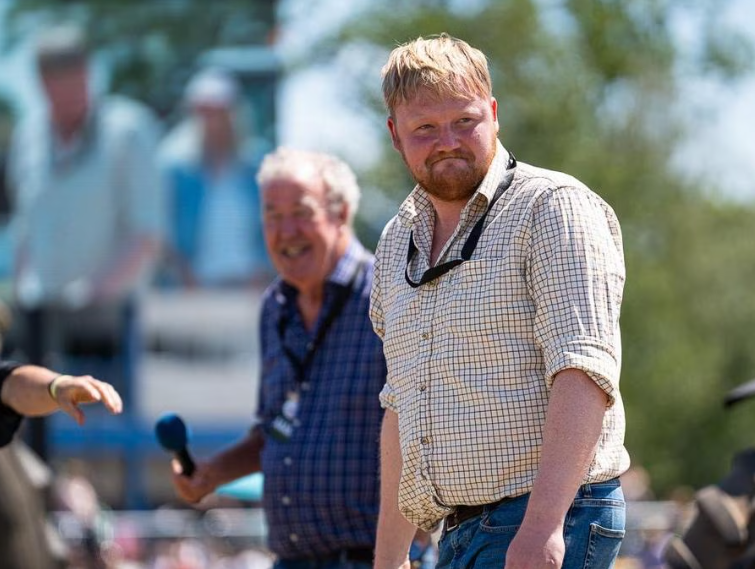
This is where the show’s best tension may appear. Clarkson’s instinct is often to think big. Charlie Ireland’s role is often to remind him of rules, costs, planning limitations, and practical consequences. Lisa Hogan could become central in the hospitality side, especially if the event involves food, guests, and customer experience. Kaleb Cooper, meanwhile, may see the whole thing through the eyes of a working farmer who understands that public enthusiasm does not remove the daily workload.
The 500-table idea also fits a broader Season 5 theme: Diddly Squat becoming more complicated. Radio Times reported that the Season 5 trailer includes Jeremy’s health scare, a driverless tractor experiment, new sheep, Kaleb’s third child, and a bovine tuberculosis outbreak on the farm. That mixture of technology, family, illness, and farm pressure suggests the season will not be only about fields and machines. It will be about how the entire Diddly Squat ecosystem handles change.
A large fan welcome could therefore act as a contrast. On one side, viewers may see celebration, full tables, and public warmth. On the other side, the farm may still be dealing with difficult weather, animal health issues, financial pressure, and the realities of rural business. That contrast is exactly what Clarkson’s Farm does well. It shows that popularity does not make farming easy. In fact, popularity can make everything harder to manage.
There is also a commercial question. If 500 tables are involved, viewers will naturally wonder what is being served, where the food comes from, and whether local British farming is at the centre of the event. Clarkson has often used his platform to focus attention on British farmers and the economics behind rural production. A major opening-day feast could give the show a visual way to connect farm output with consumer demand.
Looking ahead, one possible development is that the event becomes a test case for the future of Diddly Squat hospitality. If it succeeds, Clarkson may be encouraged to expand food-led experiences around the farm and pub. If it becomes difficult to manage, it could reinforce the recurring lesson that enthusiasm must be balanced with structure. Either outcome would be useful television.
Another prediction is that Season 5 may increasingly frame Clarkson as a host as well as a farmer. He is no longer only learning how to grow crops or raise livestock. He is managing a public-facing rural world that includes fans, customers, staff, suppliers, and local authorities. That is a major shift in the show’s identity.
The most interesting possibility is that the 500-table welcome becomes a symbol of the show’s central contradiction. Clarkson’s Farm has made farming feel closer to the public, but that closeness brings pressure back to the farm itself. Every visitor is a supporter, but also a logistical demand. Every table filled with fans is a sign of success, but also a reminder that Diddly Squat now operates under public expectation.
If Season 5 captures that balance, the opening day could become one of the defining moments of the series. It would not simply show Jeremy Clarkson welcoming fans. It would show Diddly Squat entering a new phase, where farming, food, television, and public loyalty all meet at the same table.