Parker Schnabel excavated a collapsed mine and discovered $180 million worth of gold!
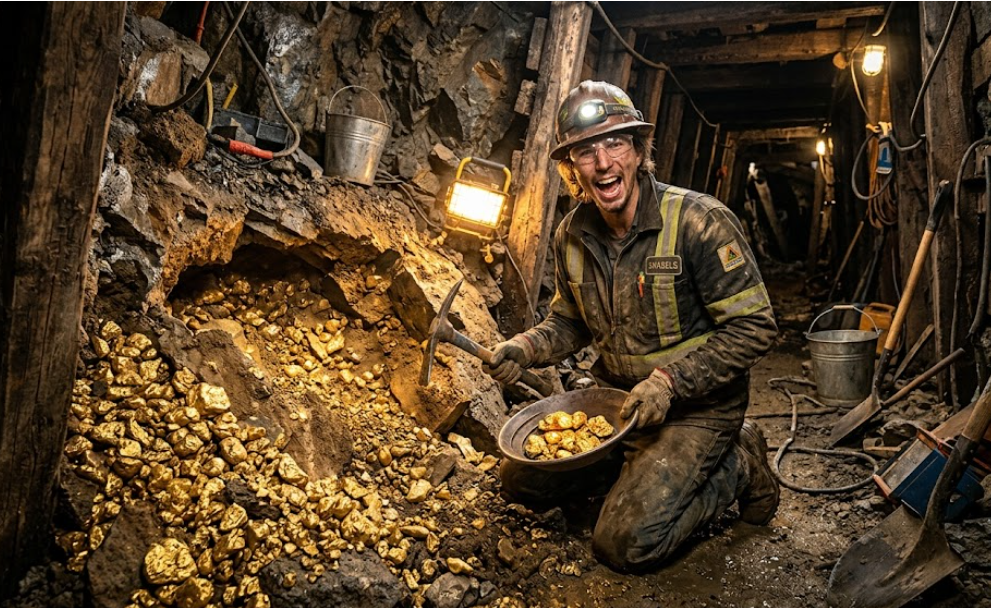
Parker Schnabel has built his Gold Rush reputation on pushing harder, spending bigger and moving faster than most miners would dare. But his latest reported move in the Klondike may be the most ambitious of his career: reopening a collapsed underground shaft that other mining companies had written off decades ago.
According to the account, the abandoned site had been avoided for nearly 40 years after previous operators lost large sums attempting to work the ground. The shaft, believed to sit nearly 120 feet below the frozen surface, had become known among miners as a place where machinery, money and confidence disappeared. Flooding, unstable tunnel walls and rotted timber supports made the area less like a standard placer mining site and more like an underground rescue operation waiting to go wrong.
Yet Schnabel reportedly saw something in the old geological data that others had missed. Historic maps, outdated survey records and deep-scan readings suggested unusual metallic density far below the surface. While previous companies had dismissed those signals as unreliable or too difficult to pursue, Schnabel is said to have treated them as a clue. His theory was simple but bold: the richest part of the claim might not be near the surface at all.

That theory set in motion a costly and dangerous operation. Heavy drilling rigs, high-pressure pumps, ventilation equipment and excavation machinery were brought to the site. The area around the old shaft was transformed into an industrial zone, with crews working through the night under floodlights. Pumps ran constantly to keep water out, while sensors monitored oxygen levels and dangerous gases inside the tunnel.
For Schnabel, the financial pressure was enormous. The operation reportedly consumed millions of dollars as crews drilled, pumped and reinforced the unstable shaft. Every delay added cost. Every new safety warning increased the pressure to stop. But the old records continued to point toward a buried system that could be unlike anything normally found in Klondike placer mining.
The first major turning point reportedly came after three weeks of continuous work. A borehole camera lowered into the shaft captured an unusual metallic reflection in the darkness. At first, engineers thought it could be water, equipment glare or a false reading. But as the camera descended further, the sensors continued to detect abnormal density. Some readings were said to be several times higher than the surrounding ground.
Even more intriguing was the discovery of a cavity-like structure beneath the shaft. The empty zone, surrounded by unusually dense mineral concentration, raised both excitement and concern. In mining, underground cavities can be highly unstable, especially when water pressure, old collapses and weakened supports are involved. The same feature that might point toward a rich deposit could also make the operation far more dangerous.
The first cleanup reportedly turned the project from an expensive test into a potentially historic find. Pay dirt taken from the deepest layer was run through the wash plant, and the early recovery exceeded expectations. According to the account, gold appeared quickly in the recovery tray, with the amount coming from a limited load rivaling what some operations might expect after several days of work.
The results were said to be so strong that Schnabel brought in independent geologists and auditors to check the data. Samples were retested, trays were weighed again and equipment was inspected. After verification, early projections reportedly pointed toward an underground gold zone worth nearly $180 million.
If accurate, that figure would place the discovery among the most significant finds linked to Schnabel’s career. It would also challenge the long-held assumption that the abandoned shaft was too damaged, too expensive and too uncertain to revisit.
For Gold Rush viewers, the story fits the arc that has defined Schnabel’s rise. He has never been portrayed as a miner who waits for ideal conditions. His success has often come from turning pressure into production, whether by expanding fast, running multiple wash plants or taking on ground that demands relentless spending before it produces. This collapsed shaft story pushes that formula to its extreme.
But the dangers remain central to the narrative. The deeper the crew goes, the more unstable the shaft reportedly becomes. Water leaks, falling rock, toxic air and structural weakness all threaten the operation. Engineers are said to have warned that deeper drilling could destabilize the entire system. At one point, vibrations inside the tunnel reportedly forced an evacuation after rocks and dirt began falling from above.
That tension is what makes the story more than a simple gold discovery. Schnabel may have found a rich underground system, but the question is whether it can be mined safely and profitably. A headline number such as $180 million sounds enormous, but mining value is not the same as cash in the bank. Extraction costs, safety requirements, processing losses, equipment damage and time all determine whether a discovery becomes a true success.

The most compelling part of the account is that the discovery may not be finished. New scans reportedly show stronger signals below the first excavation zone, with anomalies extending beyond 180 feet underground. Some experts in the story speculate that the shaft could be only the entrance to a much larger gold network.
For now, Schnabel’s collapsed shaft operation stands as a high-pressure test of instinct, technology and nerve. If the deeper layers confirm the early readings, the Klondike may have a new chapter in its mining history. If the ground turns unstable or the recovery rates fade, the project could become a costly lesson in how dangerous hidden gold can be.
Either way, Parker Schnabel has once again placed himself at the center of the Gold Rush conversation — not by playing it safe, but by chasing a claim that others had left behind.