Anger reaches its peak: Jeremy Clarkson sends a final message to the government about absurd agricultural policies.
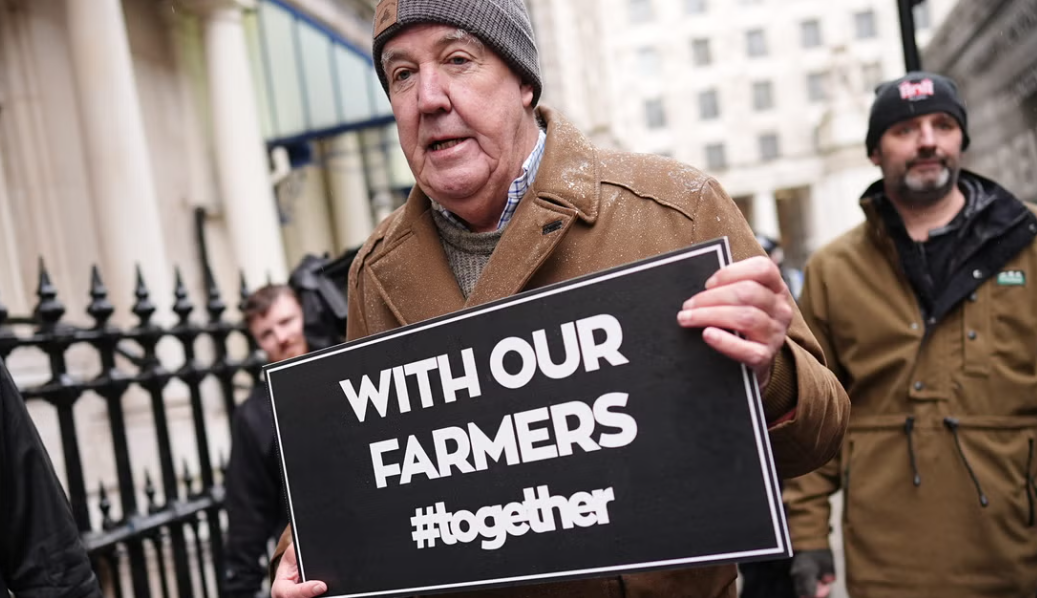
Jeremy Clarkson has never been a quiet television figure, but Clarkson’s Farm has given his public voice a new kind of weight. Once known mainly for fast cars, blunt opinions and comic provocation, Clarkson has become one of the most visible faces in the debate over British farming. Now, with frustration over agricultural policy reaching a new level, his message to government may become one of the defining storylines of the show’s next chapter.
From the beginning, Clarkson’s Farm was more than a rural entertainment series. It worked because it placed a famous outsider inside an industry that many viewers did not fully understand. Clarkson arrived at Diddly Squat Farm with money, machinery and confidence, but quickly discovered that farming was shaped by forces far beyond personal effort. Weather, disease, fuel prices, machinery costs, planning rules and subsidy changes all became part of the story.
That is why the latest tension between Clarkson and government policy feels like a natural continuation of the series rather than a sudden political turn. Clarkson’s Farm has always shown that the farm gate is not the boundary of the problem. Decisions made in Westminster can affect what happens in the field, the barn, the shop and the bank account. For Clarkson, the frustration appears to come from a simple belief: farmers are being asked to produce food, protect the countryside, absorb rising costs and obey complex rules, while receiving too little practical support in return.
As an analyst of the programme, the most important point is that Clarkson’s anger is not only a personal reaction. It is a narrative engine. The show thrives when Clarkson faces a system he believes is working against common sense. In earlier seasons, that system often appeared through planning disputes, council restrictions and the difficulty of expanding rural businesses. In the next phase, the focus may shift more directly toward national agricultural policy.
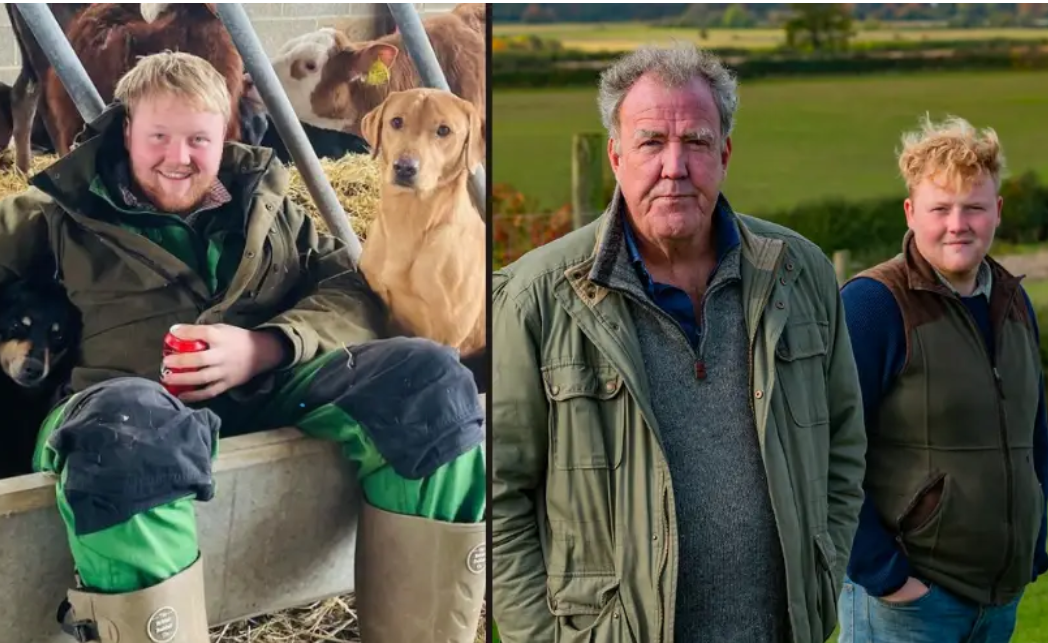
This could change the tone of Clarkson’s Farm. The show is still likely to contain humour, machinery mishaps, Kaleb Cooper’s blunt corrections and Charlie Ireland’s calm warnings. But the policy debate may give the new season a sharper edge. Instead of simply asking whether Clarkson can grow crops or manage livestock, the series may ask whether farming itself can remain financially workable under the current policy environment.
Clarkson’s final message to government, if presented on screen, would probably be built around the practical realities viewers have already seen. He can point to fields that fail to return enough profit, livestock restrictions that disrupt planning, weather patterns that ruin schedules and rural businesses that struggle to survive under strict regulations. His argument is strongest when it is grounded in visible evidence rather than slogans.
That is where Clarkson’s Farm has an advantage over ordinary political commentary. Viewers do not only hear that farming is difficult; they watch it happen. They see the late nights, the broken machines, the thin margins and the uncomfortable conversations with Charlie about money. When Clarkson says policy is making life harder for farmers, the audience has already seen why that claim resonates.
The next likely development is that the show will contrast Clarkson’s celebrity safety net with the reality facing ordinary farmers. This has been one of the most effective themes in the series. Clarkson can survive a bad year because he has other income and a media platform. Many farmers do not. If the show leans into this contrast, it could turn his final message to government into something broader than a personal complaint. It could become a warning about the fragility of family farms across Britain.
Kaleb Cooper’s role may become even more important in that context. Kaleb represents the younger farming generation: practical, local, ambitious and deeply connected to the land. If Clarkson is the loud public voice, Kaleb is the proof that farming’s future depends on whether younger workers can see a viable life in the industry. Any policy that makes farming less attractive to the next generation could become one of the show’s strongest emotional themes.
Charlie Ireland will likely provide the other side of the analysis. He is the figure who translates Clarkson’s frustration into numbers, forms and consequences. If government policy becomes a central storyline, Charlie will probably be the one explaining what it means for tax, investment, planning, land use and long-term survival. His presence prevents the programme from becoming only a protest platform. He brings structure, detail and credibility.
The major prediction is that Clarkson will not simply complain. He will try to adapt. That has always been the rhythm of Clarkson’s Farm. A problem appears, Clarkson reacts strongly, Charlie warns him, Kaleb doubts him, and then the farm attempts a new solution. In this case, the response may involve more diversification, more direct sales, more public campaigning, greater use of technology or a stronger push to make Diddly Squat less dependent on traditional farm income.
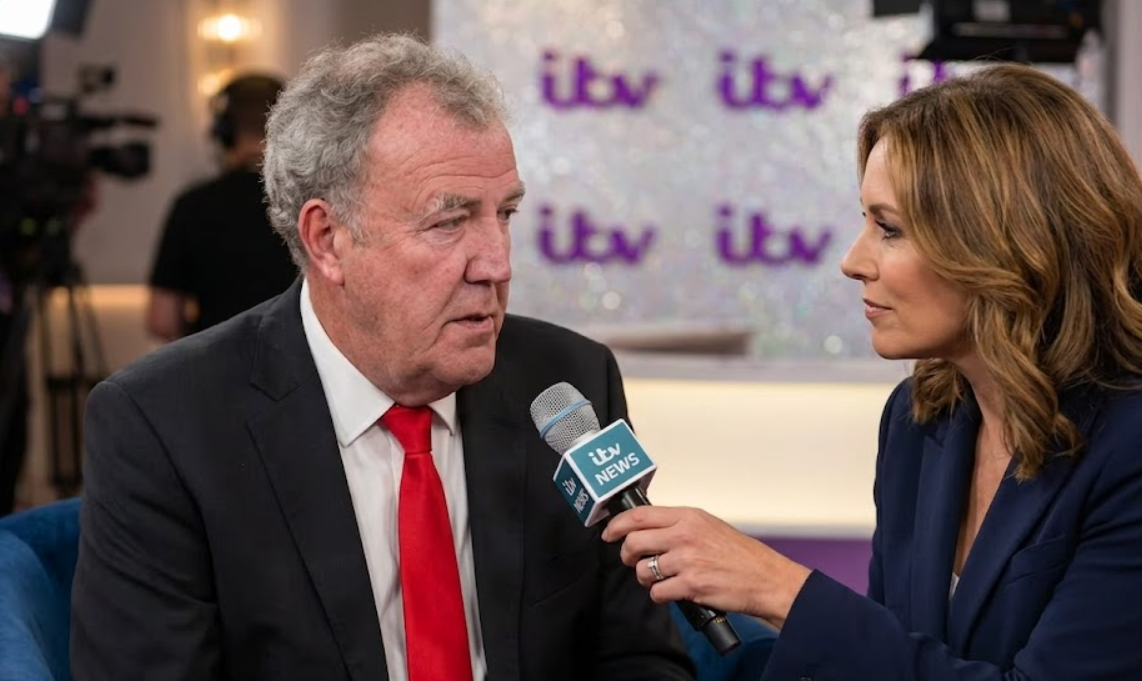
This could also explain why the series continues to resonate with such a wide audience. The debate is not only about farming. It is about whether people who work in practical industries feel listened to by those who make rules for them. Clarkson’s appeal in this setting comes from his ability to turn complicated policy frustration into everyday language. Whether viewers agree with every point or not, they understand the emotion behind it.
The risk for the show is balance. If the political message becomes too dominant, Clarkson’s Farm could lose some of the warmth that made it successful. The audience comes for the animals, the mishaps, the countryside, the friendships and the humour as much as the policy debate. The strongest version of the season would not abandon those elements. It would use them to show why the policy questions matter.
In the end, Jeremy Clarkson’s final message to government may not be a single speech or dramatic confrontation. It may be the entire season itself. Every failed crop, every blocked plan, every rising bill and every difficult farm decision becomes part of the argument. Clarkson’s Farm has turned one man’s agricultural experiment into a national conversation because it makes policy feel human.
If the coming episodes follow this path, viewers may see Clarkson at his most serious yet: not just defending Diddly Squat, but using it as a symbol of a wider rural struggle. His message to government is likely to be blunt, emotional and imperfect, but it may also be hard to ignore. For Clarkson’s Farm, that could mark a turning point from countryside entertainment to one of television’s most closely watched portraits of modern British farming.