RECONVERTING RADAR SIGNATURES: Josh Gates Launches ‘Expedition Unknown’ Season 17 with Unprecedented World War II Hellship Discovery
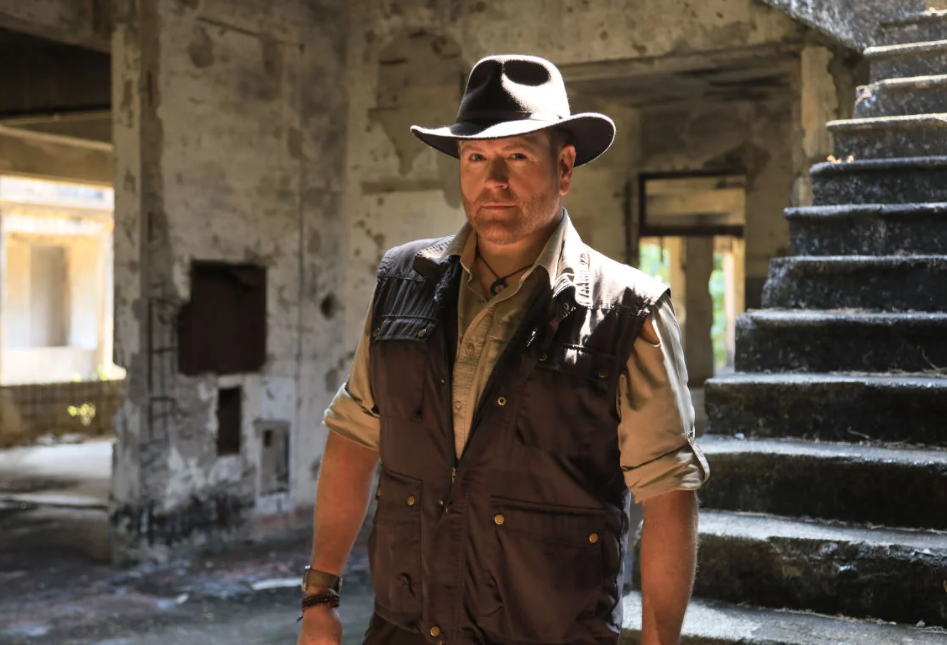
The landscape of investigative historical television reached a profound milestone tonight as veteran archaeologist and explorer Josh Gates officially launched the seventeenth season of Discovery Channel’s flagship franchise, Expedition Unknown.
Appearing on the national promotional circuit to break down the highly anticipated broadcast slate, Gates detailed a deeply emotional, historic breakthrough that anchors a special two-part season premiere. The investigative team, working alongside federal military forensic units and non-profit recovery organizations, has successfully located and documented the final resting place of an infamous Japanese “Hellship”—a twisted maritime graveyard that has remained completely unseen and unmapped for over 80 years.
The Double Tragedy of the Pacific
The two-part premiere drops viewers into the deep, low-visibility waters of the Philippines to investigate an agonizing, frequently overlooked chapter of the Second World War: the maritime transport of Allied captives. During the conflict, the Imperial Japanese military converted standard merchant vessels into makeshift, gray-painted prison ships—colloquially known as “Hellships”—to covertly move captured servicemen across the Pacific Theater.
“The Japanese military refused to mark these vessels with red crosses or any humane indicator that hundreds of prisoners were locked below,” Gates explained. “They painted them neutral gray to blend in with standard military convoys. Because of this deception, a devastating number of these ships were actually bombed and sunk by Allied aircraft whose pilots had absolutely no idea their own captured comrades were trapped in the cargo holds.”

Tonight’s premiere focuses heavily on two specific vessels. The production crew partnered directly with the United States government’s defense repatriation networks to film an active excavation targeting the Oryoku Maru, an underwater site where the remains of roughly 200 American servicemen are currently being recovered.
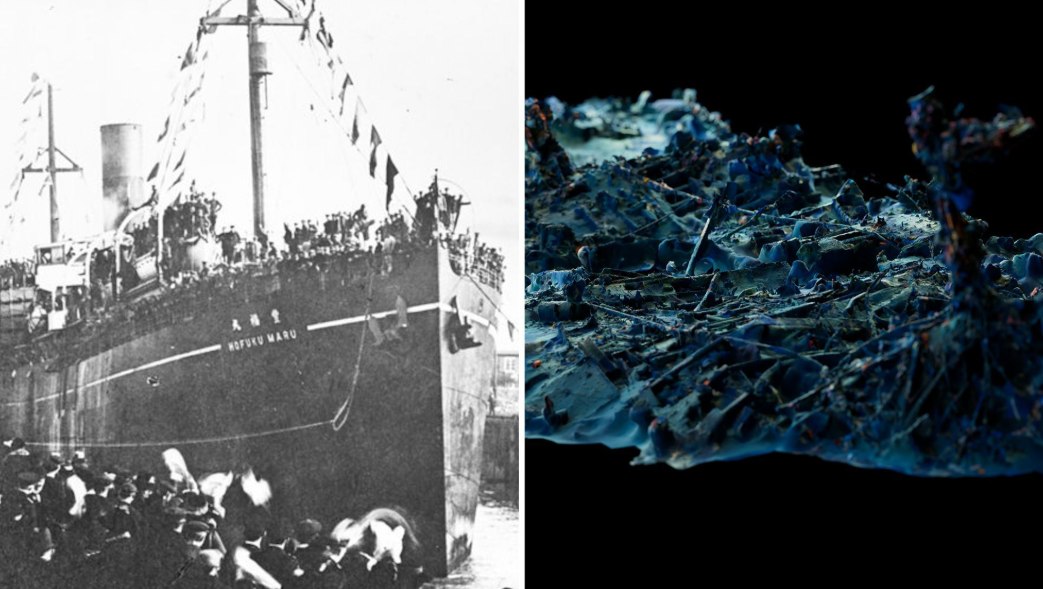
Simultaneously, the expedition joined forces with the Hell Ships Memorial Foundation to search for the Hofuku Maru, a massive transport that was split in half by a US Navy carrier airstrike in 1944, sinking to the ocean floor in less than three minutes. The joint operation resulted in the definitive, real-time discovery of the Hofuku Maru wreck site—instantly identifying what historians categorize as one of the largest remaining unmapped wartime mass graves in the world, where over 1,000 Allied POWs tragically perished.
Deep-Sea Schematics and Emotional Closure
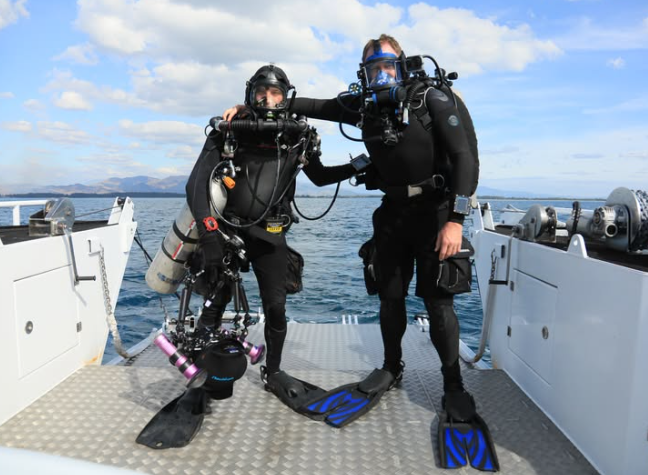
Navigating the underwater debris field presented immense technical hurdles for Gates and his specialized diving teams. Resting at extreme depths characterized by heavily clouded, zero-visibility waters, the wreckage of the Hofuku Maru manifests as a chaotic heap of collapsed steel.
To definitively confirm the vessel’s identity, investigators had to meticulously cross-reference the sonar signatures against original 1940s maritime blueprints, manually verifying specific industrial markers including the alignment of two main masts, four distinct cargo holds, and specific anchor housing configurations.
While the technical feat is a monumental victory for marine archaeology, Gates emphasized that the true weight of the project belongs to the living relatives of the vanished soldiers.
“For 80 years, these men have been waiting in the dark to be found,” Gates remarked. “They didn’t just die in the war—they completely vanished from their families’ lives. Seeing the emotional responses from people realizing we’ve finally found their uncles or grandfathers transforms this from a standard television show into a mission of fundamental human dignity. It proves that our government and these foundations simply refuse to give up on these guys.”
A Global Multi-Continental Campaign
Following tonight’s two-part military offensive, the remainder of Season 17 will feature an aggressive global itinerary. Gates teased upcoming episodes tracking the search for sunken pirate fleets off the coast of Jamaica, excavations of long-lost Inca subterranean tunnels beneath the ancient capital of Cusco in Peru, and an intensive trek through the deep wilderness of Georgia hunting for missing American Civil War-era gold.
By anchoring the season debut in the sacred, recovered history of the Pacific, Expedition Unknown continues to assert its status as the gold standard of reality exploration—reminding audiences that the ultimate purpose of unearthing the past is to bring light to the forgotten human stories buried beneath it.