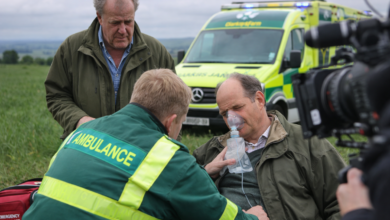
LAWSUIT INCOMING? British Supermarkets Destroy Clarkson’s £6M Beef Empire
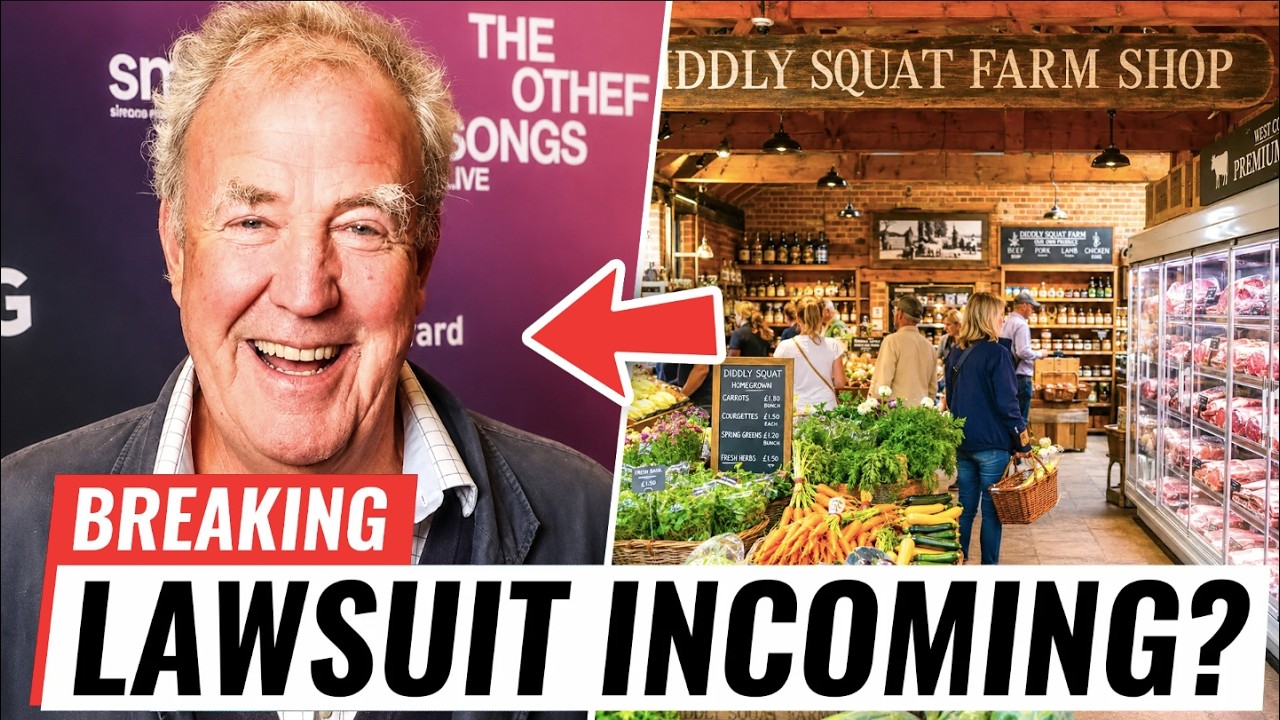
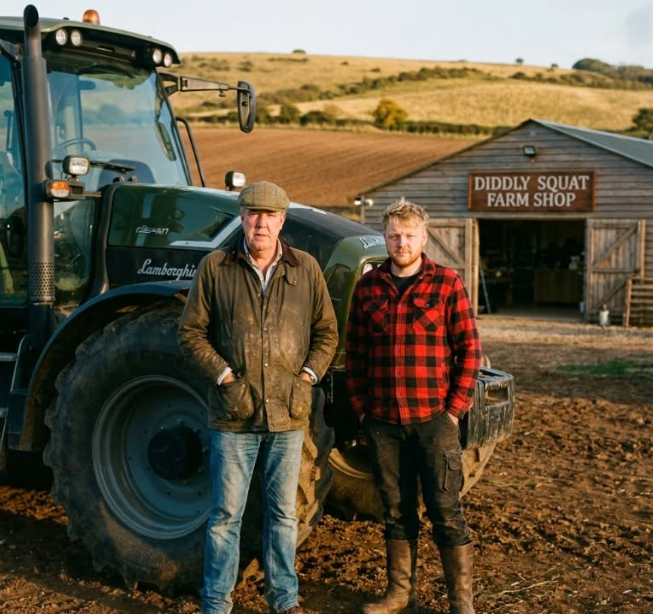
The business empire built around Jeremy Clarkson’s rural ventures—popularised through Clarkson’s Farm and its associated hospitality and food operations—has entered what analysts are describing as its most structurally exposed phase yet. Once framed as a bold success story in British farm-to-fork retail, the operation anchored at Diddly Squat Farm is now facing a convergence of legal, financial, and regulatory pressures that threaten to reshape its long-term viability.
What was once celebrated as a defiant challenge to supermarket dominance is increasingly being reinterpreted by industry observers as a high-cost experiment operating at the edge of Britain’s food economics system.
FROM VICTORY NARRATIVE TO SYSTEM PRESSURE
For much of the past two years, Clarkson’s rural enterprise has been framed publicly as a success story: a farmer bypassing traditional supply chains by building direct-to-consumer operations including a farm shop, butcher-style sourcing, branded beverages, and a high-profile pub venture.
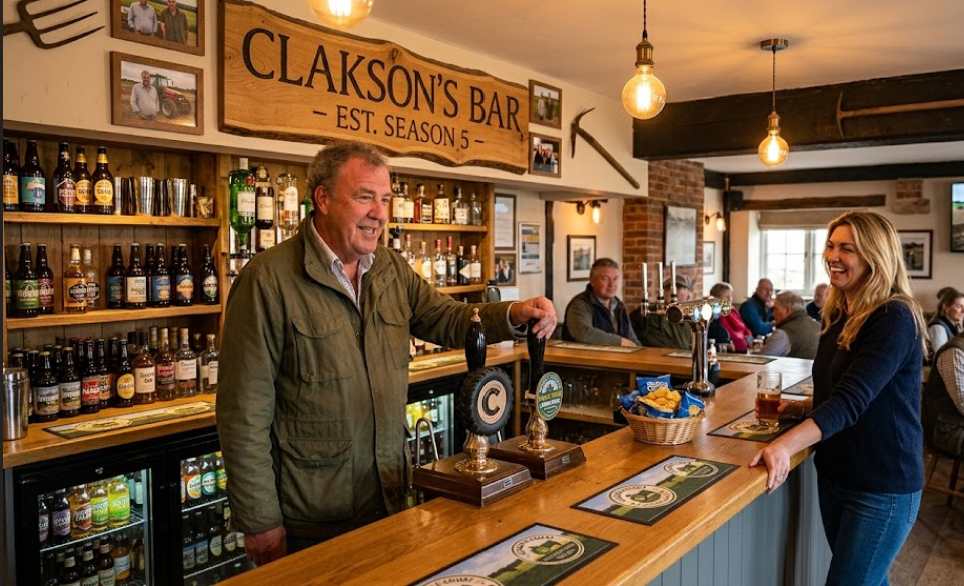
At the center of that ecosystem is The Farmer’s Dog, a hospitality site that quickly became symbolic of the entire model—British-only sourcing, direct supply chains, and strong brand identity.
However, analysts now argue that the system’s apparent success has masked a more fragile economic foundation. Unlike supermarket distribution networks that spread cost across volume and imports, Clarkson’s model is intentionally concentrated: higher-cost sourcing, local labor intensity, and infrastructure-heavy operations.
That design, once viewed as ideological strength, is now being re-evaluated as structural vulnerability.
THE FIRST LEGAL FLASHPOINT: A SYMBOLIC WARNING SIGN
The immediate catalyst for renewed scrutiny is a legal claim brought by a visitor alleging injury in a car park at The Farmer’s Dog site. According to the claim, the incident occurred on temporary metal coverings placed over uneven ground during ongoing development works.
While the case itself is still unfolding, analysts suggest its significance lies less in the individual claim and more in what it represents: the transition from media-backed enthusiasm to full-scale operational liability.
The car park, reportedly shaped by earlier disputes with local planning authorities including West Oxfordshire District Council, has become a focal point for risk exposure. What was once a regulatory victory enabling expansion is now part of a legal and safety framework under review.
In business terms, this marks a familiar inflection point: when infrastructure built during rapid growth enters its liability phase.
THE ECONOMICS OF IDEALISM
The deeper pressure, however, is financial rather than legal.
The Clarkson model relies heavily on a strict sourcing philosophy: exclusively British produce, high animal welfare standards, and minimal reliance on global supply chains. While this strengthens brand identity, it also creates one of the highest input-cost structures in the UK food and hospitality sector.
Rising wage costs, increased employer contributions, and higher operational overheads have compounded the issue. Analysts note that even modest changes in taxation and staffing obligations have disproportionate effects on businesses with low import flexibility.
In essence, every plate served at The Farmer’s Dog carries structural cost inflation that supermarket competitors do not face.
Where large retailers offset margins through scale and international sourcing, Clarkson’s system absorbs costs directly at the consumer interface.
THE SUPERMARKET RESPONSE: A WAR OF PERCEPTION
While Clarkson’s model has positioned itself as an alternative to supermarket pricing structures, industry observers argue that major retailers have not been passive.
Instead, supermarkets have increasingly leaned into “British branding strategies”—emphasizing Union Jack labeling, domestic-sounding product lines, and origin-focused marketing.
This creates what analysts describe as a “perception parity strategy”: if consumers believe they are buying British at lower prices, the competitive advantage of direct farm sourcing weakens.
The result is not a price war—but a meaning war.
And in that war, brand interpretation becomes as important as agricultural origin.
TAX POLICY AND THE LAND QUESTION
Perhaps the most structurally significant pressure point lies in proposed changes to agricultural inheritance tax frameworks.
Under new policy directions affecting farmland above certain valuation thresholds, estates like Diddly Squat Farm face potential long-term estate fragmentation risks. While adjustments and exemptions have softened initial proposals, analysts note that even partial implementation could force asset restructuring.
For integrated operations like Clarkson’s, this is critical.
The business model depends on land continuity: farm production feeds hospitality, hospitality funds branding, and branding sustains retail expansion. Breaking that chain through forced asset liquidation could destabilize the entire structure.
THE STRUCTURAL RISK: A CONNECTED ECOSYSTEM
What makes Clarkson’s enterprise unique is also what makes it vulnerable: everything is interconnected.
- The farm produces raw goods
- The pub and retail outlets consume and monetize those goods
- The brand narrative drives demand
- Media visibility sustains pricing power
But this system has limited redundancy. If one layer weakens—through taxation, legal liability, or cost inflation—the impact cascades across the entire model.
This is what analysts refer to as “tight coupling risk”: high efficiency, low flexibility.
A PERSONAL FACTOR IN AN INDUSTRIAL PROBLEM
Adding complexity to the situation is Clarkson’s high public visibility. As the face of Clarkson’s Farm, he is not only a business operator but also a cultural figure. That dual role amplifies both scrutiny and expectation.
In such environments, operational setbacks are rarely viewed as isolated events. They become part of a broader narrative about viability, fairness, and systemic pressure in British agriculture.
ANALYST OUTLOOK: THREE POSSIBLE PATHS
Industry observers outline three likely trajectories for the next phase of the empire:
1. Stabilization Through Scale Adjustment
Cost structures are recalibrated, expansion slows, and profitability is maintained through efficiency rather than growth.
2. Brand Consolidation Strategy
The business pivots further into media and premium positioning, accepting lower volume in exchange for higher margins.
3. Structural Retrenchment Risk
Rising costs, legal exposure, and tax pressure force partial asset sales or operational downsizing.
At present, none of these outcomes appears dominant—but all are plausible.
CONCLUSION: A SYSTEM UNDER TEST
The story of Clarkson’s rural empire is no longer simply about disruption or success. It has become a case study in how idealistic, vertically integrated food systems behave under sustained economic and regulatory pressure.
What began as a challenge to supermarkets has evolved into something more complex: a stress test of whether a high-cost, transparency-driven agricultural model can survive in a low-margin, high-regulation environment.
And as analysts continue to watch Clarkson’s Farm and its expanding ecosystem at Diddly Squat Farm, one question now dominates the discussion:
Not whether the empire works—but how long it can withstand everything working against it at once.