HIDDEN Chamber Detected! Emma Culligan Discover Oak Island’s Biggest Clue!
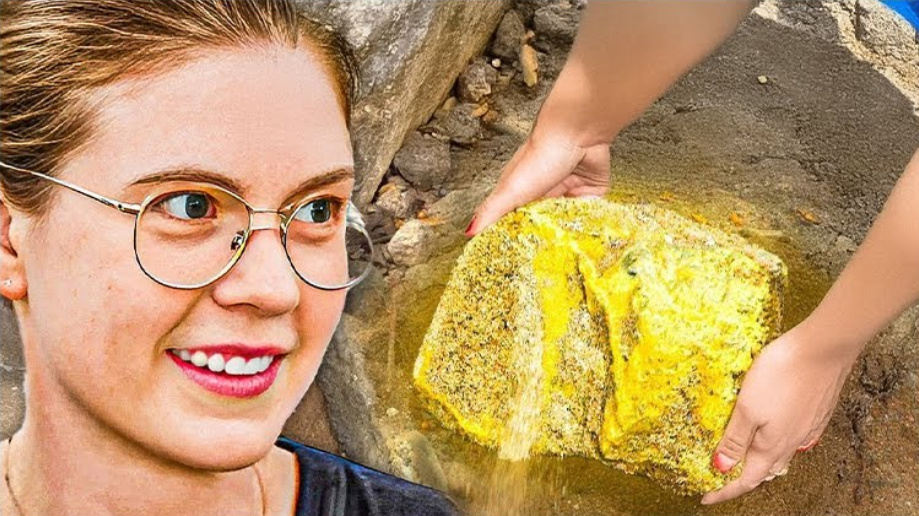
A newly uncovered underground structure on Oak Island has reignited debate over one of history’s most enduring mysteries, with researcher Emma Culligan describing the find as potentially the most important clue ever discovered on the island. Buried more than 30 feet below the surface, the structure appears deliberate, engineered, and far from accidental—raising fresh questions about who built it and why.
The discovery began during excavation through dense, waterlogged soil, when the team encountered a wooden board embedded deep underground. For Rick Lagina and the Oak Island team, the significance was immediate. This was not driftwood or debris displaced by centuries of flooding. The wood appeared placed, aligned, and preserved in a way that suggested it was part of something larger.
As digging continued, further signs of human construction emerged. A wall of rocks appeared, carefully stacked and positioned with what Culligan later described as “clear intent.” The alignment suggested planning rather than chance, as though the builders had followed a blueprint. Beneath the rockwork, more indications of a tunnel or chamber came into view, reinforcing long-standing theories that Oak Island’s underground features were designed, not natural.
In the war room, Culligan presented her findings in a characteristically restrained manner. There was no dramatic speculation—only data. Her material analysis revealed the presence of Portland cement within the concrete structure, a material consistent with construction methods used in the 18th and 19th centuries. Even more telling, the sand and gravel composition matched local Nova Scotia sources, suggesting the builders were familiar with the land and its resources.
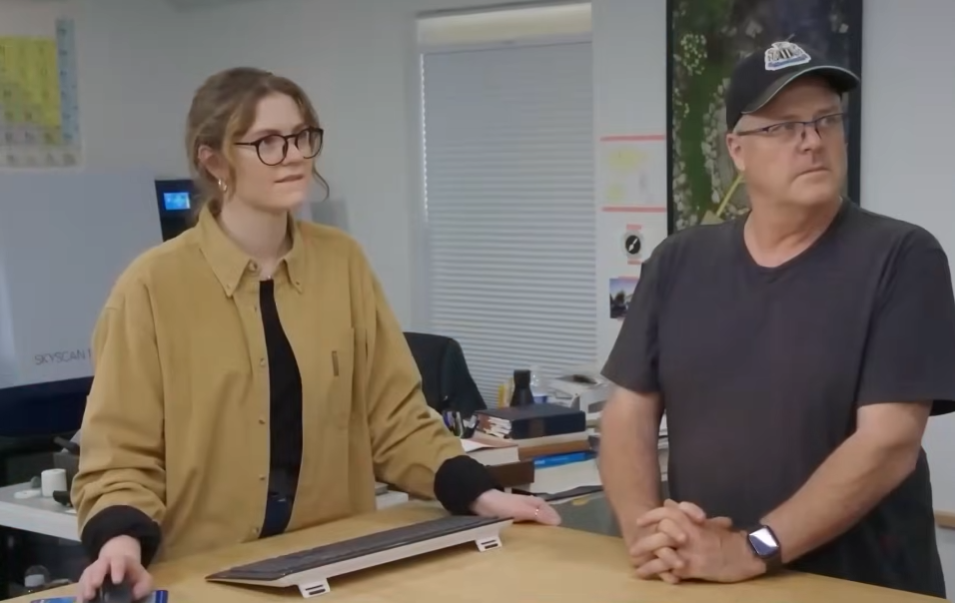
“This wasn’t imported from halfway around the world,” Culligan explained. “It was made here, by people who understood the environment and had access to tools, time, and planning.”
The dating of the materials also appeared to align with the activities of the Restall family, who worked on Oak Island in the 1960s. The Restalls believed they were close to solving the mystery and focused heavily on sealing what they thought was a flood tunnel. The newly uncovered concrete and structural elements may represent their attempt to block water intrusion—or evidence of something much older they were trying to access.
Rick Lagina suggested that if the structure corresponds with historical flood tunnel maps, it could confirm theories that Oak Island was deliberately engineered to protect something hidden deep underground. Unlike surface-level finds, this structure was intentionally buried, requiring enormous effort to conceal.
The implications are significant. Constructing tunnels, allowing seawater to flood them, installing traps, then sealing everything with beams, rock, and cement is not casual labour. It demands advanced planning, manpower, and substantial financial backing. As Lagina noted, “Nobody does this unless they are protecting something valuable.”
Culligan’s role in interpreting such discoveries has become increasingly central to the Oak Island investigation. Trained as an archaeometallurgist, she brings a rare blend of engineering precision and archaeological context. Her background is unusually diverse: raised partly in Japan, fluent in Japanese before learning English, and later trained in engineering and materials science.
Her academic journey included hands-on archaeological work at Memorial University of Newfoundland, followed by technical roles in materials testing and quality assurance. She later worked with underwater sites at Frontier Subsea Inc., examining structures most people never see. This experience prepared her for the complexity of Oak Island, where geology, metallurgy, and history intersect.
Culligan joined The Curse of Oak Island in Season 10, applying advanced analytical tools such as X-ray fluorescence and X-ray diffraction to artifacts recovered on the island. One notable moment involved her analysis of a lead object, where she identified its composition and suggested possible geographic origins—adding credibility to interpretations that artifacts may not all be local.
Beyond the show, Culligan has proposed a global artifact database, allowing researchers worldwide to compare material data across sites. Working with institutions such as the Fortress of Louisbourg, Acadia University, and the Black Loyalist Heritage Society, she aims to connect historical movements through physical evidence rather than speculation.
Oak Island itself has been a focal point of fascination for more than two centuries. Since 1795, when three teenagers reported wooden planks arranged like steps in a pit, the island has inspired countless theories. Finds such as old coins, coconut fibre, a lead cross, and strange stone alignments have fueled ideas ranging from pirate treasure to lost religious relics.

Yet despite advanced technology—ground-penetrating radar, sonar, and deep drilling—the island has yielded more questions than answers. The so-called “curse,” which claims seven must die before the treasure is found, adds a darker layer to the legend.
The newly discovered chamber does not resolve the mystery. Instead, it sharpens it. Unlike scattered artifacts, this structure suggests coordination and purpose. It points to people who understood engineering, materials, and concealment—and who were willing to invest heavily to keep something hidden.
As Culligan concluded in the war room, the evidence does not yet prove what was hidden, only that something was. And for the Oak Island team, that distinction is crucial. The fire in their eyes was not excitement alone, but resolve. After more than 200 years of speculation, the island may finally be yielding clues grounded not in legend, but in deliberate human action.