Who Was The Curse Of Oak Island’s Samuel Ball?

For more than two centuries, Oak Island has drawn treasure hunters, historians, and theorists from around the world. From the infamous Money Pit to hidden tunnels and unexplained structures, the small island off the coast of Nova Scotia has become synonymous with unanswered questions. Yet among the many figures linked to its past, few are as compelling—or as puzzling—as Samuel Ball.
Ball’s life story stands apart from the legends typically associated with Oak Island. Born in 1761 on a rice plantation near Charleston, South Carolina, his early years were shaped by hardship and uncertainty. During the American Revolution, however, Ball seized an opportunity that would alter his fate. In 1779, the British offered freedom to enslaved individuals who joined their cause. Ball escaped, eventually reaching New York and serving with a unit known for conducting daring raids against rebel forces.
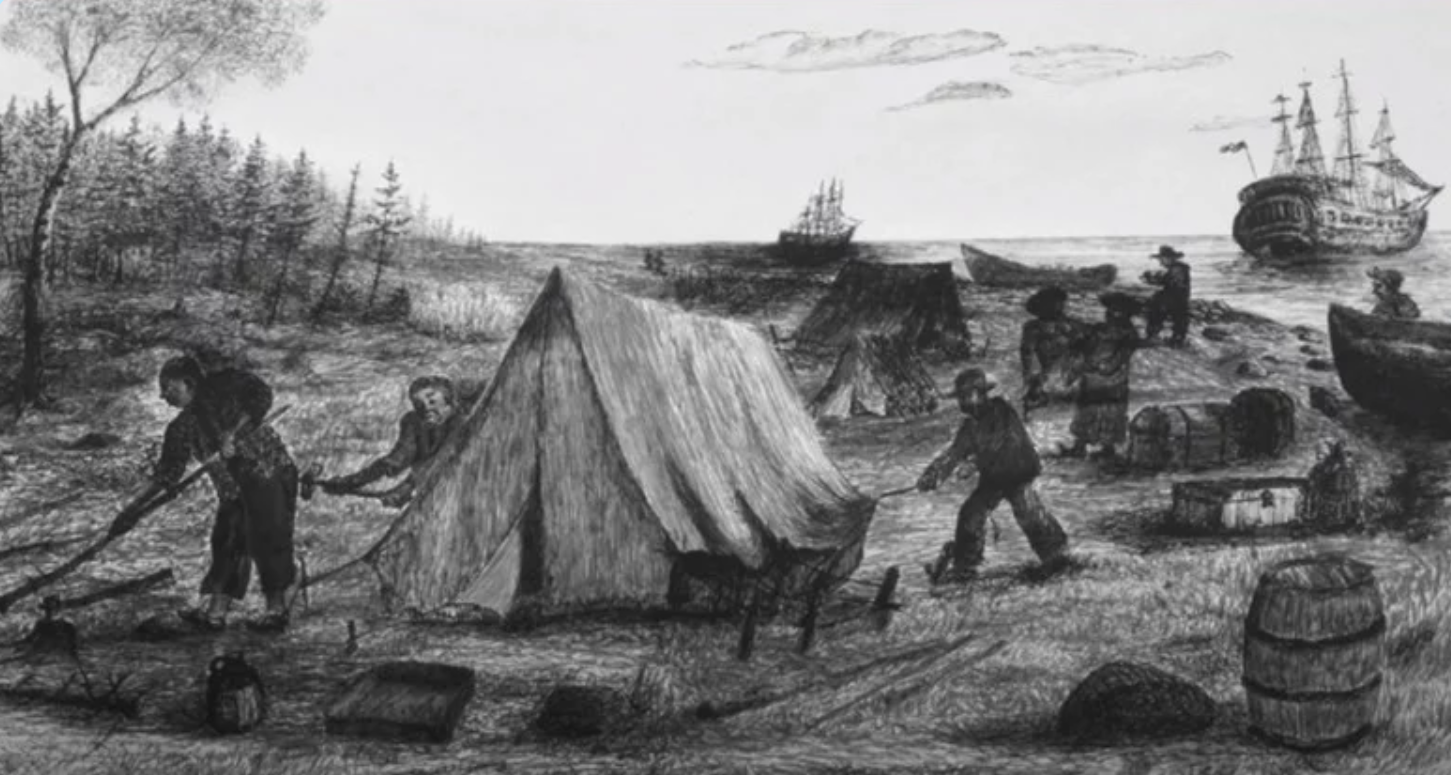
When the war ended, Ball followed thousands of Black Loyalists north to Nova Scotia, where the British Crown promised land and freedom. In 1787, he purchased Lot 25 on Oak Island. At the time, the property was considered unremarkable—remote, wooded, and largely undeveloped. Yet Ball’s decision to settle there has since raised questions, particularly given his proximity to Captain James Anderson, a former American privateer who had defected to the British. Whether their relationship was purely neighbourly or based on shared knowledge remains unknown.
What is clear is that Ball’s fortunes grew rapidly. By the early 1790s, he had acquired multiple properties on Oak Island, eventually owning several lots, including Lots 8, 24, and 36. His wealth far exceeded what most would expect from farming alone. Historians point to Ball’s business dealings with the British Navy as a likely source of his prosperity. He is believed to have supplied large quantities of cabbage, a key ingredient in sauerkraut, which helped prevent scurvy during long naval voyages.
When the Royal Navy later shifted to using citrus fruit as a source of vitamin C, the cabbage trade declined sharply. Yet Ball’s financial success did not. Records indicate that his landholdings and assets continued to expand, prompting speculation that his income came from additional, less visible sources.
The mystery deepened in 1795 with the discovery of the Money Pit. When three young men noticed a strange depression in the ground, they unknowingly triggered what would become one of the world’s longest-running treasure hunts. The timing of this discovery, combined with Ball’s extensive land ownership, has led many to wonder whether he knew more about Oak Island’s secrets than he ever revealed.
Some researchers suggest Ball may have been connected to events dating back even earlier. One theory links Oak Island to British military activity during the Seven Years’ War, particularly following the capture of Havana in 1762. That campaign resulted in vast quantities of gold and silver falling into British hands. According to some historians, portions of that treasure may have been hidden for safekeeping, possibly in remote locations such as Oak Island. Ball’s connections to the British Navy and his reputation for reliability have made him a central figure in such theories.
Modern investigations have added weight to these suspicions. In 2016, metal detection expert Gary Drayton and Oak Island historian Charles Barkhouse began surveying Lot 24, once part of Ball’s holdings. Their work uncovered coins and other artefacts that suggested activity far beyond ordinary settlement. These finds aligned with the ideas of the late treasure hunter Fred Nolan, who argued that Oak Island contained multiple hidden caches rather than a single deposit.
Further attention returned to Ball’s original homestead in 2019, when Rick and Marty Lagina’s team used ground-penetrating radar on Lot 25. The scans revealed an underground anomaly beneath the former foundation of Ball’s home. Excavation uncovered a stone box drain leading toward the shoreline. Although a camera inserted into the structure found it empty, the discovery raised new questions about whether the tunnel once served a larger purpose.

Additional artefacts have continued to surface. Among them were a fragment of fabric believed to be from a British Navy jacket and a gold-gilded officer’s button. Such items suggest Ball had direct contact with British military personnel, reinforcing theories that his role extended beyond farming and trade.
Taken together, Ball’s wealth, property ownership, underground structures, and military connections paint a picture that is difficult to dismiss. Whether he was involved in hiding valuable materials, safeguarding important assets, or simply benefitting from well-placed relationships remains unresolved.
As excavation continues across Oak Island, researchers are uncovering more than physical evidence. They are piecing together the life of a man who rose from enslavement to become one of Nova Scotia’s most prosperous landowners. Samuel Ball’s story is one of resilience, opportunity, and unanswered questions.
The central mystery remains unchanged. Was Samuel Ball merely a successful entrepreneur who chose Oak Island by chance? Or was he entrusted with knowledge—or responsibility—connected to one of history’s most enduring legends? As the search goes on, it is increasingly clear that understanding Oak Island may depend as much on understanding Samuel Ball as on what lies beneath the ground.