What Chris Doumitt’s Return Could Mean for Parker Schnabel’s Gold Rush Season
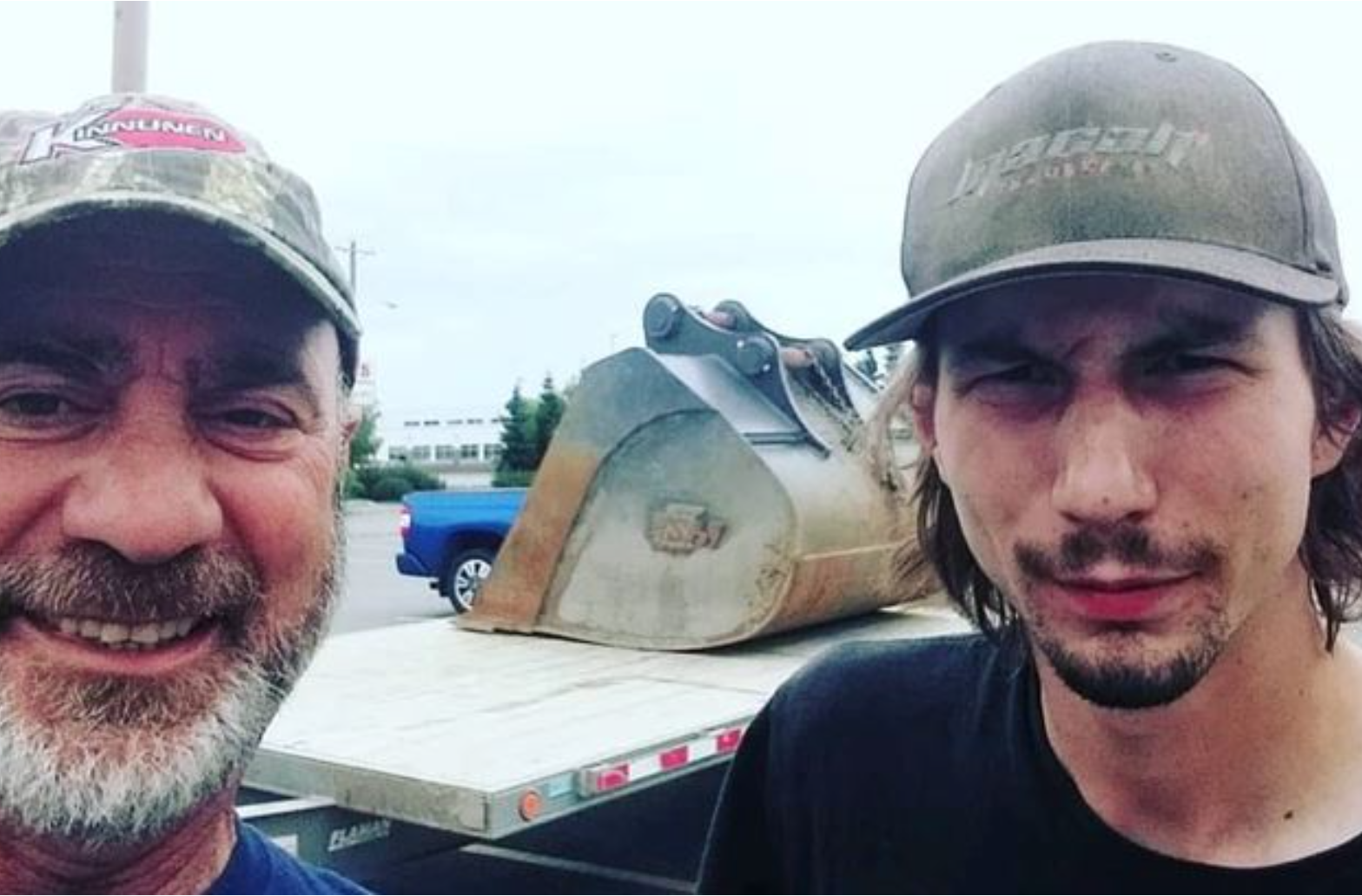
In the evolving ecosystem of Gold Rush, personnel changes often carry as much weight as new ground acquisitions or equipment upgrades. The reported return of Chris Doumitt to Parker Schnabel’s crew is therefore more than a nostalgic reunion. From an analytical standpoint, it signals a recalibration of leadership, experience, and operational balance at a moment when Parker’s mining strategy demands reliability as much as ambition.
Chris Doumitt occupies a distinctive place in Gold Rush history. Unlike many cast members who arrived with established mining backgrounds, Doumitt entered the series from a construction and carpentry background. Over time, he evolved into one of the most dependable problem-solvers on site—someone capable of bridging the gap between mechanical improvisation and disciplined work ethic. His value has never been measured solely in ounces recovered, but in downtime prevented.
For Parker Schnabel, whose recent seasons have involved increasingly complex, multi-claim operations, that distinction matters. As Parker’s mining footprint has expanded, so too has the margin for small failures to snowball into costly delays. Wash plant bottlenecks, structural issues, and on-site inefficiencies have become just as critical as ground quality. Doumitt’s return suggests a renewed emphasis on operational stability rather than constant expansion.

From a programme analysis perspective, this move also reflects Parker’s evolving leadership style. Earlier in his career, Parker leaned heavily on scale—more ground, more equipment, more throughput. Recent seasons, however, have revealed the limitations of that approach when manpower and experience are stretched thin. Bringing back Doumitt indicates recognition that depth of expertise can be as important as raw production capacity.
One immediate implication is how Doumitt may influence Parker’s core crew dynamic. He has historically served as a grounding presence—someone respected across departments, not tied to a single machine or role. That versatility is particularly valuable in high-pressure mid-season pivots, when crews must adapt quickly to changing ground conditions or unexpected breakdowns. Analysts should expect Doumitt to be positioned not as a front-facing leader, but as a quiet stabiliser behind the scenes.
Strategically, Doumitt’s return may also signal a shift in Parker’s seasonal objectives. Rather than chasing record-setting totals, the emphasis may move toward consistency and risk control. This aligns with broader trends seen in Parker’s recent decisions: targeted claim acquisitions, incremental equipment upgrades, and a willingness to adjust timelines instead of forcing output under suboptimal conditions.
There is also a narrative dimension to consider. Gold Rush has increasingly highlighted the cost of sustained pressure on crews—both physically and mentally. Doumitt’s presence offers producers a familiar figure who embodies endurance rather than confrontation. His return provides a counterweight to the younger, faster-paced energy that often dominates Parker’s operation, reinforcing a theme of experience complementing ambition.
Looking ahead, several likely developments emerge. First, expect Doumitt to be heavily involved in early-season setup and troubleshooting. His skill set is best utilised before production ramps up, when foundational decisions determine how smoothly the season unfolds. Second, his influence may reduce visible on-screen friction within the crew, as fewer issues escalate to crisis points. Third, his return could allow Parker to delegate more effectively, freeing him to focus on strategic oversight rather than day-to-day mechanical problem-solving.

It is also worth noting how Doumitt’s return could affect Parker’s long-term planning. As Parker moves further into multi-year claim development, the need for institutional knowledge becomes more pronounced. Doumitt represents continuity—a living archive of lessons learned across multiple seasons. That institutional memory can inform decisions about equipment layout, staffing, and maintenance cycles in ways spreadsheets cannot.
From a broader Gold Rush analysis standpoint, the move reinforces a recurring pattern: teams that balance innovation with experience tend to outperform those that rely on scale alone. Doumitt’s return does not guarantee higher gold totals, but it increases the probability of smoother operations, fewer lost days, and more efficient recovery across the season.
For viewers, the significance may be subtle rather than immediate. There may be fewer dramatic turning points, but more sustained progress. For Parker Schnabel, that trade-off could prove decisive. In an environment where margins tighten quickly and seasons are increasingly compressed, dependability becomes a competitive advantage.
Ultimately, Chris Doumitt’s return should be read as a strategic choice rather than a sentimental one. It reflects Parker’s growing awareness that success in modern placer mining is not defined by bold moves alone, but by the people capable of making those moves work, day after day. If that calculation holds, this reunion may quietly shape one of Parker’s most disciplined seasons yet.