Tony Beets BANNED From Mining, Parker Wastes No Time and Takes All Gold!

The balance of power in the Klondike gold fields appears to be shifting, following a sudden regulatory shutdown that forced veteran miner Tony Beets off one of his most significant claims. Within days, the fallout created an unexpected opening—one that Parker Schnabel moved to exploit with remarkable speed and precision.
For years, Beets has been synonymous with scale and stubborn independence, operating some of the largest and loudest mining setups in the Yukon. His reputation was built on pushing limits, often clashing with regulators while maintaining production at levels few could match. That reputation, however, became a liability when inspectors sealed his equipment and suspended operations over unresolved environmental and reclamation concerns. The shutdown was immediate, comprehensive, and—crucially—open-ended.
What followed was less about spectacle and more about strategy.
While Beets contested the decision publicly and prepared appeals behind the scenes, Schnabel treated the moment as a logistical problem to be solved. According to sources familiar with the situation, Schnabel had already mapped access routes, water management options, and lease boundaries surrounding the affected ground. When the claim went idle, his team was ready.
Within hours, trucks were rerouted, machinery mobilised, and paperwork filed through a newly structured operating entity designed to comply fully with territorial requirements. By the time much of the mining community was still debating the fairness of Beets’ shutdown, Schnabel’s operation was already breaking ground nearby.
The contrast between the two approaches could not have been clearer. Beets, long accustomed to relying on experience and force of will, found himself stalled by process. Schnabel, whose rise has been marked by methodical planning and legal discipline, moved forward without delay.
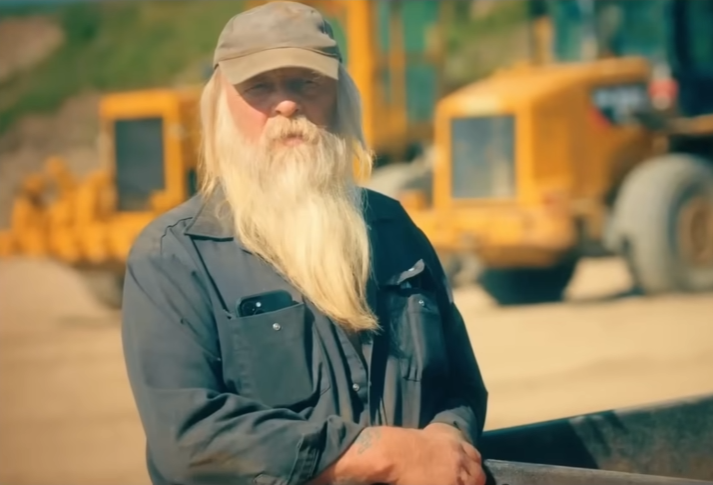
Industry insiders note that the ground left behind was not marginal. Portions of the claim had been stripped but not yet processed, leaving behind rich pay that could be accessed quickly by a well-organised crew. Early test runs reportedly produced encouraging results, reinforcing the belief that Schnabel’s decision was based on more than opportunism—it was rooted in data.
The response across the Yukon was swift. Miners, regulators, and local communities began to reassess long-held assumptions about who truly controls the future of large-scale placer mining in the region. Beets’ shutdown raised uncomfortable questions about whether the era of rule-bending giants is giving way to a new model—one where compliance, transparency, and corporate structure matter as much as experience.
Public reaction mirrored that divide. Some viewed Beets as a symbol of a fading frontier spirit, targeted for refusing to soften his methods. Others argued that the enforcement was inevitable, pointing to years of warnings and unresolved obligations. Schnabel, meanwhile, was praised by supporters for acting decisively—but criticised by detractors who felt the move was too calculated, too fast.
From a broader perspective, the episode highlights a growing reality in modern gold mining: success increasingly depends on navigating regulation as carefully as geology. Environmental oversight has tightened across the Yukon, and tolerance for delayed reclamation or unauthorised expansion has narrowed. Miners who adapt quickly stand to gain; those who resist may find themselves sidelined.
For Schnabel, the move represents more than a short-term production boost. It reinforces his long-term strategy of controlling infrastructure, access points, and surrounding leases—an approach that limits competitors’ options while maximising flexibility. By consolidating ground around the former Beets operation, Schnabel has effectively reshaped the local mining map without crossing a single boundary.
For Beets, the road back remains uncertain. Appeals can take months, sometimes longer, and even a successful outcome may come with new restrictions. In the meantime, idle equipment and displaced crews represent real costs. The longer the shutdown lasts, the harder it becomes to reclaim momentum in a region where seasons are short and windows of opportunity close quickly.

Observers of Gold Rush will recognise the moment as a rare convergence of regulatory reality and competitive ambition—one that exposes how fragile even the largest mining empires can be when conditions change. It also underscores how thoroughly Schnabel has evolved from prodigy to operator, capable of turning disruption into advantage without hesitation.
Whether this marks a permanent shift or a temporary setback remains to be seen. The Klondike has a long memory, and fortunes there have a habit of turning with the seasons. But for now, the message is clear: in today’s Yukon, preparation outweighs bravado, and the miner who moves first often defines the outcome.
As winter tightens its grip and legal proceedings unfold, one truth stands out. The ground may be frozen, but the contest for control of the Klondike is very much alive—and its next chapter is already being written.