Jeremy Clarkson’s giant tractor caused chaos for 7 minutes – What happened to this tractor?
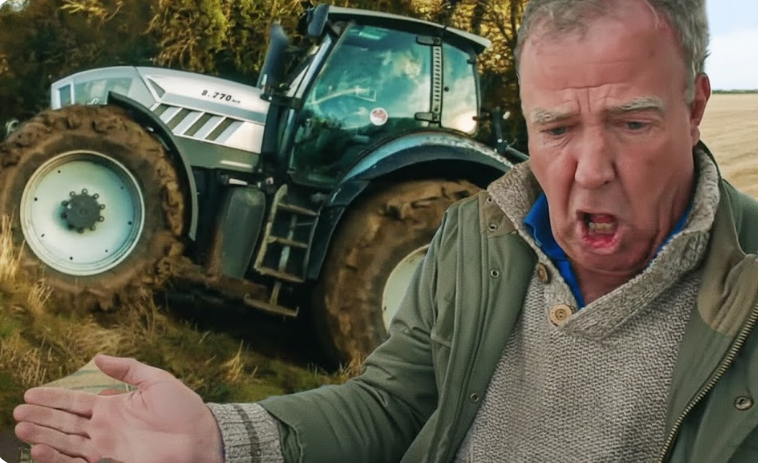
In many ways, this episode of Clarkson’s Farm delivers a moment that perfectly captures the spirit of the show: ambition colliding head-on with reality. What begins as an excited unveiling of a powerful new tractor quickly turns into a masterclass in why farming experience, practicality, and local knowledge matter more than horsepower—or price tags.
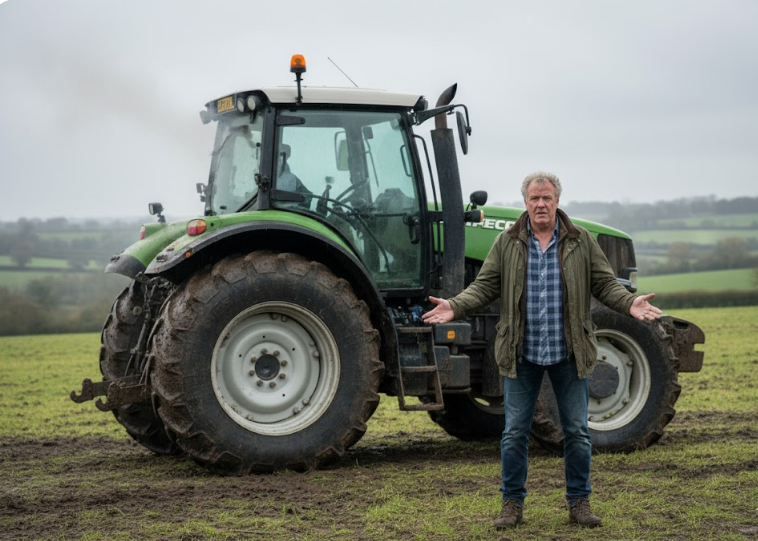
When Jeremy Clarkson introduces his latest purchase, the enthusiasm is unmistakable. The machine is vast, imposing, and technologically advanced. With dozens of forward and reverse gears and the sheer presence of industrial might, it represents everything Clarkson believes modern farming equipment should be. Compared to his modest old Massey Ferguson, this new tractor feels like a bold upgrade—an unmistakable statement of progress.
That confidence, however, lasts only until the tractor arrives at Diddly Squat Farm.
When Bigger Isn’t Better
The first problem appears almost immediately: the tractor simply does not fit. The sheds are too small, the clearances too tight, and the scale of the machine suddenly feels less impressive and more impractical. The situation worsens when Clarkson discovers that the tractor’s hitch system—designed for continental Europe—renders it incompatible with much of his existing equipment.
What follows is a familiar Clarkson ritual: frustration, confusion, and a frantic attempt to translate foreign manuals written in multiple languages. German becomes Italian, Italian turns into French, and none of it provides a solution. The tractor refuses to move properly, the controls seem incomprehensible, and even basic functions remain locked behind unfamiliar systems.
Despite hours of effort, the source of the problem remains elusive. This is not a failure of machinery, but a failure of preparation—a recurring theme throughout the series.
Kaleb Cooper’s Reality Check
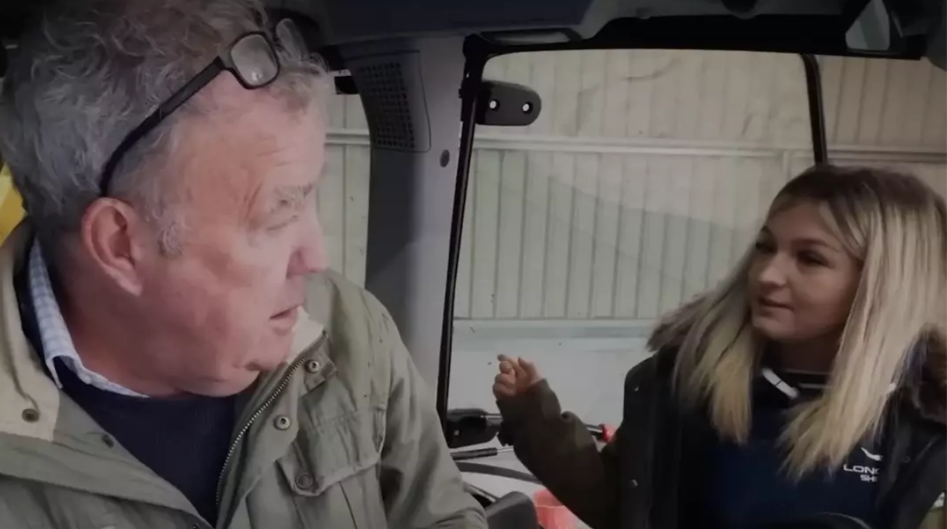
Enter Kaleb Cooper, whose role as the grounded counterbalance to Clarkson is once again on full display. Kaleb’s assessment is immediate and blunt: the tractor is too wide, too heavy, and unsuitable for the task at hand. Using it for planting would damage freshly worked soil, flatten rows, and undo hours of careful preparation.
From Kaleb’s perspective, the solution is obvious. The smaller, older tractor—the one Clarkson initially dismissed—was better suited to the job. It fits the land, matches the equipment, and respects the limitations of the field. This difference in thinking highlights one of the show’s most enduring tensions: innovation versus suitability.
Clarkson, naturally, resists. Pride plays its part, as does the belief that superior machinery should overcome any obstacle. But farming, as the show repeatedly demonstrates, does not reward ego.
From Confidence to Crisis
The turning point arrives when the oversized tractor becomes physically stuck. Mud, uneven ground, and narrow access routes combine to trap the machine in place. Attempts to power through only worsen the situation, and soon even Clarkson recognises the seriousness of the predicament.
The rescue effort becomes an episode within the episode. Kaleb attempts to pull the tractor free, only to require assistance himself. A third tractor is brought in, creating a chain of machines working together in a carefully coordinated effort. Instructions fly back and forth, directions are misunderstood, and progress is painfully slow.
The sequence is chaotic, exhausting, and deeply revealing. It strips away the illusion of control and replaces it with teamwork, patience, and humility.
A Lesson Learned—Eventually
By the time the tractor is finally freed, the mood has shifted. Exhaustion replaces bravado, and Clarkson’s tone softens noticeably. The machine he once mocked—the smaller tractor he had been dismissive of—is suddenly appreciated for its agility, reliability, and suitability to the land.
In a rare moment of reflection, Clarkson admits that his earlier criticism may have been misplaced. The tractor he initially belittled proves to be exactly what the farm needs. It navigates tight spaces, handles uneven terrain, and completes the job without unnecessary complication.
This admission is more than comedic closure. It underscores one of Clarkson’s Farm’s central messages: farming is not about showing dominance over the land, but working in harmony with it.
Why This Moment Matters
From an analytical viewpoint, this tractor saga encapsulates why the series resonates so strongly with audiences. The appeal does not lie in flawless execution, but in visible learning. Clarkson’s willingness—however reluctant—to accept correction transforms failure into progress.
The episode also reinforces Kaleb Cooper’s growing importance within the show. His practical knowledge, calm authority, and refusal to be impressed by size or cost make him an essential anchor. Without him, Clarkson’s enthusiasm would likely spiral unchecked.
More Than Machinery
Ultimately, this is not a story about tractors. It is about adaptation, listening, and recognising limits. The laughter comes easily, but the lesson lingers. Farming demands respect for scale, terrain, and experience—qualities no machine can replace.
As Clarkson himself comes to realise, sometimes the right tool is not the biggest or most impressive one, but the one that fits. And in that quiet moment of acceptance, Clarkson’s Farm once again proves that its greatest strength lies not in spectacle, but in honesty.