Parker Schnabel’s bold move at Dominion Creek: How a risky trade led to gold, losses, and unanswered questions.

When Parker Schnabel committed to Dominion Creek, it was meant to be the defining move of his mining career. The Yukon property carried near-mythical status among Klondike miners, whispered about as ground that could still hold tens of thousands of ounces of gold. With more than 7,500 acres of historic claims and decades of speculation attached to its name, Dominion Creek promised scale unlike anything Parker had attempted before.
But ambition alone does not move frozen ground.
From the outset, the project proved far more punishing than expected. The gold Parker hoped to unlock lay buried deep beneath permafrost, some 40 feet below the surface, sealed in ground as hard as reinforced concrete. Early plans to build momentum by re-processing old tailings quickly unraveled. Heavy equipment began to fail in rapid succession, turning what should have been a controlled start into a costly struggle.
Excavators lost teeth. Hydraulic systems ruptured under pressure. Bulldozers spent more time idle than pushing dirt. Each breakdown carried a price tag, and as repair bills mounted, so did the strain on the crew. Dominion Creek did not feel like a fresh opportunity; it felt like an adversary.
Morale inside the camp dipped sharply. Long hours in sub-zero conditions are difficult even when gold shows up in the pans. When it does not, doubt sets in fast. For a time, the numbers simply did not add up. Fuel, wages, and parts drained capital while returns remained stubbornly thin. The goal of extracting 5,000 ounces in a single season began to look increasingly distant.
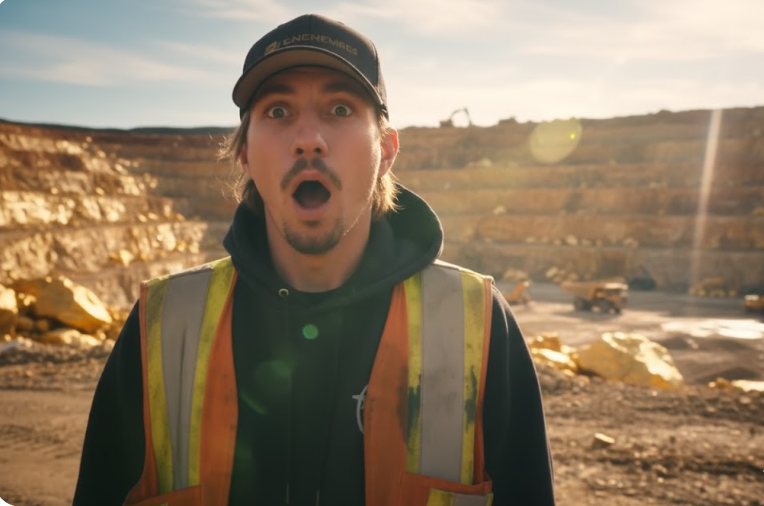
Recognising that the operation needed more than persistence, Parker looked beyond the Yukon for answers. His search led him to New Zealand, where he studied high-capacity wash plant designs capable of processing enormous volumes of material efficiently. What he found inspired a radical decision: if no existing system could handle Dominion Creek’s demands, he would build one himself.
The result was a custom wash plant known as Roxanne — a million-dollar investment layered on top of an already massive commitment. Designed to process deeper, tougher ground at higher volumes, Roxanne represented a technological reset for the operation. When it first came online, the results were immediate and encouraging. Early runs produced meaningful gold, offering the first genuine sense that Dominion Creek could deliver.
Yet even new equipment proved vulnerable to the Yukon’s extremes. Minor mechanical faults halted production. Water systems failed in freezing conditions. Each restart felt fragile. Progress came in bursts rather than steady strides.
Then, unexpectedly, the ground offered something different.
During one cleanup, the crew uncovered a rare dendritic gold nugget — a naturally occurring crystalline form shaped like branching lightning frozen in metal. Though modest in weight, the find carried outsized significance. Dendritic gold forms under specific geological conditions and is prized for both its rarity and beauty. More importantly, it signaled that Dominion Creek held not just quantity, but quality.
Soon after, a far larger discovery followed. A massive boulder obstructing the pay layer revealed visible gold veins across its surface. When the rock was carefully split, it exposed a solid gold mass weighing approximately 100 ounces — a single piece worth around $200,000 at current prices.
Celebration was brief. During extraction, the nugget fractured into multiple pieces. While none of the gold was lost, its value as a unique collector specimen vanished in seconds. What remained was still valuable bullion, but the moment captured the contradictory nature of Dominion Creek: extraordinary reward paired with immediate consequence.
These highs and lows have fueled ongoing discussion among viewers of Gold Rush. Some question whether the timing of discoveries and setbacks feels overly convenient for television. Others focus on the scale of investment involved, noting that modern mining at this level almost certainly requires financial backing beyond what appears on screen.
The presence of unseen investors, profit-sharing arrangements, and silent partners is common across large-scale resource extraction. Such structures would explain how operations withstand prolonged periods of limited returns without collapsing. While there is no evidence of manipulation, the economics of modern mining suggest layers of business activity that remain off-camera.
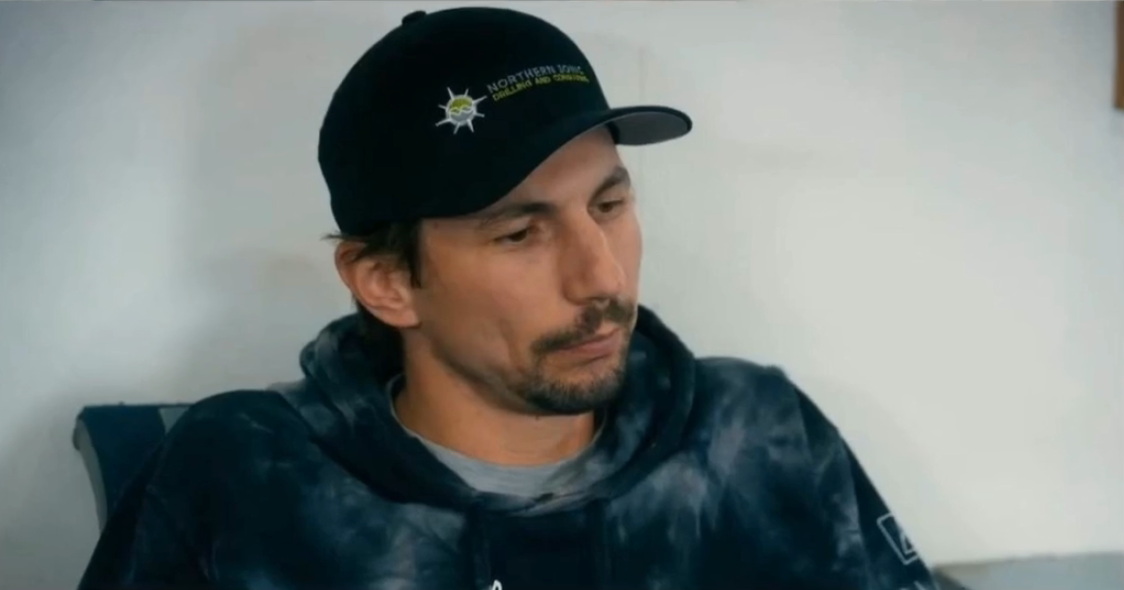
What is undeniable is the pressure. Dominion Creek demanded constant adaptation, rapid decision-making, and acceptance of losses alongside gains. Equipment failures, fractured finds, and frozen ground tested the limits of even a seasoned operation.
For Parker Schnabel, the season at Dominion Creek stands as a defining chapter. It demonstrated the cost of scale, the limits of planning, and the unforgiving nature of deep-ground mining. It also reinforced a central truth of the Klondike: gold may be hidden in abundance, but it is never given freely.
Whether Dominion Creek ultimately fulfills its legendary promise remains an open question. What is clear is that success there requires far more than rich ground — it demands resilience, capital, and the ability to absorb disappointment without losing momentum.
In the Yukon, fortune is never straightforward. It arrives layered in ice, steel, and uncertainty.