NOT FOR SALE: Jeremy Clarkson Rejects £100M “Bribe” from Bill Gates in Battle for British Farmland
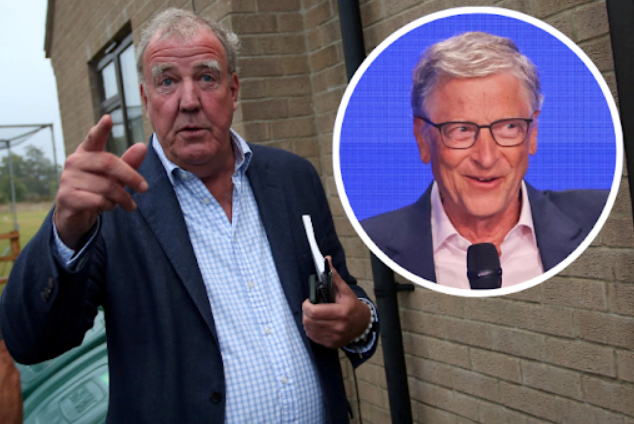
Jeremy Clarkson, the broadcaster turned unlikely champion of British agriculture, has revealed he rejected a staggering £100 million offer from Microsoft co-founder Bill Gates to buy his now-famous “Diddly Squat” farm. The revelation has sparked a national debate over the corporate “consolidation” of the British countryside and the future of food security.
The Offer He Had to Refuse
The saga began with a “fancy envelope” delivered by a high-end courier, originating from a prestigious law firm in Seattle. Inside was an initial offer of £50 million—nearly triple the market valuation of the 1,000-acre Oxfordshire estate.
“Diddly Squat is a nice farm, but it is not a £50 million farm,” Clarkson wrote in a recent editorial. “It’s muddy, it leaks, and it’s full of sheep that actively dislike me. £50 million isn’t a valuation; it’s a bribe.”
When Clarkson issued a blunt, two-word refusal, the stakes escalated. Over several months, the offers climbed to £70 million, then £85 million, finally peaking at a “final offer” of £100 million. The intent, Clarkson argues, was not merely to acquire land but to test whether a prominent voice could be silenced by “ridiculous numbers.”
The “Quiet” Land Grab
While Clarkson was learning the nuances of tractor maintenance for his hit series Clarkson’s Farm, he noticed a pattern emerging across the Cotswolds. Local farms were being snapped up by a web of shell companies and investment vehicles with “boring names.”
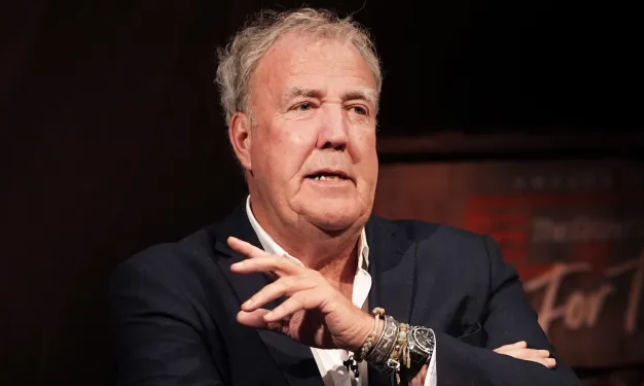
Investigations by Clarkson’s team revealed that these acquisitions were linked back to Gates, who has quietly become the largest private farmland owner in the United States and is now reportedly turning his sights toward the United Kingdom.
“This is billionaire language for ‘I’ll own everything and you’ll be allowed to watch,'” Clarkson noted. He described a strategy of “strategic consolidation,” where corporate entities buy every plot surrounding a “holdout” farmer, effectively controlling the local environment through planning applications and industrial-scale development.
Sustainable Agriculture or Industrial Monopoly?
The conflict highlights a growing tension between traditional family farming and “Big Tech” agriculture. Clarkson alleges that the phrase “sustainable agriculture” is being used as a corporate shield to justify the industrialization of the countryside.
Shortly after his refusal, the areas bordering Diddly Squat were hit with planning applications for massive equipment storage facilities and “research and development” hubs. Clarkson describes this as “death by bureaucracy”—a system where billionaires can outspend local councils on consultants until every objection is crushed under paperwork.
“They didn’t need to buy my farm straight away,” Clarkson said. “They just needed to own everything around it. Once you control the land next door, you control the noise, the traffic, and the environment.”
A Moral Decision
Despite the pressure, Clarkson maintains that his refusal was a moral choice rather than a financial one. He warned that when farmland stops belonging to the people who work it, the decision-making power over what the nation eats moves from the mud of Oxfordshire to glass offices in Seattle.
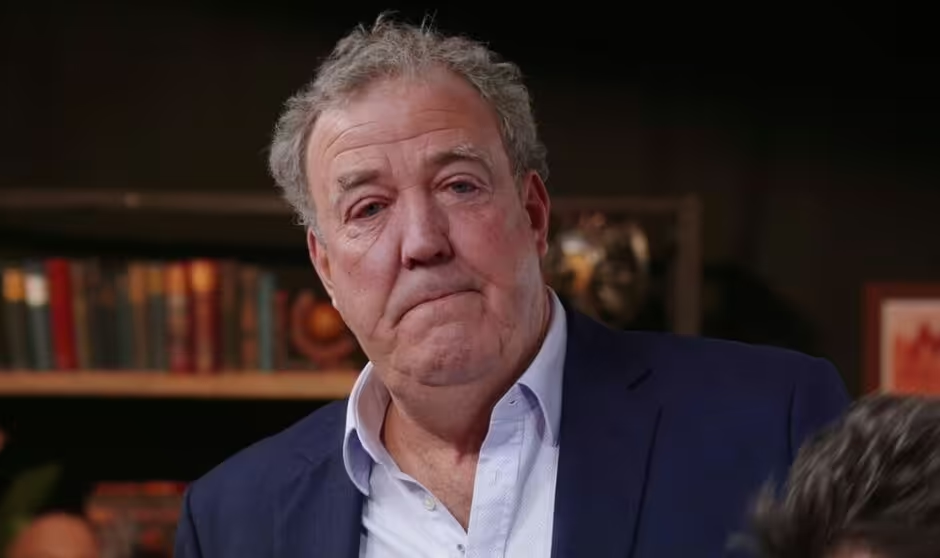
The public nature of Clarkson’s stand has already had an impact. Since going public, other farmers have come forward with similar stories of aggressive outbidding by anonymous shell companies. The issue has reached the halls of Westminster, where MPs are beginning to question the implications of foreign corporate monopolies on the UK’s food supply.
For now, the gates of Diddly Squat remain closed to the billionaire. “I’m still farming, still dealing with mud, and still being ignored by my sheep,” Clarkson concluded. “The offers stopped not because they ran out of money, but because they ran out of silence.”