Jeremy Clarkson DESTROYS Farming Minister Over Broken ‘BREXIT’ — RED ALERT Britain Farmers

In the space of just 18 months, more than 3,000 British farms have disappeared. Not conglomerates or speculative ventures, but family-run operations that, in many cases, had survived for generations. At the same time, government support for farmers has fallen sharply, paperwork has multiplied, and ministers continue to describe the changes as progress. The growing question across rural Britain is no longer whether farming is under pressure — it is who current policy is actually designed to serve.
Before Brexit, farmers were given clear assurances. Leaving the European Union, they were told, would bring greater control, stronger domestic agriculture, and better-targeted support. In 2016, Michael Gove publicly argued that farmers would have more money to invest in productivity and animal welfare once EU structures were replaced. Those pledges mattered. Many rural communities voted on the strength of them.
Nearly a decade later, the reality looks very different.
Ministers now point to a headline figure of £2.4 billion a year in agricultural support as evidence that farming remains protected. That figure, cited recently by Victoria Atkins, sounds substantial — until it is placed in context. Under the EU’s Common Agricultural Policy, direct payments were around 35% higher. Between 2024 and 2026, those payments are being reduced by more than a third.
This is not a theoretical adjustment. It is a material loss of income, felt immediately on working farms. Bills do not wait for transitions to settle. Feed costs do not pause while systems are restructured. Banks do not accept future environmental outcomes in place of repayments. When a third of support disappears, the effect is structural.
The language used to describe this shift matters. Ministers speak of reform and transition, but avoid the word loss. On the ground, however, the outcome is unmistakable. Farm incomes have fallen by around 20%. Employment in the sector is down roughly 15%. These are not marginal fluctuations. They represent a sustained contraction.
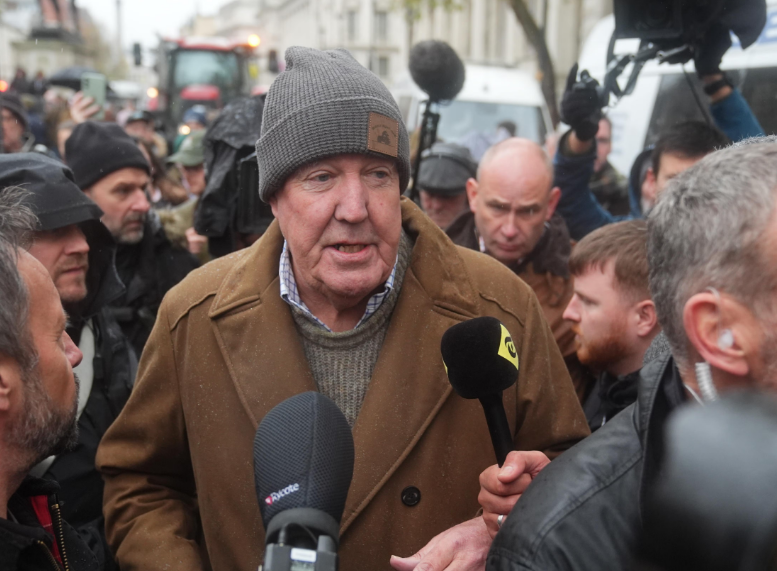
Each farm closure carries consequences that rarely appear in policy documents. A family loses its home. A son or daughter loses a livelihood they were raised to inherit. Local suppliers lose customers. Villages lose jobs and stability. None of this fits neatly into a ministerial briefing, but it shapes the countryside nonetheless.
At the centre of the new system is the Environmental Land Management scheme (ELMs), presented as a smarter, greener replacement for EU subsidies. In principle, rewarding environmental stewardship is difficult to argue against. In practice, the scheme has introduced a level of bureaucracy that many small farmers struggle to manage.
Application packs can run to dozens of pages, requiring detailed evidence, ongoing monitoring, and compliance checks. For large landowners or organisations with access to advisers, this is manageable. For a 60-year-old livestock farmer already working seven days a week, it can be overwhelming. The irony is stark: more paperwork, for less money, in a system that was sold as simpler and more generous.
The result is a quiet but significant reshaping of land ownership. When small farms collapse, the land rarely passes to another struggling family farmer. Instead, it is often bought by corporations or wealthy investors. These buyers are not villains; they are responding rationally to the incentives created. They manage land as an asset, meeting minimum requirements to qualify for payments, with limited personal connection to place.
This has implications far beyond ownership. Traditional family farms maintain hedgerows, ditches, stone walls and meadows not because a scheme instructs them to, but because it is embedded in their way of life. When those farms disappear, the cultural knowledge that sustained the landscape disappears with them.
Government ministers continue to point to environmental gains, but critics argue that fewer farmers and larger owners do not automatically translate into better outcomes. Compliance can replace care. Forms can replace familiarity. Once land changes hands, it rarely returns to the communities that shaped it.
There is also a national dimension to consider. According to figures published by Department for Environment, Food and Rural Affairs, the UK’s food self-sufficiency has declined from around 61% in 2020 to 58% in 2025. That shift may appear modest, but its direction is troubling. Less domestic production means greater reliance on imports — food produced under standards Britain does not control.
This trend is not driven by climate alone or global markets alone. Those pressures exist everywhere. What differs is policy response. Weakening domestic farming at a time of global uncertainty carries long-term risk. A country that cannot reliably feed itself becomes more exposed to disruption, whether from trade disputes, supply chain shocks or extreme weather.
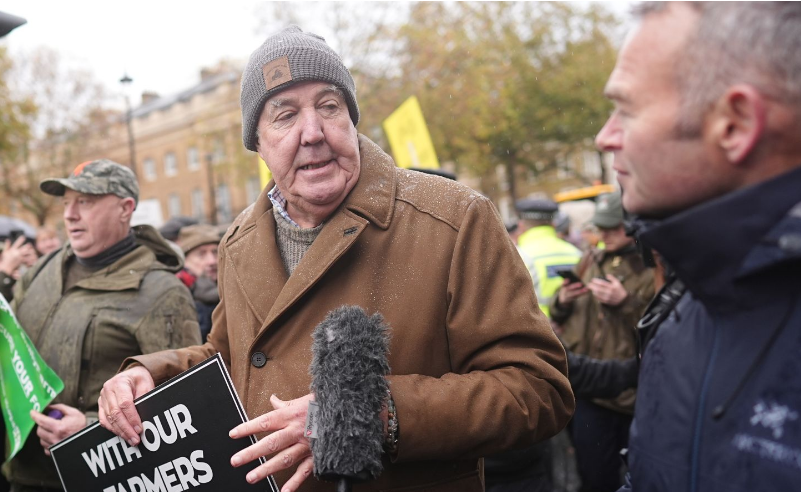
At the heart of the debate is a simple question: are farmers better off now than they were before Brexit? It is a question that cuts through frameworks, schemes and slogans. If the answer were yes, it would be easy to say. Instead, it is met with hesitation and deflection.
The outcomes are visible. Less support. More bureaucracy. Fewer farms. Lower output. Greater dependence on imports. These are not matters of opinion; they are measurable trends.
British farmers have not forgotten how to farm. What has changed is the system around them — a system that promised empowerment and delivered strain. When policy language can no longer mask lived experience, silence becomes its own verdict. And in rural Britain, that silence is growing louder.