A rare gold discovery in the Yukon could reshape the gold rush — who will be the owner of this gold?
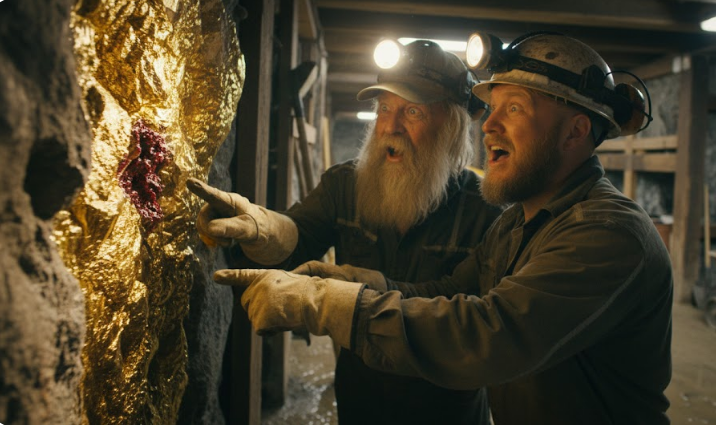
A reported discovery of a rare gold deposit in the Yukon, estimated at roughly five tonnes, would represent far more than a headline-grabbing geological find. From the perspective of a Gold Rush analyst, such a revelation has the potential to alter not only mining strategies on the ground, but also the narrative structure of the programme itself.
Five tonnes of gold — roughly 160,000 ounces — is not a marginal deposit. In modern placer mining terms, it would qualify as a generational opportunity, especially if concentrated within recoverable ground rather than dispersed across vast acreage. The first and most important question, however, would not be how much gold exists, but where and how it can be mined.
Why This Discovery Is Different
Most gold featured on Gold Rush is recovered incrementally: ounces added week by week through relentless processing of pay dirt. A deposit of this scale suggests something else — either an unusually rich paleo-channel, a long-missed bench deposit, or fine gold accumulation that earlier miners simply lacked the technology to capture.
Historically, many of the Yukon’s richest zones were only partially exploited. Early operations focused on visible nuggets and coarse gold, leaving behind fine material that modern wash plants are far better equipped to recover. A five-tonne estimate strongly implies that previous activity overlooked or could not access the richest layer.
From a programme standpoint, that kind of discovery instantly becomes a strategic storyline, not a short-term win.
Who Would Be Best Positioned to Chase It?
If confirmed, the race to control such a deposit would likely involve the show’s most experienced operators. Figures such as Parker Schnabel and Tony Beets already operate at a scale where processing thousands of yards per day is standard. But scale alone would not be enough.
The deposit’s depth, ground composition, and water access would determine whether it favours Parker’s high-efficiency, fine-gold recovery approach or Tony’s brute-force, multi-plant strategy. If the gold is locked deep in frozen ground, excavation speed and thaw management become decisive. If it is fine and widely distributed, recovery efficiency matters more than raw volume.
This distinction would shape not only who pursues the ground, but how the season unfolds on screen.
Likely Early-Season Developments
From an analytical standpoint, the show would almost certainly treat such a discovery cautiously at first. Expect initial drilling results, test pans, and guarded optimism rather than immediate celebration. Gold Rush has learned over many seasons that promising ground can quickly disappoint once full production begins.
Early episodes would likely focus on verification — confirming grade consistency, determining strip ratios, and identifying whether the deposit can sustain long-term output rather than delivering a brief spike. Viewers would see competing interpretations: is this a season-defining opportunity or a logistical challenge waiting to unfold?
Production Pressure and Operational Risk
A discovery of this magnitude would also bring pressure. High expectations change decision-making. Equipment would be pushed harder. Crew schedules would tighten. Capital would be committed earlier in the season to maximise access while conditions allow.
From a narrative perspective, this is where Gold Rush often finds its most compelling material — not in the gold itself, but in how miners respond to opportunity. Expansion requires confidence, but overextension can be costly. The show’s history is filled with moments where rich ground exposed weaknesses in planning, staffing, or maintenance.
How the Show’s Narrative Could Shift
In recent seasons, Gold Rush has leaned heavily into efficiency, technology, and long-term planning rather than last-minute recoveries. A five-tonne discovery fits that evolution perfectly. Instead of asking whether miners will reach a seasonal target, the story becomes who can control and sustain the resource.
Expect deeper focus on land negotiations, permitting timelines, and logistical constraints. The audience would likely see less emphasis on weekly weigh-ins and more on strategic positioning — who secures access, who invests early, and who hesitates.

Long-Term Implications Beyond One Season
If even a fraction of the estimated reserve proves recoverable, this discovery could underpin multiple seasons of content. Rather than a single dramatic arc, it could become a new anchor site similar to Indian River or Dominion Creek — locations that shape years of production.
For the miners involved, it would influence equipment purchases, staffing decisions, and future claims. For the show, it would offer continuity, allowing viewers to track progress over time rather than chasing fresh ground each year.
A Measured Outlook
Crucially, an analyst’s view must remain grounded. Many promising Yukon finds have fallen short once scaled up. Permafrost, water management, environmental oversight, and simple mechanical wear can erode even the richest projections.
But if this deposit is real, accessible, and consistent, it represents a rare convergence of geology and timing — one that aligns with modern mining capability and a television format built around long-form storytelling.
In the world of Gold Rush, gold alone is never the full story. What matters is who controls it, how they extract it, and whether they can turn opportunity into sustained success. A five-tonne discovery would not end the struggle — it would simply raise the stakes of every decision that follows.