Parker Schnabel’s HUGE $100 million gold discovery after exceptional drilling results in Yukon
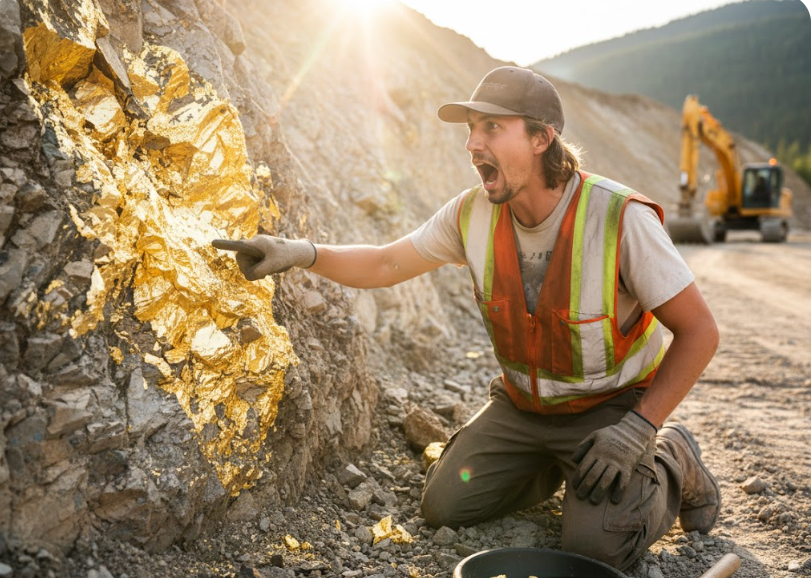
A cool Yukon breeze swept across the cut as the excavators fell silent and Parker Schnabel studied a fresh set of drill results. What he and his team were seeing on the screen was not routine variability. It was a potential game-changer.
Initial projections for the ground suggested grades of around two ounces per cubic yard—strong by most Klondike standards. But the latest samples were reporting between 4.6 and five ounces per yard, with occasional spikes above 5.2. A confirmatory test pan only deepened the tension: thick flakes and small, heavy pieces of gold settled quickly to the bottom.
If those grades hold across even a modest stretch—say 10,000 to 12,000 cubic yards—the implications are substantial. At an average of roughly 4.8 ounces per yard, recovery could approach 50,000 to 60,000 ounces. With gold trading near $2,000 an ounce, that equates to gross value in the region of $100m to $115m.
In a business where margins are thin and ground can change abruptly, such numbers are rare. They also come with caveats.
The site’s daily operating burn rate is estimated at $40,000 to $60,000, covering diesel, heavy equipment maintenance, replacement parts and crew wages. A week of delays can approach $300,000 in cost; a month could exceed $1.5m. In other words, the upside is enormous—but so is the exposure.
Schnabel’s dilemma is therefore strategic as much as geological: accelerate and maximise output while grades are strong, or proceed cautiously to protect pit integrity and personnel safety. Engineers have already flagged soft sections in the walls, with visible dampness and minor sloughing. In deeper cuts, the risk of a wall failure increases sharply. There is also concern about intersecting an unexpected water layer, which could flood the lower benches and halt operations.
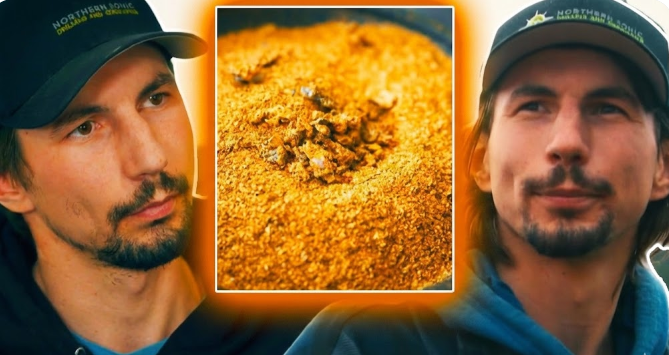
“We have to move carefully,” a senior engineer told the team after reviewing the pit face. “The ground is getting softer as we go.”
The tension is palpable across camp. Younger crew members talk openly about record-breaking cleanups and bonuses; more experienced operators speak in measured tones about stability and slope angles. Mining history is full of pay streaks that dazzled briefly before thinning out or disappearing altogether.
Geologically, the readings are intriguing. Beyond the high-grade pay layer, deeper drill holes have shown increased quartz fragments and heavy black sands—indicators that can point toward proximity to a richer source channel. If the pattern strengthens with depth, the current estimate may represent only the upper portion of a broader system.
Such speculation is fuelling industry chatter across the Yukon. In a tight-knit mining community, news travels quickly. Suppliers, consultants and rival operators are watching closely. A sustained run of four to five ounces per yard across a broad area would be considered exceptional for the district.
There is also the regulatory dimension. Larger production volumes bring heightened scrutiny. Water use limits, tailings management, reclamation plans and royalty reporting are standard requirements, but a significant expansion can trigger additional oversight. As production scales, so too does paperwork—and government interest.
For Schnabel, the moment is as much about leadership as geology. Standing above the cut, he faces a dual responsibility: capture the opportunity without compromising safety or compliance. The images are compelling—excavators loading thick pay, conveyors feeding the wash plant, riffles ready to trap heavy metal—but beneath the industrial choreography lies a narrow margin between breakthrough and setback.
Cleanup day will offer the clearest signal yet. In the gold room, concentrates have been drained and trays prepared. The digital scale will convert months of drilling, stripping and hauling into a single figure. Whether the number confirms a record-grade streak or tempers expectations, it will shape the season’s trajectory.
If recoveries approach the projected 50,000-ounce threshold, the season could become one of the most lucrative in recent Yukon memory. Beyond immediate revenue, such a result would strengthen Schnabel’s position with investors, expand acquisition options and potentially reset competitive benchmarks in the region.

Yet mining veterans caution against extrapolation from early data. Pay streaks can pinch out abruptly; structural shifts in the channel can dilute grades in a matter of yards. Optimism must be balanced against contingency planning.
The emotional stakes are evident in camp. For some crew members, this is more than a profitable quarter—it is security for families and validation of long hours in harsh conditions. For Schnabel, whose reputation rests on calculated risk-taking, the decision to push hard or pace development will define not only this cut but his broader standing in the Klondike.
As the sun rises over the Yukon and engines restart, the site hums with expectation. The promise beneath the soil is substantial; so too are the risks embedded in unstable ground and relentless daily costs.
In gold mining, fortune often hinges on a handful of ounces per yard. This week, those ounces may determine whether Parker Schnabel’s latest strike becomes a headline milestone—or a cautionary tale in the delicate arithmetic of risk and reward.