BEYOND THE RISK: WHY JOSH GATES REFUSES TO ABANDON “EXPEDITION UNKNOWN”
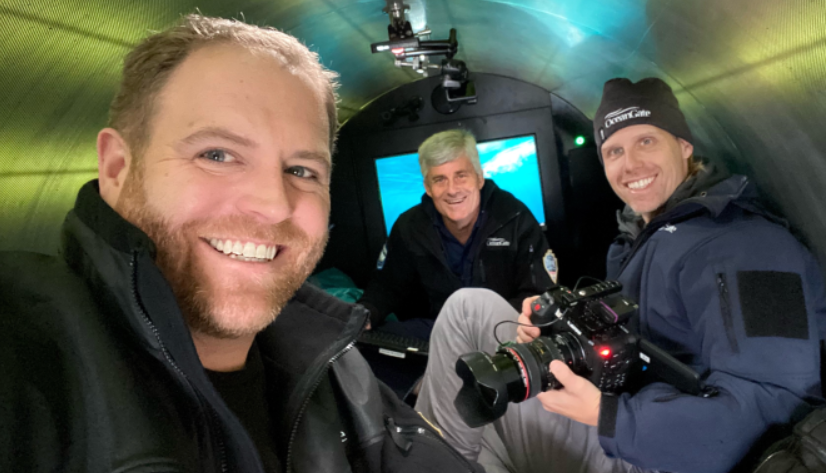
In the quiet, sterile hum of a Seattle recovery wing, Josh Gates is currently surrounded by the physical reminders of his latest brush with mortality. There are the IV drips for his dehydration, the monitors tracking his heart rate, and the deep, dark bruises from 72 hours of survival in the Cascade Mountains. Yet, despite the harrowing ordeal that nearly claimed his life, the host of Expedition Unknown remains fundamentally unchanged in his resolve. To the skeptics who ask why a man with a family and a successful career continues to walk into the jaws of danger, Gates has a simple, defiant answer: the truth is worth the terror.
The Question of Safety
For over a decade, fans and critics alike have watched Gates navigate a gauntlet of global hazards. From dodging political embargoes in Egypt and escaping cartel blockades in Guadalajara to surviving the “green abyss” of the Pacific Northwest, the risks are not merely televised drama— chúng là sự thật khốc liệt (they are a harsh reality).
During a bedside briefing today, Gates addressed the question he is asked more than any other: Isn’t it too dangerous to spend your life investigating ruined temples and forbidden zones?
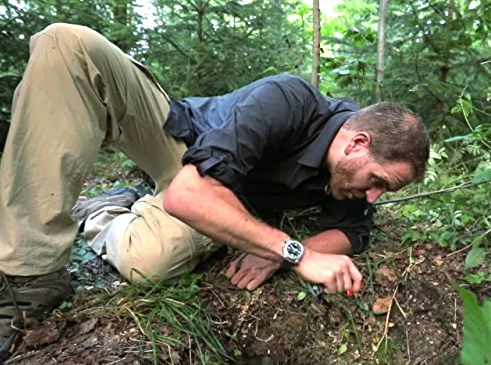
“Sure, it’s dangerous,” Gates said, his voice regaining its characteristic warmth and gravel. “I’ve been bitten, stung, chased, and lost more times than I can count. But I always tell people the same thing: this work needs to be done. Someone has to go into the dark corners of the map to see what’s left. If everyone stayed in the safety of the ‘known,’ our history would remain a half-finished book.”
The “Addiction” to the Mystery
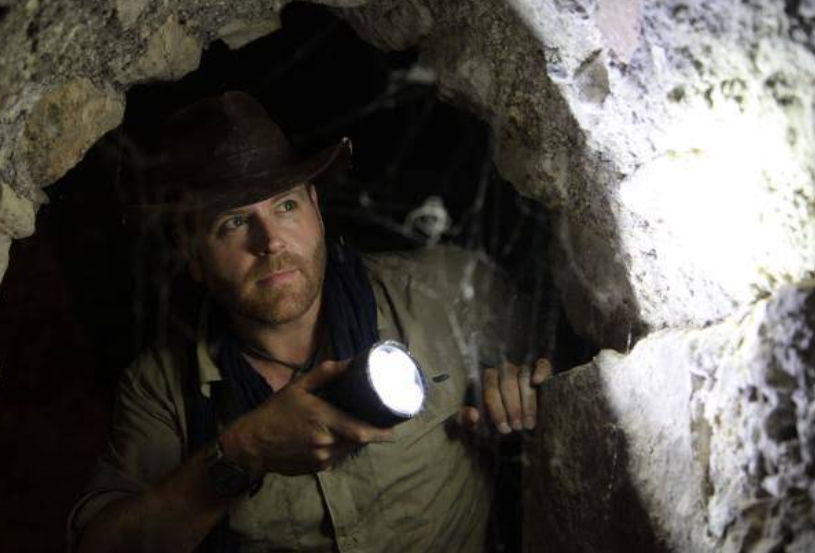
For Gates, the motivation isn’t a death wish or a thirst for adrenaline; it is a deep-seated intellectual hunger. He describes the moment of discovery—that split second when a flashlight hits a 2,000-year-old inscription or a hidden chamber—as a high that no amount of physical pain can diminish.
“The feeling of finding something that has been lost to time… that sensation is worth every snake and scorpion I’ve ever had to face,” Gates explained. “When you’re standing in a tomb that hasn’t seen light in two millennia, you aren’t thinking about the spiders. You’re thinking about the connection to the person who stood there before you. That’s the ‘Holy Grail.’ That’s the fuel.”
A Legacy of Resilience
The recent Bigfoot expedition in the “Devil’s Backbone” served as a stark reminder of the “cost of curiosity.” While Gates recently admitted that he might “break up” with the forest due to his repeated accidents in the deep green, he was quick to clarify that he isn’t retiring from the hunt. He is merely recalibrating his strategy.
“Discovery isn’t a hobby for me; it’s a mechanical necessity,” Gates noted. “We live in a world where we think everything has been googled and mapped. But it hasn’t. There are still massive, world-altering secrets buried in the sand and the stone. If I don’t go back out there, I’m leaving those stories behind. And I can’t live with that.”
The Next Frontier
As he nears his final discharge from the hospital, Gates is already looking at satellite maps of the high-altitude Andes and the arid plains of the Middle East. He represents a rare breed of modern explorer—one who accepts the “curse” of the hunt as a fair trade for the privilege of witnessing the past.
“I’ll be back in the field before the mud on my boots is even dry,” Gates concluded with a wink. “The scorpions are just part of the office decor. The mystery… that’s the real job.”