Rick Ness urgently needs Tony Beets’ help due to a technical problem.
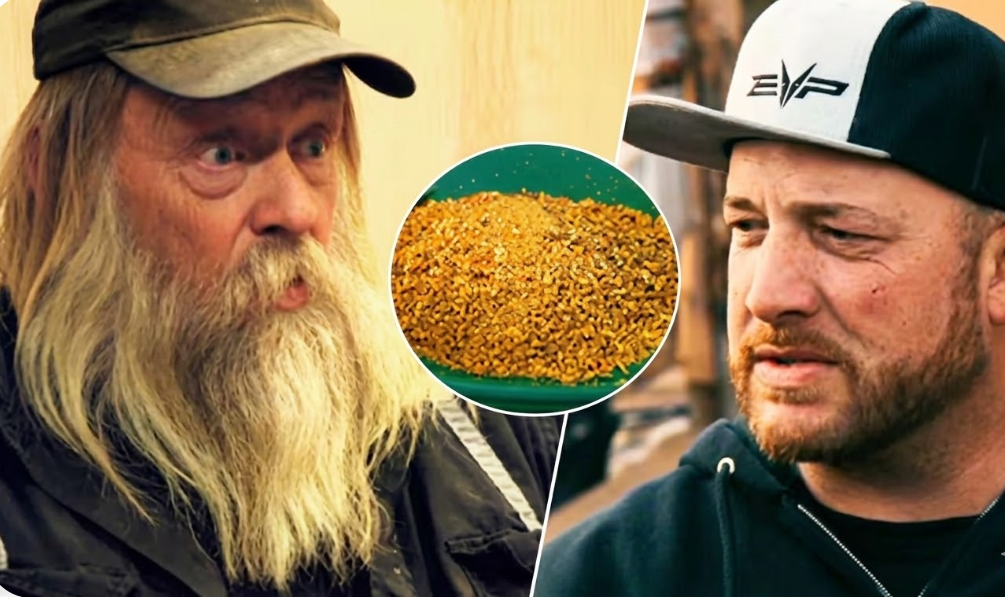
A mechanical failure nearly brought Rick Ness’s mining operation to a standstill during a crucial week in the Klondike, highlighting once again how fragile production schedules can be in the demanding environment of Gold Rush. What began as a routine day at the mine quickly turned into a race against time after one of Rick’s most important machines suffered a major track problem.
The issue emerged when the team noticed something unusual with the Caterpillar 700 excavator, a key piece of equipment responsible for moving large volumes of paydirt at Duncan Creek. As the machine slowed down, crew member Carl was called over to inspect the problem more closely.
It soon became clear that one of the excavator’s carry rollers—components designed to support and guide the machine’s track—had shifted out of alignment.
Under normal conditions, these rollers keep the track elevated and running smoothly along the machine’s frame. But in this case, one roller had seized completely. When the bearing inside stopped rotating, the constant movement of the track forced the roller sideways, leaving the track unsupported.
Without that support, the track risked grinding directly against the machine’s frame, a situation that could quickly lead to severe mechanical damage.
Carl explained that the problem likely began when debris or a large rock became lodged in the roller assembly, eventually damaging the bearing and forcing the component out of place.
“The bearing’s gone,” he concluded after examining the damaged part.
The discovery meant that the roller would have to be removed and replaced before the excavator could safely return to work.
For Rick Ness, the timing could not have been worse.

The 700 excavator is considered the workhorse of the operation, loading paydirt at a rate far beyond the smaller 480 machine used as backup. With the 700 out of action, production immediately slowed, threatening the crew’s weekly gold targets.
Rick quickly began searching for a replacement roller.
Although he managed to locate a new part, shipping delays presented another obstacle. Delivery estimates suggested the replacement could take more than a week to arrive in the remote Yukon region.
“That’s my main machine,” Rick explained. “Every second counts.”
Determined not to lose valuable production time, Rick began calling contacts across the mining community in the area.
Eventually he learned that a used roller might be available in Dawson City—at the equipment yard belonging to fellow Gold Rush veteran Tony Beets.
Tony Beets, known throughout the Klondike for operating one of the largest mining operations in the region, maintains a vast collection of spare parts and equipment. His scrapyard has often served as a resource for miners facing unexpected breakdowns.
Rick travelled to Dawson to meet Tony in person and explain the situation.
During their conversation, Tony acknowledged that shipping delays have become increasingly common in the Yukon. Parts that once arrived quickly can now take much longer due to transportation disruptions and logistical challenges.
Fortunately for Rick, Tony had exactly the part he needed.
“I got them here on site,” Tony told him. “If you need it, you take it and get going.”
With Tony’s help, Rick secured the replacement roller and began the long drive back to Duncan Creek, where his crew was waiting to install it.
The repair operation began as soon as Rick arrived.
Working together, the team carefully lifted the heavy roller into position and secured it to the excavator’s frame. The process required precision to ensure the track would run smoothly again without placing stress on other components.
Once the installation was complete, Carl started the machine and slowly rotated the track to test the repair.
The system worked perfectly.
Within minutes, the excavator was running again, restoring the mine’s primary loading capacity.
“Number one hoe,” one crew member joked as the machine returned to service.
Although the repair allowed operations to resume, the breakdown had already taken a toll on the week’s production. Without the 700 operating at full speed, the crew had been forced to rely on the smaller excavator, which loads paydirt at roughly half the rate.
At the end of the week, Rick and his team gathered for their routine gold weigh.
To stay on track for his ambitious season target of 1,000 ounces, Rick needs to average roughly 70 ounces per week. But the mechanical issues had clearly slowed progress.
When the gold was counted, the total reached just over 51 ounces—worth nearly $100,000 at current gold prices.
While the result represented an improvement over the previous week, it still fell short of the pace needed to meet the season goal.
“I’m not going to lie,” Rick admitted after the weigh-in. “That seems a little light.”
Despite the setback, he remained optimistic about the weeks ahead.
With the 700 excavator now back in operation and strong ground waiting to be mined, Rick believes the team can quickly recover lost ground.
“This kind of two weeks of problems we’ve had,” he said, “but the 700’s back in action. The ground’s good. All we need is a few clean weeks.”
The experience also served as a reminder of the importance of relationships within the Klondike mining community.
Tony Beets’s willingness to lend a crucial part helped Rick avoid what could have been a far more costly delay.
“It’s nice to get help from friends,” Tony later said, reflecting on the situation. “When you’re a good guy, other good people are willing to help you out.”
For Rick and his crew, the focus now shifts back to production.
With their main excavator running again and the season continuing, the team is determined to regain momentum—and chase down the gold still waiting in the ground.