JOSH GATES’ DISASTROUS RETURN TO EGYPT SPARKING “LOSS OF MOMENTUM” RUMORS
For over a decade, the “Josh Gates luck” was considered a law of nature in the archaeological world. No matter how deep the tomb or how treacherous the terrain, Gates always emerged with the artifact, the answer, or at the very least, a witty story. But following a traumatic month of disappearances in the Pacific Northwest and a terrifying return flight from Mexico, the legendary explorer’s luck appears to have finally run dry. This week in Egypt, the man who once moved mountains failed to move even a single stone, leaving fans and scholars asking: has Josh Gates lost his “Midas touch”?
The Giza Failure
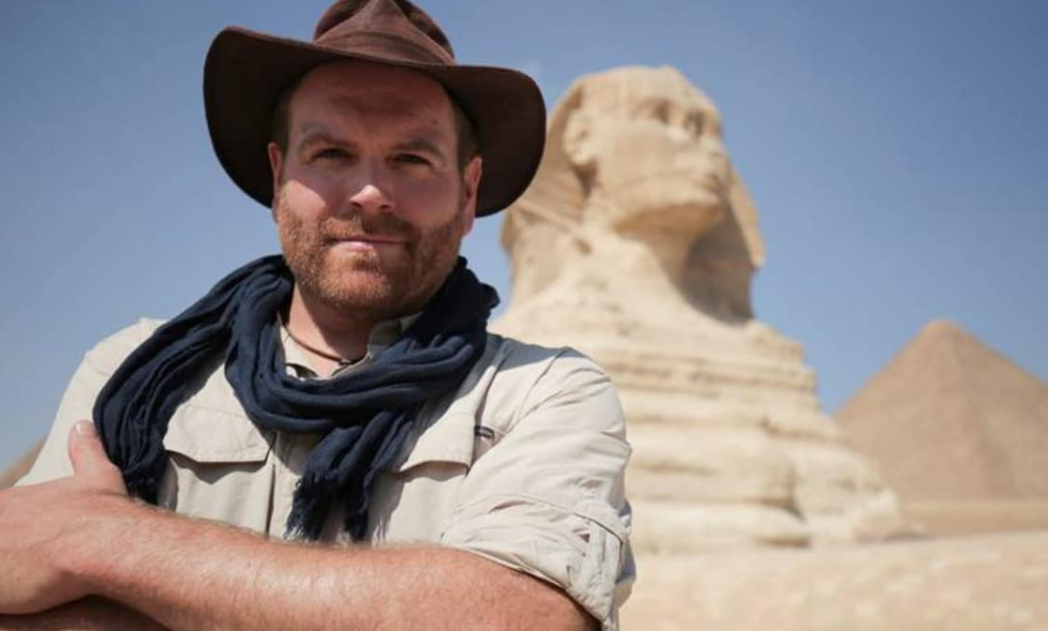
The mission was supposed to be Gates’ triumphant “return to form”—a high-stakes investigation into a newly detected void beneath a minor pyramid in the Saqqara complex. Dubbed “The Shadow Chamber,” the site was expected to yield a breakthrough in Old Kingdom burial rites. Instead, it became a symbol of a career in a “downward slide.”
From the moment the Expedition Unknown team touched down in Cairo, things went south. Equipment malfunctions, bureaucratic delays, and a series of uncharacteristic tactical errors plagued the production. For the first time in his career, Gates looked visibly out of step with the rhythm of the dig.
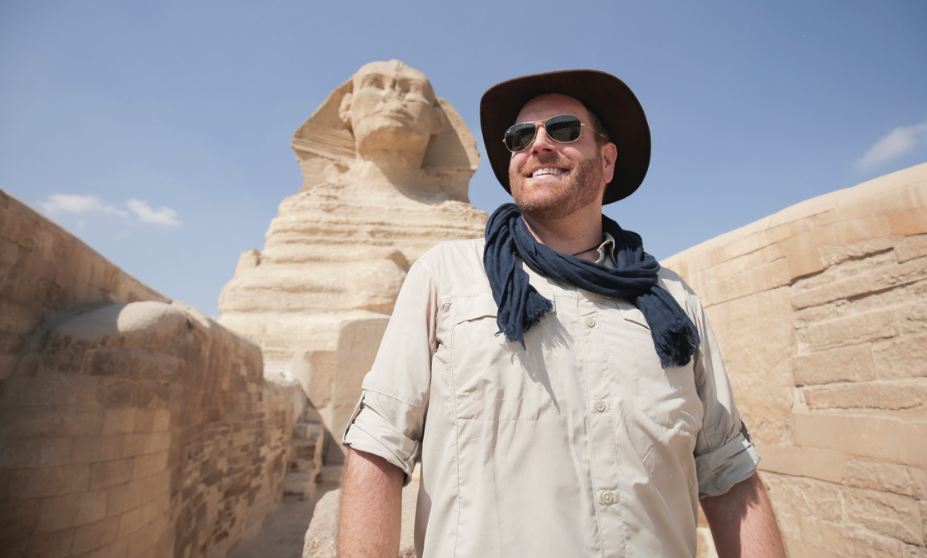
“He seemed distracted, almost hesitant,” noted a local excavation supervisor. “The Josh Gates we knew was decisive. This man spent hours second-guessing the ground-penetrating radar. By the time we breached the target zone, the chamber was a collapsed ruin of salt and sand. There was nothing. A total failure.”
A String of Bad Luck
Analysts are pointing to Gates’ recent “triple threat” of trauma as the source of his decline. Between the 72-hour survival ordeal in the “Devil’s Backbone,” the cartel blockades in Mexico, and the violent mid-air turbulence on his flight home, the explorer’s nervous system appears to be frayed.
In Giza, the “Explorer’s Intuition” that once guided him to hidden portals seemed to have vanished. During the climax of the Saqqara dig, a critical drill bit snapped, and a localized sandstorm buried the team’s primary sensor array—setbacks that a “lucky” Gates would have navigated with ease in years past. Instead, the team was forced to abandon the site empty-handed.
The Social Media Backlash
The failure has not gone unnoticed by the “Gates-Nation.” On social media, the tone has shifted from admiration to concern, and in some corners, harsh criticism.
“Is it just me, or has Josh lost his edge?” asked one long-time viewer on a popular archaeology forum. “The energy is gone. It feels like he’s forcing it now. Maybe the mountain took more out of him than he’s admitting.”
Gates himself addressed the setback in a brief, uncharacteristically somber post: “Egypt didn’t give up her secrets this time. Sometimes the sand wins. Heading back to regroup.” There was no joke, no signature wink—just the admission of a man who looked defeated by the very history he loves.
The Question of Retirement
With the “Shadow Chamber” mission declared a total loss and the production costs mounting, rumors of a permanent “Expedition Unknown” hiatus are regaining steam. Industry insiders suggest that the network is concerned about the “slump” in both the team’s morale and the tangible results of their hunts.
If luck is the currency of the explorer, Josh Gates appears to be bankrupt. Whether this is a temporary dip in a legendary career or the beginning of a final “slide” into retirement remains to be seen. But as the sun sets over the Giza plateau, the shadow cast by the pyramids feels longer and colder for Josh Gates than ever before.