Giant coin discovered from the 12th century: Its value reaches millions of dollars.
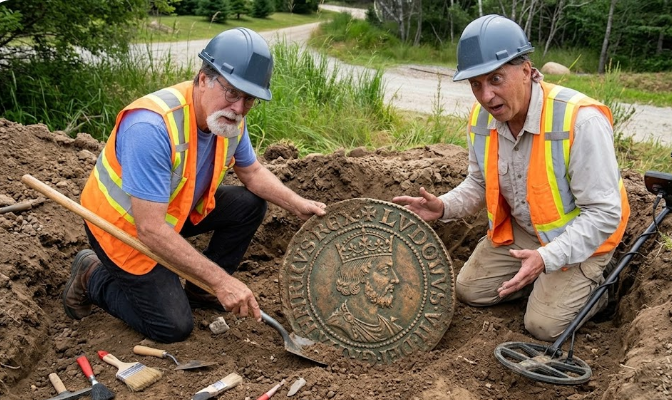
The mystery of Oak Island took a fascinating turn in the latest episode of The Curse of Oak Island, as the team unearthed a number of potentially historic artifacts, including a gold coin, a British military button, and a Spanish coin, all of which may point to a deeper, more complex history of the island. The discovery comes as the team continues its excavation efforts on Lot 5 and Lot 4, with each new find offering a tantalizing clue that could lead to solving one of the longest-running mysteries in treasure hunting history.
The Discovery of the Gold Coin: A Glimpse of Treasure?
The most significant find of the episode came when the team uncovered a gold coin while working in the Money Pit area. The discovery was met with a mix of excitement and disbelief as the coin was pulled from the spoil pile. Initially, there was some uncertainty about whether the object was a coin or a button, but a closer examination revealed that it was indeed a gold coin. The find immediately raised questions about its origin and what it could mean for the Oak Island mystery.
As the team carefully examined the coin, they noted several markings on its surface, which appeared to suggest it was of significant age. Experts are now analyzing the coin to determine its exact date and origin, but initial reactions suggest that it could be a key piece of evidence pointing to treasure being hidden on the island. The excitement in the team was palpable, with one team member exclaiming, “That’s got some marks on the side of it. There’s writing on the outside.”
The gold coin discovery is particularly meaningful because it could represent the first solid evidence of treasure buried deep within the Money Pit area. For years, the Oak Island mystery has been associated with tales of hidden treasures, including pirate plunder and possibly even religious artifacts, but no definitive evidence has been found until now. This coin could be the breakthrough the team has been waiting for, offering a glimpse of the riches that may still lie beneath the surface.

The British Military Connection: A Gold-Plated Button and Historical Clues
In addition to the gold coin, the team also uncovered a gold-plated British military button. The button’s design suggests it dates back to the 18th century, potentially linking the island’s history to British military activity during the time of the American Revolutionary War. This find is significant for several reasons. First, the presence of a military button implies that Oak Island may have played a role in military operations, possibly as a strategic location for storing valuable goods during a time of conflict. Second, the button may serve as further evidence of British activity on the island, which has long been theorized by researchers.
According to the team, the button’s design and markings match those used by British officers during the 18th century, and it could even be a component of the uniforms worn by soldiers. This would suggest that Oak Island was not simply a random site for treasure hiding, but a location that could have had military significance, with officers or soldiers using it as a safe place to store valuable goods.
This discovery further strengthens the argument that the island’s mysterious past is intertwined with European military and political history. In fact, many theorists have long speculated that Oak Island’s treasure could be tied to British military efforts, particularly during the late 1600s and early 1700s, when European nations were heavily involved in colonization and trade.
The Spanish Coin: A Link to European Exploration?
The discovery of a Spanish coin on the island adds another intriguing layer to the mystery. The coin, which appears to be from the 15th or 16th century, could point to the presence of Spanish explorers or even pirates on Oak Island long before the British military ever set foot there. Spanish coins were commonly used by pirates and explorers during the Age of Exploration, making this find particularly exciting for those who believe Oak Island’s treasure could be connected to Spanish plunder.
The coin’s design suggests that it was likely used for trade or as part of a pirate’s hoard, which makes sense given the island’s rumored connection to treasure and hidden valuables. The presence of Spanish coins, in addition to British military buttons and the gold coin, suggests that Oak Island could have served as a meeting point for different European nations, all vying to protect their valuable goods from the dangers of piracy and war.

Theories and Implications: What Does This All Mean?
With each new discovery, the theories surrounding Oak Island’s mystery continue to evolve. The presence of a British military button and a Spanish coin hints at the possibility that the island served as a strategic location for storing valuables during times of conflict. This would support long-standing theories that Oak Island was used by European explorers and military forces as a place to hide or protect important items, such as treasure, documents, or religious relics.
The connection between the artifacts and the 17th and 18th centuries also suggests that Oak Island’s history could be far older than previously thought. If the island was used as a storage site for military or valuable goods during the early modern period, it could mean that the treasure hunt has been focused on the wrong time period. This discovery could also challenge the prevailing theory that the island’s treasures are tied to pirates, suggesting that Oak Island’s real story lies in the interactions between European powers during the colonial era.
The recent finds also add weight to the theory that Oak Island’s treasure is not just one cache of gold or jewels, but possibly multiple caches, hidden by different groups over the course of centuries. The presence of both Spanish and British artifacts indicates that Oak Island could have played a role in the broader geopolitical struggles of the time, particularly as European nations jockeyed for power in the New World.
Conclusion: A New Chapter in the Oak Island Mystery
The latest discoveries on Oak Island have provided a fresh wave of excitement for treasure hunters and fans of the show. The gold coin, British military button, and Spanish coin are all clues that suggest the island’s past is far more complex than anyone could have imagined. With each new find, the team comes closer to uncovering the truth behind the legendary Oak Island treasure, and these recent discoveries could mark a turning point in the investigation.
As the team continues to explore the Money Pit and other areas of Oak Island, the stakes are higher than ever. The presence of military and colonial-era artifacts suggests that the island’s treasure may be tied to a broader historical context than previously thought. With more research and excavation to come, the mystery of Oak Island remains as intriguing as ever, and the team is more determined than ever to uncover the secrets buried beneath its surface.