THE ARCHIBALD COIN: 14th-Century Portuguese Silver Ignites Oak Island Season 13
The 230-year-old mystery of Oak Island has entered a “decisive and aggressive” new phase. In a two-hour Season 13 premiere, the Fellowship of the Dig unveiled what may be the most significant piece of physical evidence in the history of the search: a mid-14th-century Portuguese silver coin linked directly to the legendary 1849 Pitblado drilling operation.
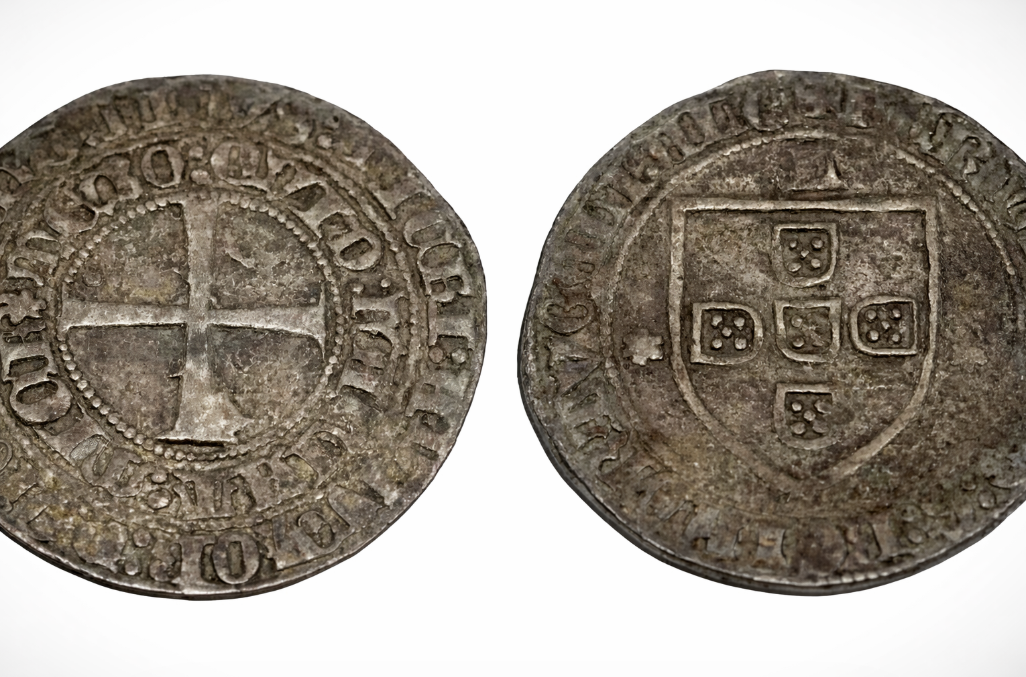
The artifact, presented by Steve Solomon—a descendant of the prominent Archibald searcher family—reportedly traces back to the reign of King Ferdinand I (1367–1383). The coin is composed of 37.5% silver and bears a distinct marking resembling a Templar cross, a find that provides a “traceable history” to the island’s most enduring theories.
The “Solution Channel” Strategy
Bolstered by the coin’s authentication, Rick and Marty Lagina have pivoted their industrial operations. The team now believes the “Money Pit” treasure is no longer located at its traditional 100-foot depth. Instead, they hypothesize the cargo plummeted into a “solution channel”—a massive, water-filled limestone cavity in the bedrock roughly 200 feet below the surface.
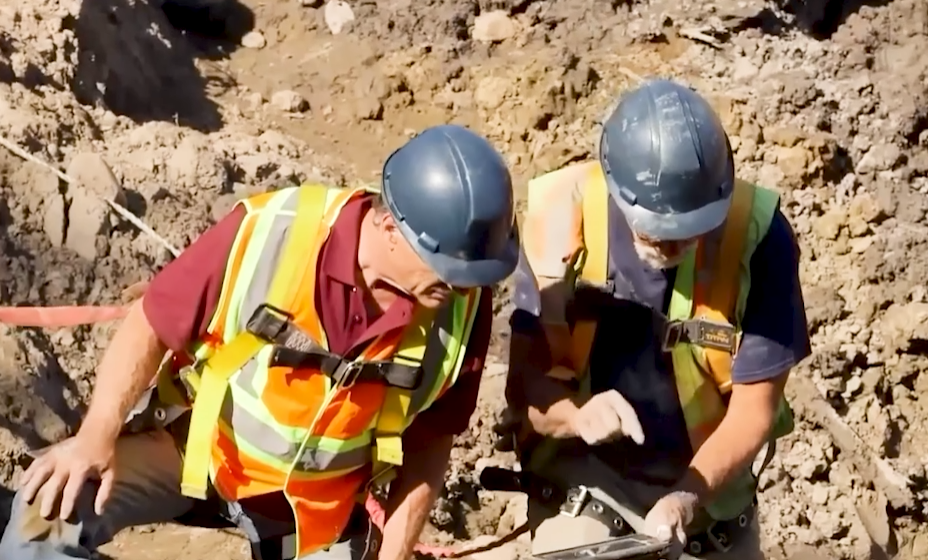
This season, the team has launched a systematic drilling program to map this subterranean void, which remains 95% unexplored. Early results from the premiere were encouraging; drillers successfully breached the cavity at 180 feet, recovering 19th-century iron casing fragments. Geologist Terry Matheson noted that abandoned equipment at these depths often signals a site where past searchers, like the mysterious James Pitblado, may have encountered something valuable before abruptly halting operations.
Lot 5: A Medieval Base Camp?
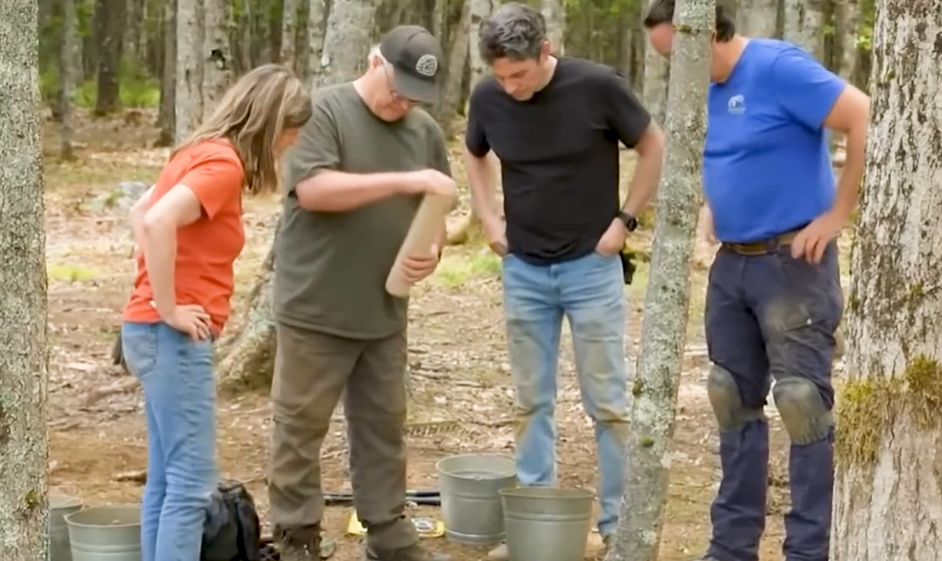
While the heavy drills batter the bedrock, archaeologist Laird Niven and his team have uncovered a parallel narrative on Lot 5. Excavations of a rounded stone foundation and a buried rectangular structure have yielded artifacts that pre-date the 1795 discovery of the Money Pit by centuries.
Key finds from the premiere include:
-
Staffordshire Slipware: Dated between 1675 and 1770.
-
Venetian Glass Beads: Including “forest glass” fragments that may date back to the 10th century.
-
Knights of Malta Tokens: Barter leads and buttons suggesting a multi-generational European presence.
According to Niven, the stratigraphy of Lot 5 suggests three distinct phases of habitation: an early 13th-century occupation, a 14th-to-16th-century “construction” phase, and the well-documented post-1795 searcher period. This suggests Oak Island was not a one-time hiding spot, but a long-term, secretive industrial site.
The Knights of Christ Connection
The Portuguese coin has effectively narrowed the team’s historical focus to the Knights of Christ—the successor organization to the Knights Templar in Portugal. The team plans to cross-reference their findings with 14th-century maritime records, searching for “clandestine voyages” to the North Atlantic.
For Marty Lagina, the coin moves the needle of probability. “Is it more than 51% likely to be true?” he asked during the war room briefing. With a tangible artifact in hand that matches the medieval timeline of the Lot 5 beads, the answer, for the first time in 13 seasons, appears to be a resounding yes.
What Lies Ahead
The premiere concludes with the team preparing for high-precision “grid drilling” of the solution channel. However, the mission remains perilous. The channel behaves like an “underground river of sludge,” capable of shifting or swallowing artifacts in seconds.
As Rick Lagina noted while holding the Archibald coin, “This isn’t just history; it’s proof.” After 230 years and six lives lost, the Fellowship is no longer chasing a legend—they are knocking on the door of a 14th-century vault.