An unprecedented discovery on Oak Island: A tunnel full of gold has been found behind Oak Island.
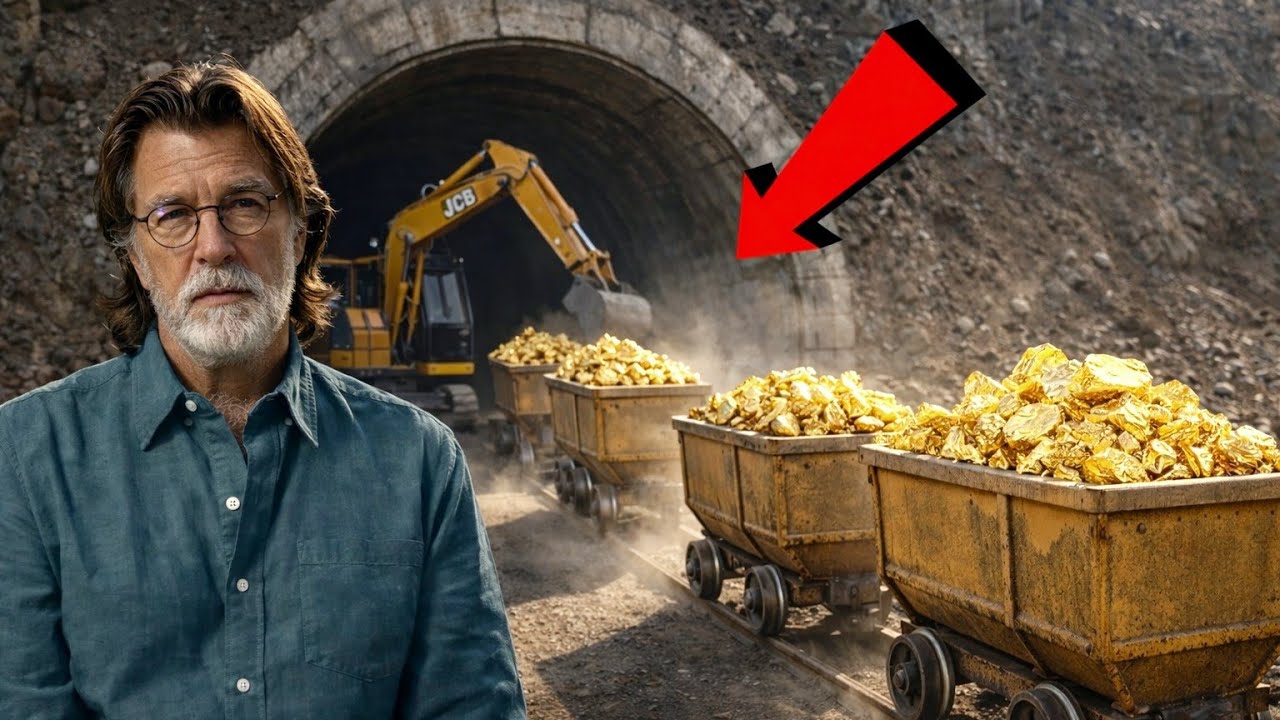
From the perspective of a Gold Rush analyst, few discoveries carry as much intrigue—or as many practical questions—as the reported unearthing of a tunnel filled with gold on Oak Island. While the island has long been associated with mystery rather than production mining, this development, if substantiated, represents a fascinating crossover between treasure hunting and resource extraction. It also raises a critical question: what happens when a site driven by historical curiosity suddenly reveals economically viable material?
For decades, Oak Island has been defined by speculation—engineered shafts, flood systems, and theories linking the site to medieval or early modern activity. Unlike the Klondike operations featured in Gold Rush, where success is measured in ounces per week, Oak Island has operated more like a long-term archaeological puzzle. But a gold-bearing tunnel changes that equation entirely. It introduces a tangible, measurable outcome—gold in place—and shifts the conversation from “what is buried here?” to “how much is recoverable, and how can it be extracted?”
A Discovery That Redefines the Site
If the tunnel truly contains significant quantities of gold, the first major implication is structural. Oak Island would no longer be viewed solely as a historical anomaly but as a hybrid site—part archaeological dig, part mining operation. From a Gold Rush standpoint, this immediately introduces a set of challenges that go beyond discovery.
Gold underground is only valuable if it can be safely and efficiently recovered. In the Klondike, operations like those run by Parker Schnabel or Tony Beets rely on open cuts, wash plants, and predictable ground conditions. Oak Island offers none of that. Instead, it presents confined spaces, unstable structures, and a legacy of water infiltration that has defeated previous efforts for over two centuries.
This means that even with a confirmed gold-bearing tunnel, extraction would not follow traditional placer mining methods. Instead, it would require a controlled, possibly phased approach combining elements of underground mining and archaeological preservation.
Engineering vs. Access: The Immediate Challenge
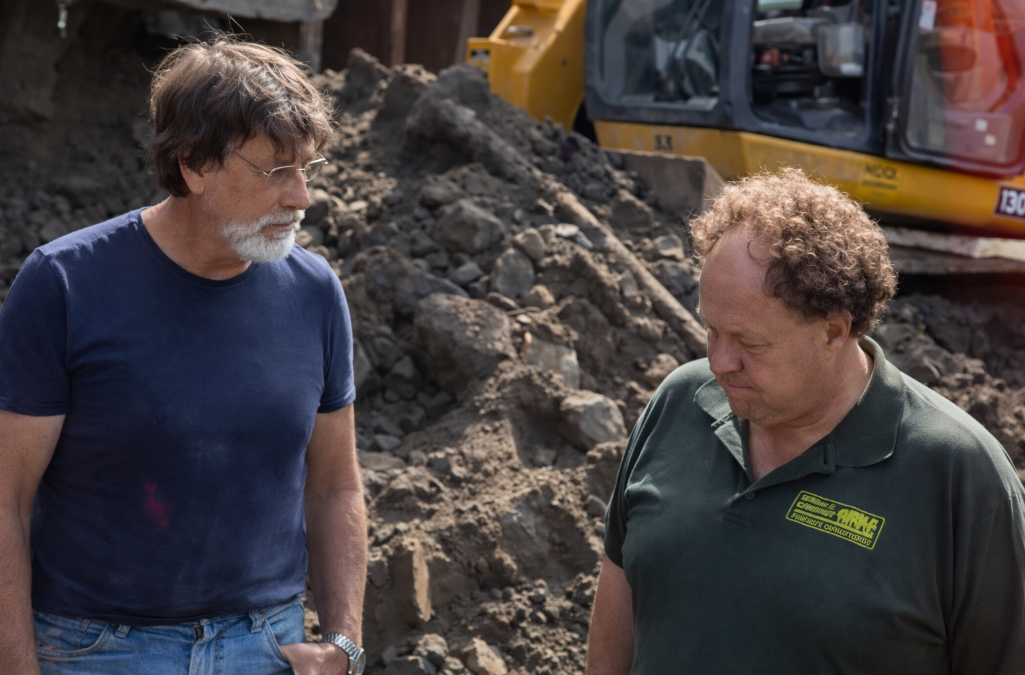
One of the most important parallels to Gold Rush lies in the balance between access and risk. In the Klondike, miners constantly weigh the cost of stripping overburden against the value of the pay layer. On Oak Island, the challenge is more complex. The tunnel itself may be structurally compromised, surrounded by unstable fill and potentially connected to old flood systems.
Before any large-scale recovery could begin, the team would need to stabilize the area. This could involve installing steel supports, creating controlled access shafts, and deploying advanced dewatering systems. From a cost perspective, this is closer to hard-rock mining than placer operations, with significantly higher upfront investment.
In Gold Rush terms, this would be equivalent to committing millions before seeing a single ounce in the gold room. The risk profile is therefore extremely high, especially if the extent of the tunnel—and the consistency of the gold within it—remains uncertain.
Estimating Value: From Discovery to Viability
Another key question is scale. A tunnel “filled with gold” is a compelling phrase, but in mining analysis, the focus shifts quickly to grade and volume. Is the gold concentrated in discrete deposits, or is it distributed along the tunnel walls and floor? How continuous is the deposit? And most importantly, how much of it can actually be recovered?
If we apply a Gold Rush framework, even a high-grade zone must be evaluated against recovery costs. For example, a deposit yielding several ounces per ton could still be uneconomical if access and safety costs are too high. Conversely, a moderate but consistent grade across a large volume could justify a long-term operation.
Initial sampling and core drilling would therefore be critical. Just as Rick Ness or Parker Schnabel rely on test holes to define a pay layer, the Oak Island team would need detailed geological data before committing to full-scale extraction.
Operational Shift: From Exploration to Production?
If early results confirm both grade and volume, the project could enter a new phase—one that resembles a scaled-down mining operation. This would mark a significant shift for Oak Island, moving from exploration-driven storytelling to production-focused decision-making.
From a television standpoint, this transition could be transformative. Viewers of The Curse of Oak Island are accustomed to incremental discoveries and historical interpretation. Introducing measurable gold output would add a new dimension, aligning the show more closely with the operational intensity seen in Gold Rush.
However, this also introduces tension. Archaeological integrity and commercial extraction do not always align. Decisions about how aggressively to mine the tunnel could become a central point of debate, both within the team and among viewers.
Risks That Could Shape the Outcome
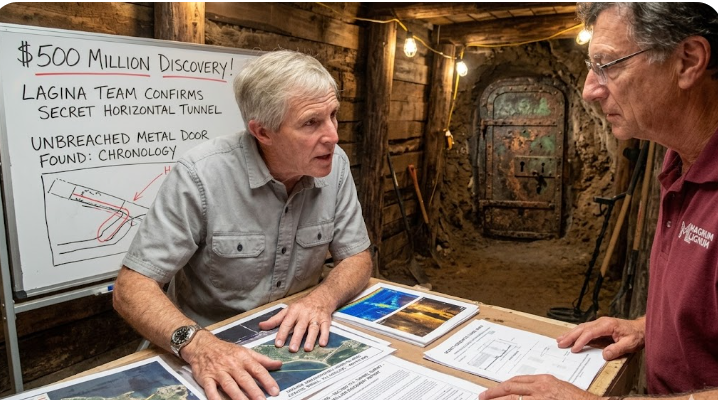
Despite the excitement surrounding such a discovery, several risks remain. Structural collapse is a constant concern in any underground environment, particularly one with a history of engineered complexity. Water intrusion, long considered Oak Island’s most persistent obstacle, could also re-emerge as a limiting factor.
There is also the possibility that the tunnel represents a localized deposit rather than a broader system. In Gold Rush, this is the equivalent of hitting a rich pocket that quickly tapers off. If the gold is not continuous, the economic case for large-scale recovery weakens significantly.
What Happens Next?
From an analytical standpoint, the next steps are clear. The team will likely prioritize verification—confirming the presence, grade, and extent of the gold within the tunnel. This will be followed by engineering assessments to determine whether safe access can be maintained over time.
If both conditions are met, Oak Island could enter a new phase unlike anything seen before on the show. The focus would shift from searching to extracting, from theory to measurable results.
Conclusion: A Turning Point with Uncertain Outcomes
The reported discovery of a gold-filled tunnel on Oak Island represents a potential turning point—not just for the investigation, but for how the site is understood. From a Gold Rush perspective, it introduces familiar challenges in an unfamiliar environment: risk management, cost control, and the constant uncertainty of what lies just beyond the next cut.
Whether this becomes a sustained operation or a short-lived breakthrough will depend on what the data reveals in the coming weeks. But one thing is certain—if the gold is as significant as early reports suggest, Oak Island may be entering its most consequential chapter yet.