THE CURRENCY OF HISTORY: Roman and Ancient Coins Rewriting the Oak Island Timeline
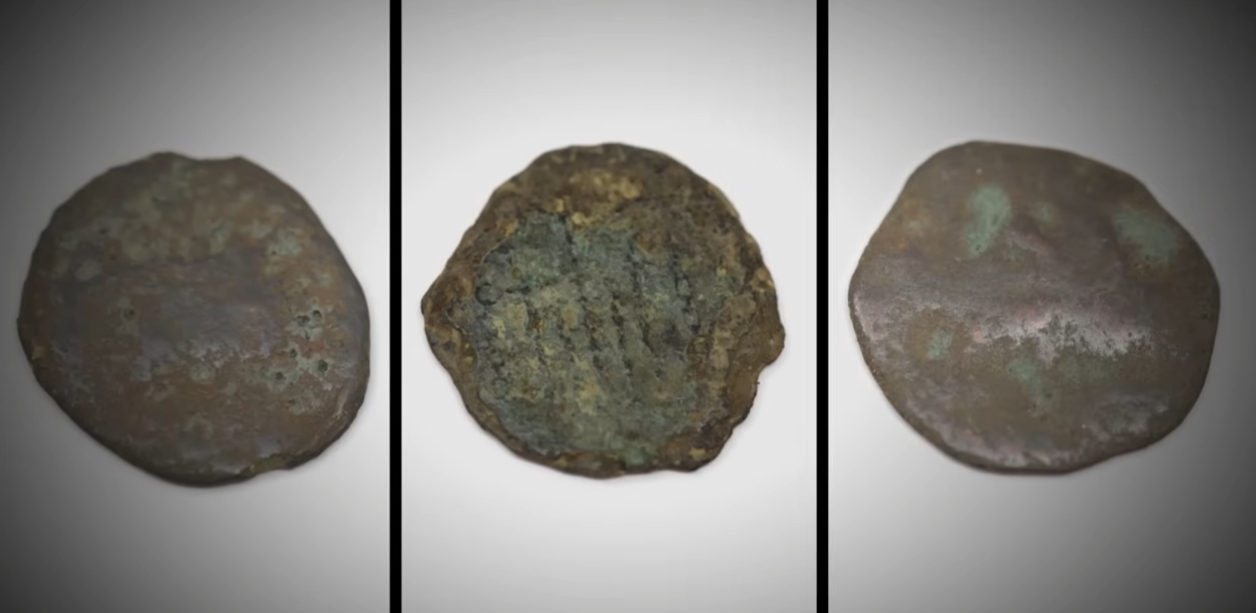
The 228-year-old mystery of Oak Island has long been dismissed by skeptics as a colonial-era obsession, but recent discoveries on the island’s western lots are forcing historians to look back thousands of years. This week, the fellowship led by Rick and Marty Lagina revealed a series of “inexplicable” numismatic finds that suggest the island was a destination for global travelers long before the 1795 discovery of the Money Pit.
On Lot 5, a site rapidly becoming the island’s most significant archaeological “hot spot,” metal detection expert Gary Drayton unearthed a collection of coins that numismatist Sandy Campbell describes as a “puzzlement that only grows.”
The Roman Connection
The most jarring revelation came with the verification of two copper coins recovered from the island’s western edge. Campbell, an expert with over 40 years of experience, confirmed that the coins are of Roman origin, dating between 100 and 300 AD. One specimen features a distinct male portrait with a prominent nose and pointed chin, while the reverse depicts two conjoined figures—a design Campbell notes could even be BC (Before Christ).
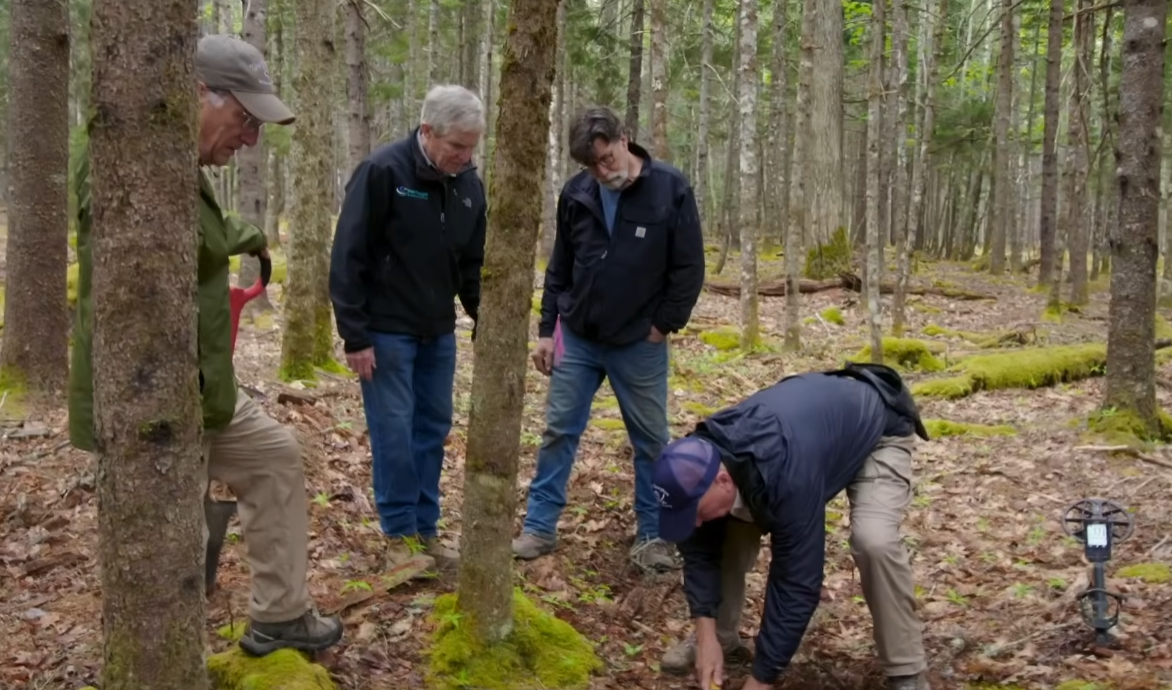
“Had somebody told me we would find this here, I would have said no,” Marty Lagina admitted. “But facts are stubborn things. We have three Roman coins found on Oak Island now. If there is an ancient treasure here, it clearly contains an ancient component.”
A Global Crossroads?
The diversity of the “ancient coin collection” on Lot 5 has left the team flabbergasted. In addition to the Roman copper, Campbell identified a 16th-century British Tudor coin featuring the “portcullis” design—a symbol of the British monarchy still used today.
However, the most exotic find of the week was a small, thin coin with a design Campbell suggests could be Indian, dating back to the 6th or 8th century. Combined with previous finds of Chinese and Spanish currency, the island appears to have served as a repository for non-associated, international wealth.
The Evidence of Lot 32 and Lot 25
The search has expanded beyond Lot 5 to the southern and western shores, where the team is investigating potential wharf activity. On Lot 32, Gary Drayton and Michael John recovered a “dirt-napped” British copper coin from deep within the soil. Drayton noted its extreme thinness—a primary indicator of age—and tentatively identified a “Carolus” inscription, suggesting a link to King Charles II and 17th-century British operations.

Meanwhile, on Lot 25, at the former homestead of the mysterious 18th-century landowner Samuel Ball, Rick Lagina helped recover a “large greenie”—a thick copper penny likely dating to the 1730s or 1740s. Samuel Ball, a former slave who became one of Nova Scotia’s wealthiest men, has long been suspected of finding part of the Oak Island hoard.
The Templar Theory
For Rick Lagina, these coins provide weight to the research of the late Zena Halpern, who posited that Knights Templar and other European groups made transatlantic voyages centuries before Columbus. The team notes that many of the Roman coins were found in regions of Europe later occupied by the Templars, potentially explaining how ancient Roman currency ended up in a medieval or colonial-era cache.
“There’s a heck of a lot of stories going on on this island from a long time ago,” Gary Drayton concluded. As the team prepares to “put more coil to the soil,” the focus has shifted from if a treasure exists to who brought such a vast, ancient collection to these shores.