THE TEMPLAR TRAIL: Overseas Discoveries Link Italian Labyrinths to Oak Island

The mystery of Oak Island has long been confined to the muddy shores of Nova Scotia, but a recent expedition to the heart of the medieval world may have finally provided the “connective tissue” needed to solve the 229-year-old enigma. Rick Lagina, accompanied by his nephews Alex and Peter, recently completed a high-stakes research trek through Italy, uncovering ancient symbols that mirror the island’s most cryptic artifacts.
From the volcanic stone churches of Viterbo to the subterranean labyrinths of Camerano, the team has found what they believe is a roadmap left by the Knights Templar—a roadmap that points directly across the Atlantic.
The “HO” Stone Cipher
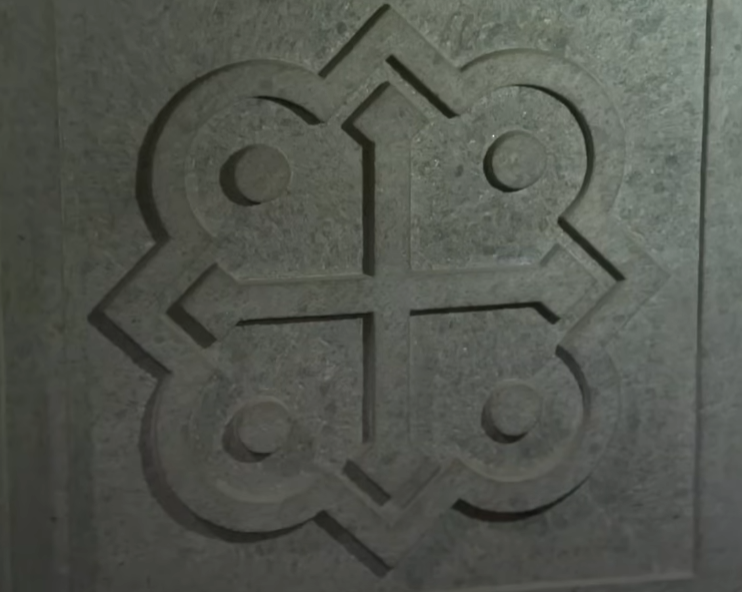
The investigation began in the 11th-century church of Santa Maria Nuova in Viterbo. Led by Templar investigator Gian Luca de Prospero, the team identified a “four-dot cross” carved into the ancient edifice. This specific symbol is an exact match for the “HO Stone,” a massive boulder discovered on Oak Island in the 1920s before it was tragically destroyed by dynamite-wielding treasure hunters.
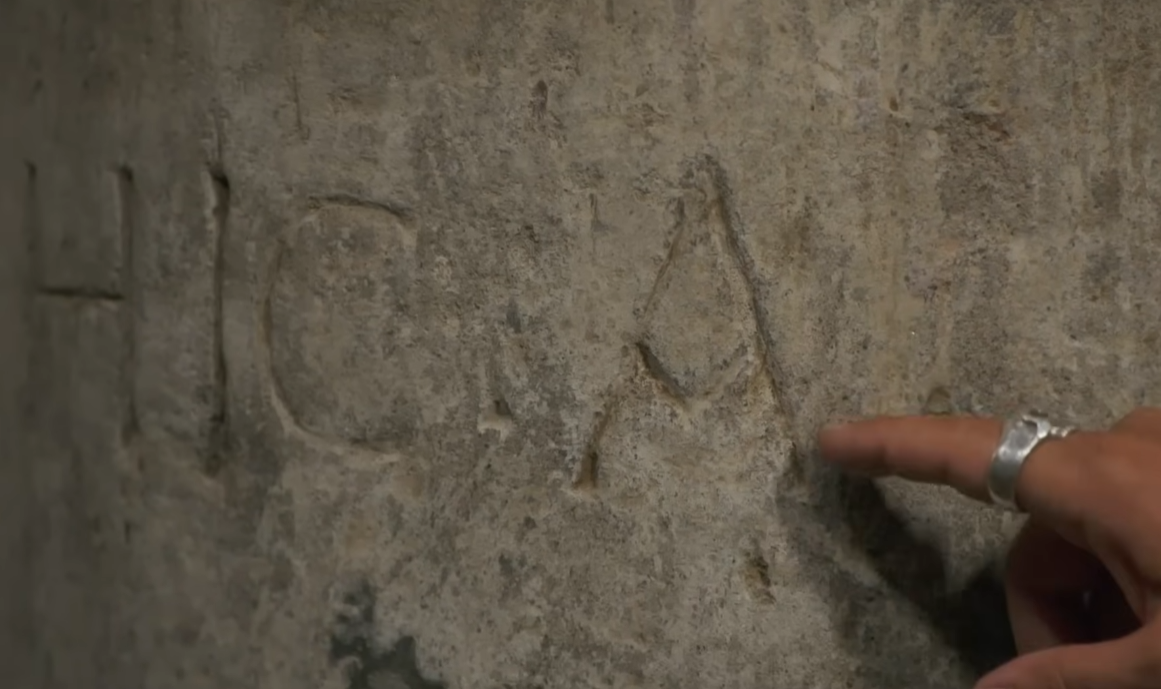
“These four-dot crosses mark special places where Templars guarded sacred relics,” de Prospero explained. Alex Lagina noted a further connection: the Latin inscription HIC (“Here”) found alongside a Masonic square and compass. “If you put it all together,” Alex posited, “the symbol represents ‘Here lies Templar Gold.'”
A Lead Cross in the Labyrinth
The team’s most emotional breakthrough occurred 3,700 miles east of the Money Pit in the Camerano Caves. This man-made underground system, dating back over 2,500 years, contains a section shaped with uncanny precision to the 14th-century lead cross found by Gary Drayton at Smith’s Cove in 2017.
Alberto Ricantini, who has mapped the caves for 50 years, pointed out the asymmetrical “arms” of the subterranean chamber—a structural anomaly that matches the Oak Island artifact perfectly. For Rick Lagina, the discovery was a tribute to his late friend and researcher, Zena Halpern. “My friendship with Zena makes this emotional,” Rick said while touching the cave walls. “She guided us here. This is validation.”
The Tree of Life and the Cistercian Connection
The trail grew warmer at Morimondo Abbey, a 12th-century Cistercian monastery. There, Professor Adriano Gaspani highlighted the deep historical alliance between the Cistercian monks and the Templar Order. Inside the Abbey’s scriptorium, the team found 13th-century paintings of the “Tree of Life,” a cabalistic symbol that many believe is the true design behind the Oak Island cross.
A 13th-Century Secret?
Perhaps the most provocative theory emerged in the Morimondo scriptorium. Rick Lagina noted carvings that appeared to resemble oak leaves—an exotic plant for the region at the time. This led to the startling hypothesis that Cistercian scribes may have been the “record keepers” for Templar voyages to the New World, documenting Oak Island activities centuries before the colonial era.
“Every place we visit speaks to me that there is an ongoing story here,” Rick Lagina concluded. While the physical treasure remains elusive, the “Italian Trail” has provided the first definitive evidence that the symbols etched into Oak Island’s stones are not local graffiti, but the signature of a powerful, medieval organization with a global reach.