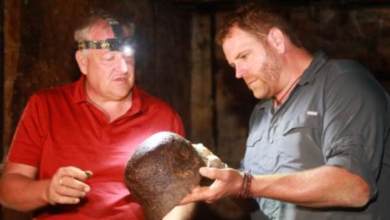
THE PRINCE’S PROXY: Unmapped Ruins in the Highlands May Hold Key to Jacobite Gold
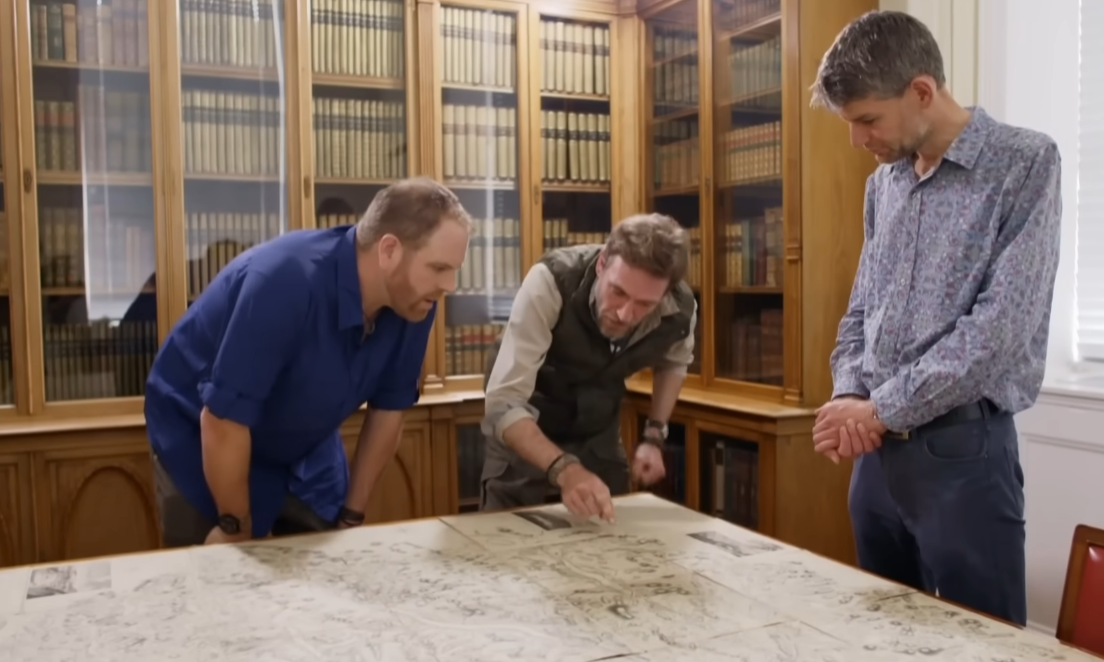
Deep within the rugged terrain of the Scottish Highlands, a 280-year-old cold case involving six chests of missing gold and a failed royal rebellion has seen a dramatic breakthrough. Explorer Josh Gates, working alongside historian Gregor Ewing and a team of researchers, has located the foundations of a previously unmapped cottage believed to be the final hideout of the legendary “Bonnie Prince Charlie” and his most trusted general.
The treasure in question—estimated at 35,000 gold coins—was sent from France in 1745 to fund the Jacobite uprising led by Prince Charles Edward Stuart. However, the fortune arrived too late to prevent the catastrophic defeat of the Highland clans at the Battle of Culloden. While the Prince eventually escaped to France, the gold remained behind, allegedly entrusted to his right-hand man, Cluny MacPherson, before vanishing into the mists of history.
The “CS” Map Discovery
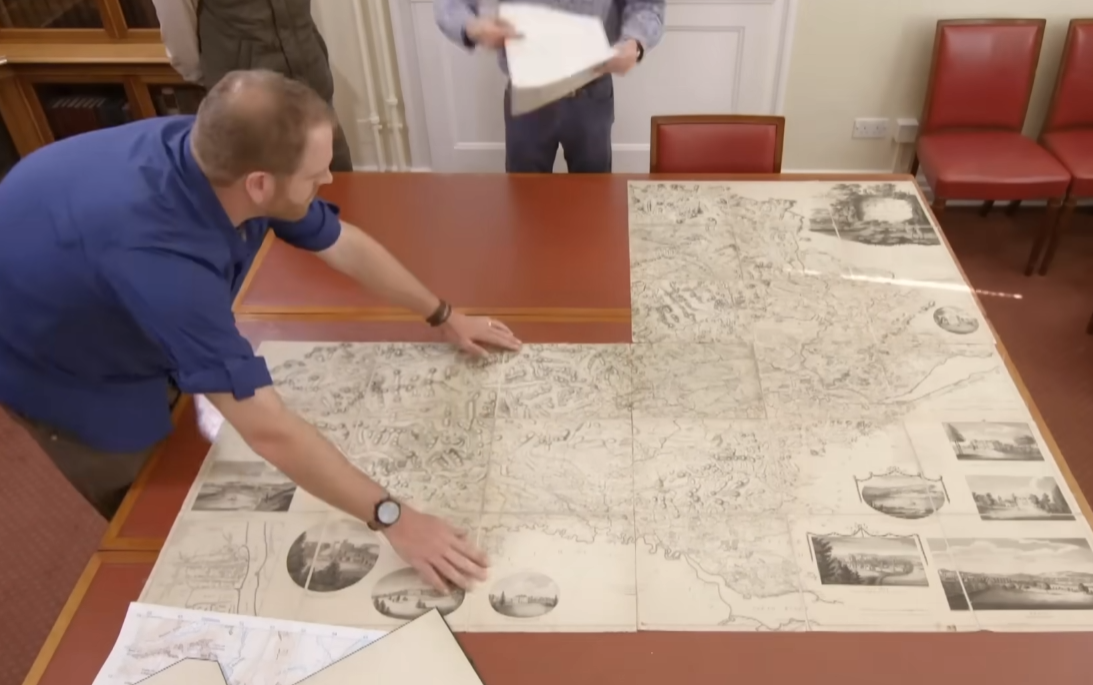
The breakthrough was sparked by a rare 1783 map of the Central Highlands. Unlike modern charts, this 18th-century document featured a cryptic inscription between a cluster of trees on the eastern bank of a remote loch: “Place where CS hid himself, 1746.”
“CS stands for Charles Stuart,” Ewing explained during the expedition. “It is a literal treasure map hidden in plain sight for over two centuries.”

Following the coordinates to a quiet ridge known as “Prince Charlie’s Head,” the team discovered the stone foundations of a rectangular structure. The ruins do not appear on any official modern survey, suggesting the site was part of a “secret rebel network” designed to shelter the Prince and his treasure from British pursuers.
Subsurface Anomalies and the “Button” Breakthrough
To peer beneath the Highland soil, researcher Emil Setti deployed electrical resistivity probes to build a virtual image of the ground. The scans revealed that the soil layer is remarkably thin—roughly 24 inches—meaning any buried caches would be located just above the bedrock.
While the elusive gold coins remained hidden during this initial survey, a high-sensitivity metal detector hit on a significant artifact just eight feet from the cottage wall: a copper Jacobite button.
“It’s not a gold coin, but it is a piece of history,” Gates remarked. “This button was worn by someone walking these grounds while the British army was hunting them. It confirms we are standing in the exact footprint of the rebellion.”
A Legacy of Exile
The failure of the 1745 uprising and the arrival of the “too late” gold altered the fate of Scotland forever. The subsequent British crackdown led to the Highland Clearances, a period of forced migration that explains why today, more people of Scottish heritage reside in the United States than in Scotland itself.
While the $30 million gold hoard remains the “Holy Grail” of the Highlands, the discovery of the MacPherson cottage provides the first physical evidence of the Prince’s desperate final months in Scotland. Archaeologists are now calling for a full-scale excavation of the site, hoping that the next anomaly detected beneath the heather will be the first of the six missing chests.