A striking discovery: A hidden antique button reveals new clues about the people who once lived on Oak Island.
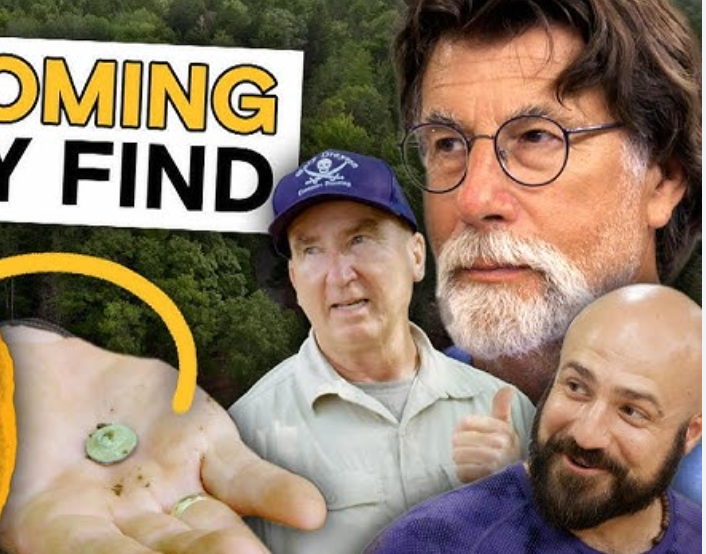
For years, Lot 5 — the heavily wooded parcel on the western edge of Oak Island — has been one of the most enigmatic areas under investigation. Despite producing unusual artifacts, curious structures, and traces of material linked to the Money Pit, the site has remained evasive, refusing to reveal a definitive explanation. But with the discovery of a unique, ornate button and the analysis that followed, Lot 5 may now stand at the center of a breakthrough that could reshape the entire Oak Island narrative.
This week’s developments on The Curse of Oak Island delivered one of the most compelling chapters yet in the ongoing search, combining archaeology, metallurgy, and high-stakes historical speculation. And for the first time in months, the team believes they may be closing in on evidence directly tied to the legendary 17th-century figure Sir William Phips — and possibly even a cache of treasure secreted on the island more than 300 years ago.
A Structure Full of Questions — and Iron
Archaeologist Fiona Steele opened the episode by admitting her frustration:
“We really felt that there was something we were going to discover at this level, and we haven’t yet.”
The rounded stone foundation on Lot 5 — a feature designated a “special place” by Nova Scotia’s government — has expanded dramatically over the past two years, now two to three times its original size. It has produced numerous anomalies: 17th-century trade beads, mortar-like soil matching samples from more than 100 feet deep in the Money Pit, and iron tools linked through scientific testing to Sir William Phips’ historical workshop in New England.
But the key question remains: What was the purpose of this odd, circular stone structure?
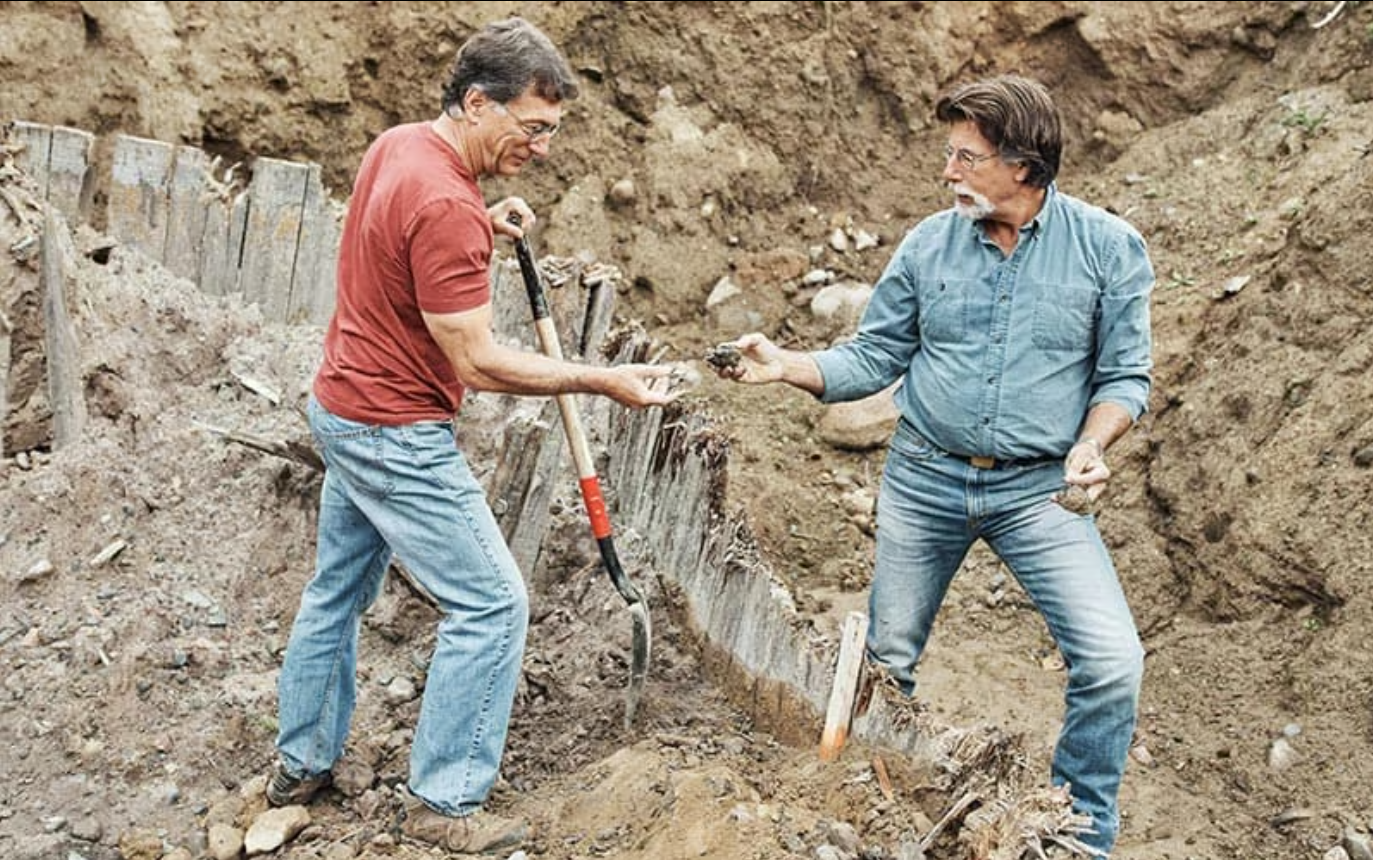
To search for new clues, Rick Lagina and famed metal detection expert Gary Drayton joined the archaeological team. Almost immediately, Gary’s detector began screaming with iron hits — so many, in fact, that Fiona joked they were “going to be busy for days.” But then came something different: a crisp, high-pitched tone, distinct from the iron signals.
“Non-ferrous,” Gary said with excitement.
“Copper, lead, or gold.”
That was enough to send anticipation soaring.
The Button That Changed Everything
One day later, under the careful trowel work of Jack Begley, the target emerged: a small, green-corroded metal disc with a looped shank on the back.
“It’s a button,” Laird Niven confirmed.
“And a weird-looking one.”
The team immediately noticed its unusual design. The outer rim appeared decorated, and beneath layers of corrosion, faint symmetrical shapes hinted at a floral motif. The button’s colour and structure suggested copper alloy — consistent with pieces from the 17th and early 18th centuries.
But the truth would come later, in the Oak Island Interpretive Lab.
Emma Culligan Reveals the Hidden Pattern
The next morning, Rick, Craig, Jack, and Laird joined archaeometallurgist Emma Culligan, whose analytical skill has become one of the show’s greatest assets. Using X-ray fluorescence mapping (XRF), Emma examined elemental distribution across the button and unveiled what lay beneath the corrosion.
As the image appeared, the entire room reacted:
“Oh… my God,” someone whispered.
Displayed across the monitor was a stunning, highly detailed floral design with multiple layered petals — far more intricate than anyone expected. The craftsmanship suggested wealth, status, and Old-World origin.
Gary Drayton reacted instantly:
“That is one fancy button… looks English to me.”
Emma and Laird agreed that stylistically, the piece could date from the late 1600s to early 1700s, aligning perfectly with the time period of Sir William Phips.
Jack Begley, who has long championed the Phips theory, was visibly excited:
“If this button dates to the 1600s, that fits really well with Phips.”
The Phips Theory Gains Momentum
For years, Oak Island theorists have speculated that Sir William Phips — who recovered 34 tons of treasure from the Spanish galleon Concepción in 1687 — may have secretly hidden some of the missing treasure on Oak Island. Historical records show that half of the expected treasure never made its way back to the English crown.
Phips’ close collaborator, Captain Andrew Belcher, was a high-ranking Freemason. Some believe the two men concealed treasure using coded knowledge and engineered structures, perhaps even involving early Masonic symbolism.
Previously discovered artifacts in Lot 5 — including iron tools linked metallurgically to Phips’ region — already supported this idea. The ornate button now adds a new piece of evidence to the puzzle.
Could Lot 5 have been a staging area or occupation site for Phips’ crew?
Was the stone structure a hiding place?
Is the team now uncovering material left behind by men transporting treasure?
These questions now fuel renewed optimism.
A Breakthrough Waiting Beneath the Soil
After the XRF reveal, Rick concluded:
“This may be one of those points that supports the idea the feature is much older than we first thought.”
Craig Tester agreed:
“What we have so far is amazing.”
Even Gary couldn’t resist a pun:
“It’s a blooming lovely find.”
But the team knows they are only at the beginning. The button — unique, ornate, and historically suggestive — could be the first of many artifacts waiting inside the expanding feature. Gary’s detector identified multiple non-ferrous and ferrous hits nearby, suggesting the site may still conceal items made of copper, lead, silver, or even gold.
And as Gary reminded them:
“If it’s gold, you’ll have to call me back for the gold dance.”
Conclusion: Lot 5 Moves to Center Stage
With every new discovery, Lot 5 grows in importance. The structure, once just a curiosity, is now shaping up as one of Oak Island’s strongest leads. A button may seem small, but in archaeology, small objects often tell the biggest stories.
If this button truly links to the era of Phips, it may be the key that finally ties together Lot 5, the swamp, the Money Pit, and the centuries-old mystery of missing treasure.
And just maybe, the island is finally beginning to talk.