The F-16 of the Seas: Josh Gates Unlocks the Engineering Secrets of Viking Longships
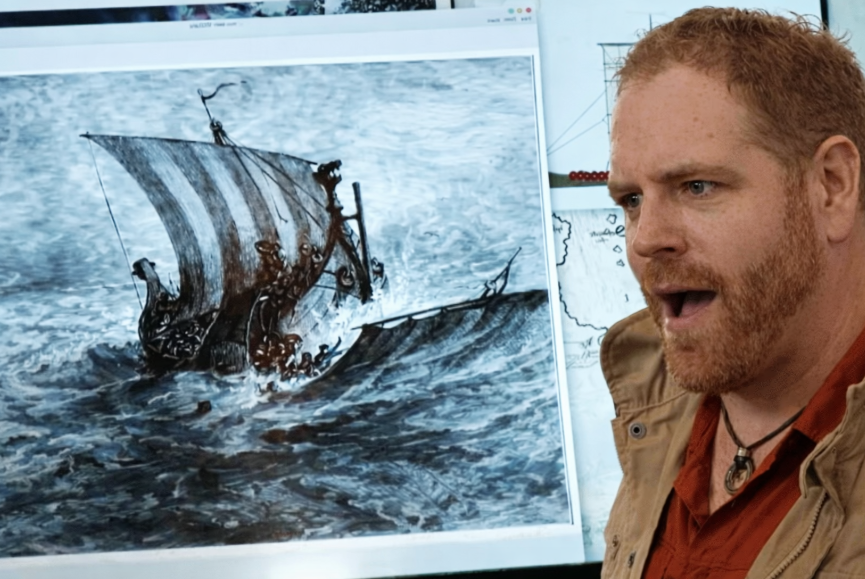
For centuries, the sight of a dragon-headed prow emerging from the North Sea mist struck terror into the hearts of coastal villagers across Europe. The Viking longship was more than just a vessel; it was a technological marvel that allowed a Norse culture to dominate the waves for over three hundred years. In a compelling segment of Expedition Unknown, host Josh Gates travels to Denmark to uncover how these ancient engineers built what experts call the “F-16 of the Viking Age.”
A Masterclass in Flexibility
At the Viking Ship Museum in Roskilde, Denmark, Josh Gates meets with master shipbuilder Martin Dæl. The museum is a hub for “experimental archaeology,” where craftsmen use period-accurate tools to recreate legendary vessels. Dæl explains that the secret to the longship’s success wasn’t just its size, but its incredible flexibility.
Unlike the rigid, heavy ships of the Mediterranean, Viking longships were designed to “dance” with the waves. “It’s a living thing,” Dæl explains as he shows Gates the internal structure. Using the “clinker” method—where oak planks are overlapped and riveted together—the Vikings created a hull that could twist and flex in heavy swells without snapping. This allowed them to navigate the treacherous Atlantic waters that would have shattered less sophisticated boats.
Splitting the Oak: The Strength of the Grain
Josh Gates dives into the labor-intensive process of preparing the timber, discovering that the Vikings didn’t use saws. Saws cut across the wood’s natural fibers, creating weak points. Instead, Viking craftsmen used wedges and axes to split massive oak logs along the grain.
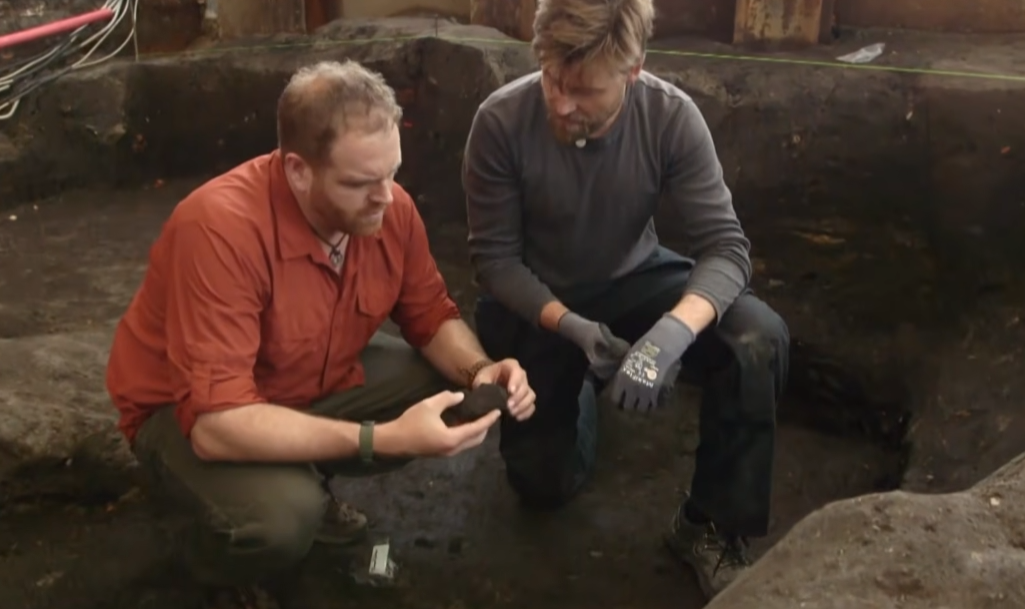
Gates assists in splitting a giant log, a process that requires precision and brute force. By splitting the wood radially—like slices of a pie—the builders ensured that each plank retained the full strength of the oak’s longitudinal fibers. This technique resulted in planks that were incredibly thin and lightweight, yet stronger than a much thicker sawn board. It was this specific engineering choice that gave the ships their signature shallow draft, allowing them to sail in water just three feet deep and launch surprise attacks directly onto beaches.
The Art of the “Iron Snail” and Tar
The assembly of these ships was an exercise in extreme patience. Gates observes the “iron snails”—the hand-forged rivets used to bind the overlapping planks. Between these planks, the Vikings layered wool or animal hair soaked in pine tar. This created a waterproof seal that functioned like a modern gasket, allowing the ship to expand and contract as it moved through the water.
The use of tar was so vital that its production was a major industry in the Viking world. Without this sticky, protective resin, the wood would rot, and the ships would leak. Gates learns that the smell of a Viking shipyard was a pungent mix of fresh oak, iron smoke, and boiling tar—the scent of a superpower in the making.
A Legacy of Global Reach
The engineering secrets Gates uncovers explain how the Vikings reached as far as North Africa and North America centuries before Columbus. The longship was a perfect fusion of speed, strength, and adaptability. It could be rowed when the wind died and sailed when the gales blew, making it the most versatile vehicle of the medieval world.
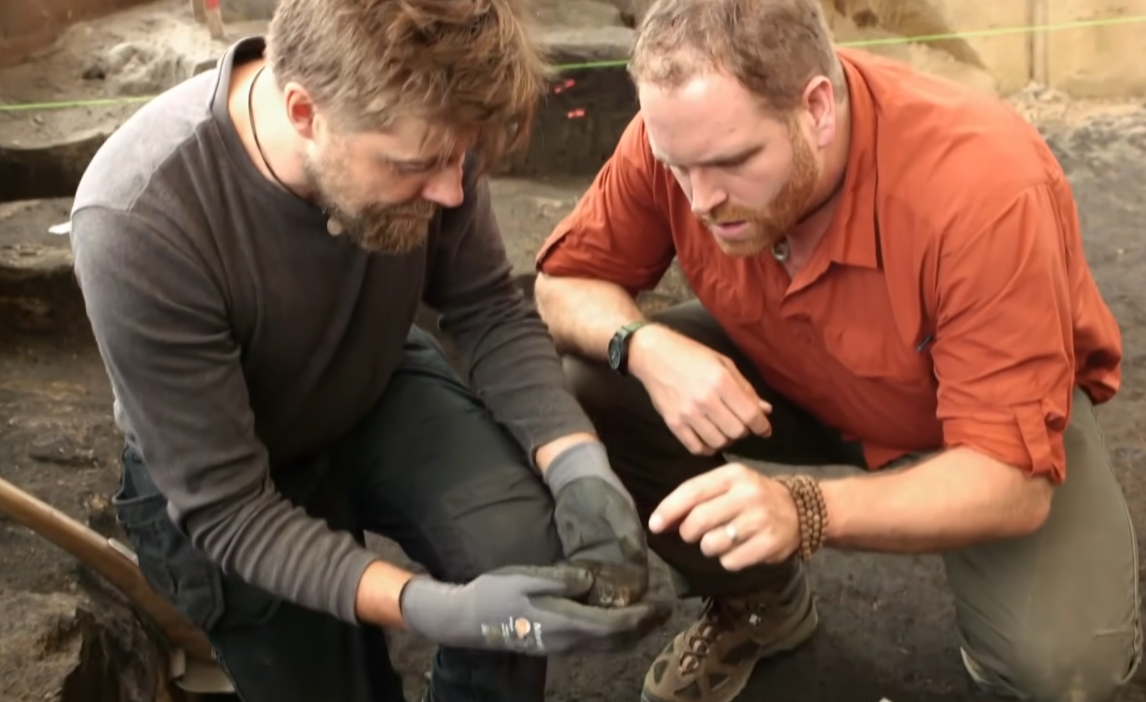
As Josh Gates concludes his journey at the shipyard, he reflects on the ingenuity of the Norse people. They didn’t have complex mathematical blueprints or power tools, but they had a profound, intuitive understanding of nature’s materials. By working with the grain of the wood and the rhythm of the ocean, they built a legacy that remains one of the greatest achievements in maritime history.