Oak Island Team Finds New Templar Clues in the Azores as Rare Portuguese Coin Raises Fresh Questions
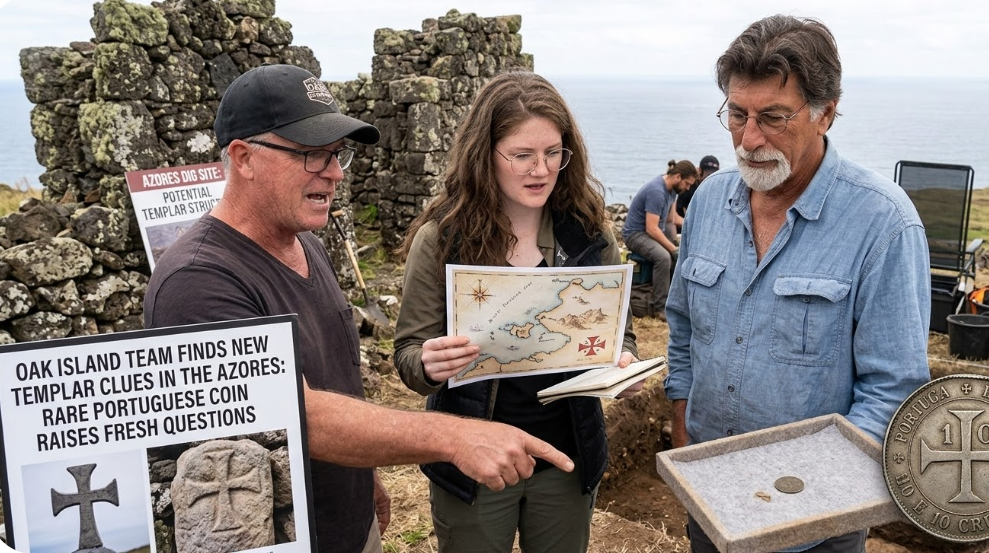
The latest investigation on The Curse of Oak Island has taken Rick Lagina and the team far beyond Nova Scotia, leading them to the Portuguese Azores in search of a deeper historical connection to the island’s mystery.
For years, the Oak Island team has examined clues that suggest Portuguese activity may have played a role in the island’s past. Medieval-style artifacts, stone structures, and the long-discussed Portuguese coin linked to the Money Pit have kept that theory alive. Now, a visit to Terceira Island has added another layer to the story.
The team arrived at the Church of Our Lady of the Conception, a 15th-century site connected to the Order of Christ, the Portuguese group that followed in the tradition of the Knights Templar. Local historian Francesco Nogueira explained that the church may sit at the crossroads of stories linking the Holy Land, the Azores, and possibly Oak Island.
Inside the church, the team noticed a symbol already familiar from previous investigations: the goose paw. This marking has appeared at several sites linked to the Templars and related orders, including locations in Italy and even Liverpool, Nova Scotia, less than 50 miles from Oak Island.

For Rick, the symbol was more than decoration. Its presence in the Azores suggested a possible trail. If Templar-linked groups used remote islands as places to protect valuable objects, the Azores would have been a logical stop between Europe and the western Atlantic.
The team also noticed an elongated cross-like shape near the marking, reminding them of Nolan’s Cross on Oak Island. While not conclusive, this similarity fed into the larger theory that certain symbols may have been deliberately repeated across important locations.
The next major development came at the Luis de Silva Ribeiro Public Library and Regional Archive, where the team met Portuguese coin expert Alberto Silva. They showed him the so-called Pitblado coin, believed by some to have come from the original Money Pit during drilling work in 1849.
Silva identified the coin as a silver piece minted in Lisbon during the reign of King Ferdinand I. More importantly, he narrowed its likely minting period to between 1369 and 1371. That detail matters because earlier analysis had placed it within a broader range, from 1367 to 1383.
The coin’s rarity also caught the team’s attention. According to Silva, fewer than 100 examples are known today, even though many more were likely produced during a period of war and financial strain in Portugal.
This created an intriguing question: if thousands of these coins were minted, why are so few known today?
For the Oak Island team, that gap opens the door to speculation. If coins of this type were part of a concealed collection, and if that collection was never recovered, it could explain why so few have appeared in circulation.
Rick connected that idea back to water testing in the Money Pit area, where previous results suggested traces of silver below ground. To him, the coin story and the scientific testing may support each other. The rare coin suggests a possible Portuguese link, while the water testing suggests that silver may still be present underground.
From an analyst’s perspective, this episode is important because it shifts the investigation from isolated finds to a wider historical pattern. The team is no longer only asking what was found on Oak Island. They are asking whether those finds fit into a route involving Portugal, the Azores, and the North Atlantic.
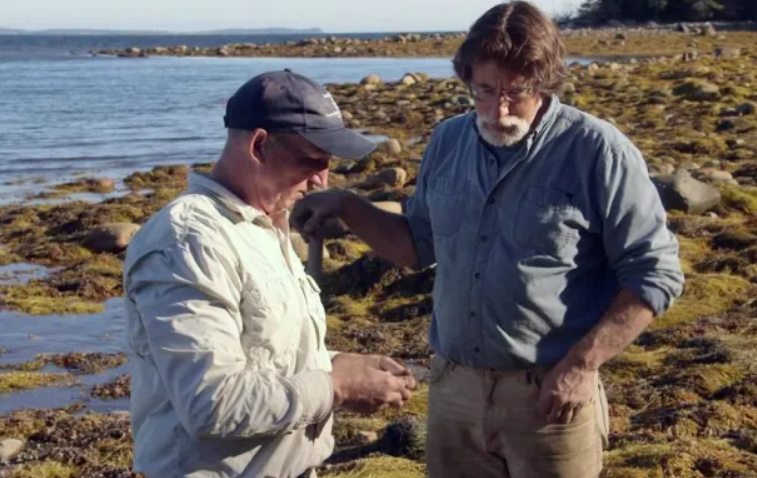
The next likely development will be renewed focus on the Money Pit caisson work. If the team believes the rare Portuguese coin could represent the kind of material still hidden underground, they will push hard to recover physical evidence before the season closes.
The Azores trip may not prove the full theory, but it gives the show a stronger narrative path: symbols in churches, Portuguese medieval history, the Order of Christ, rare coinage, and scientific signals from the Money Pit all pointing toward one question.
Was Oak Island part of a larger Atlantic journey connected to treasure, religious artifacts, or protected wealth?
For now, the answer remains uncertain. But the team returns to Oak Island with a clearer reason to keep digging. The mystery has not been solved, but the trail has become more compelling.