THE SMOKING GUN: Roman Numerals and Military Artifacts Linked to Oak Island’s Secret Past
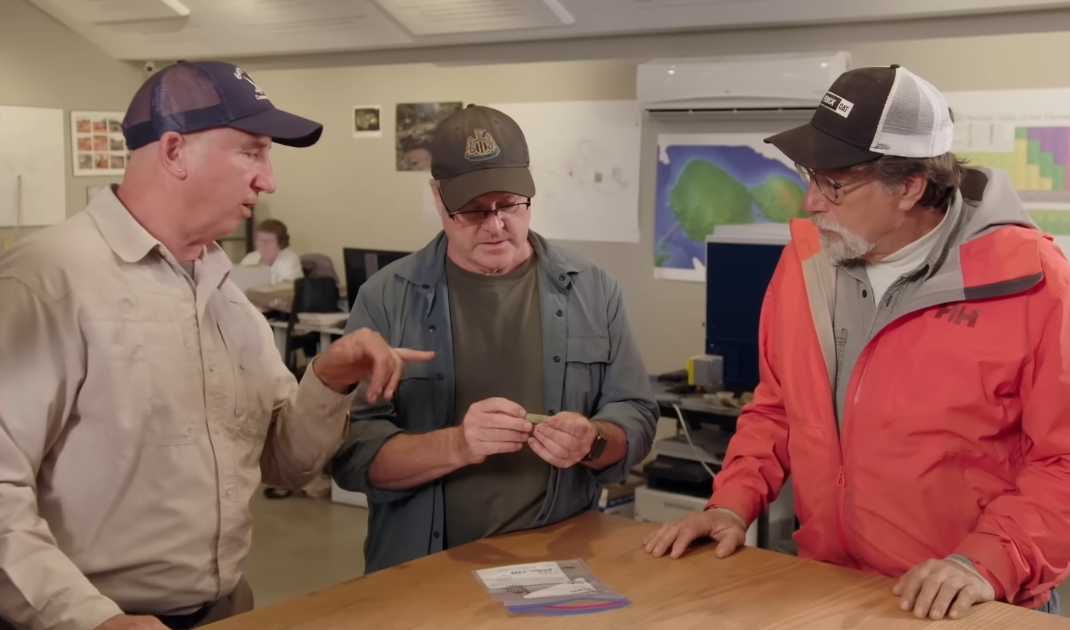
The investigation into the Oak Island mystery has taken a sharp turn toward military history following a series of high-stakes archaeological discoveries. Members of the Lagina team, working alongside metal detection expert Gary Drayton and a suite of specialists, have unearthed artifacts that may finally provide a “nationality” and a specific date for the original depositors.
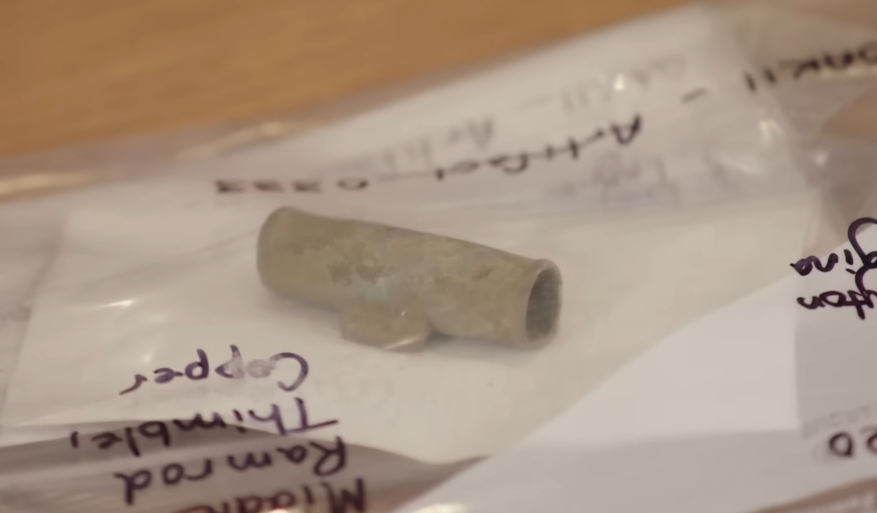
The most provocative find surfaced on Lot 5, where a copper, barrel-shaped artifact was recovered from the spoils of a circular depression. Initial speculation by the team suggested a gun sight, but high-tech analysis in the island’s laboratory has identified the item as a ramrod guide for a centuries-old musket.
The Roman Numeral Connection
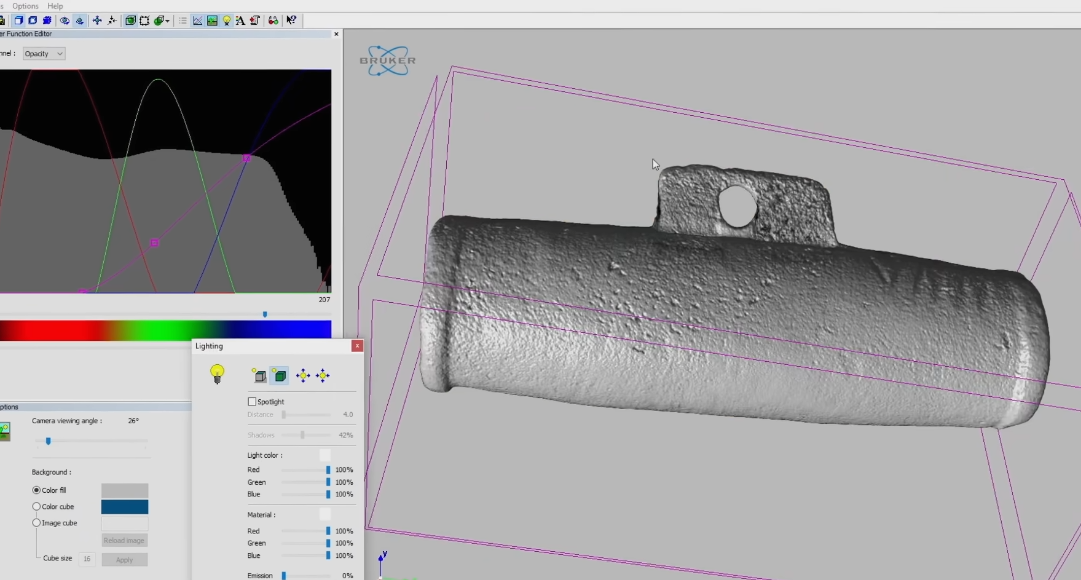
The discovery reached a fever pitch when archaeometallurgist Emma Culligan processed the ramrod guide through a SkyScan 1273 CT scanner. The non-destructive X-ray penetration revealed a detail invisible to the naked eye: a series of Roman numerals—specifically “VIII”—carved into the metal.
This marking has sent shockwaves through the team, as it mirrors the Roman numerals found on the 65-foot-long U-shaped wooden structure uncovered at Smith’s Cove in the 1970s. “We’ve never found Roman numerals on any other artifact to date,” noted Rick Lagina. “To have them found here suggests the two are strongly connected.” The team is now investigating whether the markings represent a specific military regiment, potentially linking the site to the 1746 Duc d’Anville expedition, a French naval mission rumored to have hidden treasure in the region.
Evidence of Wealth: The Samuel Ball Estate
Simultaneously, the team has expanded its search of Lot 24 and Lot 25, the former properties of Samuel Ball. Ball, an 18th-century former slave who became a wealthy landowner, remains one of the island’s greatest enigmas. Despite being a simple cabbage farmer, Ball died as one of the richest men in the province, leading many to believe he discovered a portion of the legendary treasure.
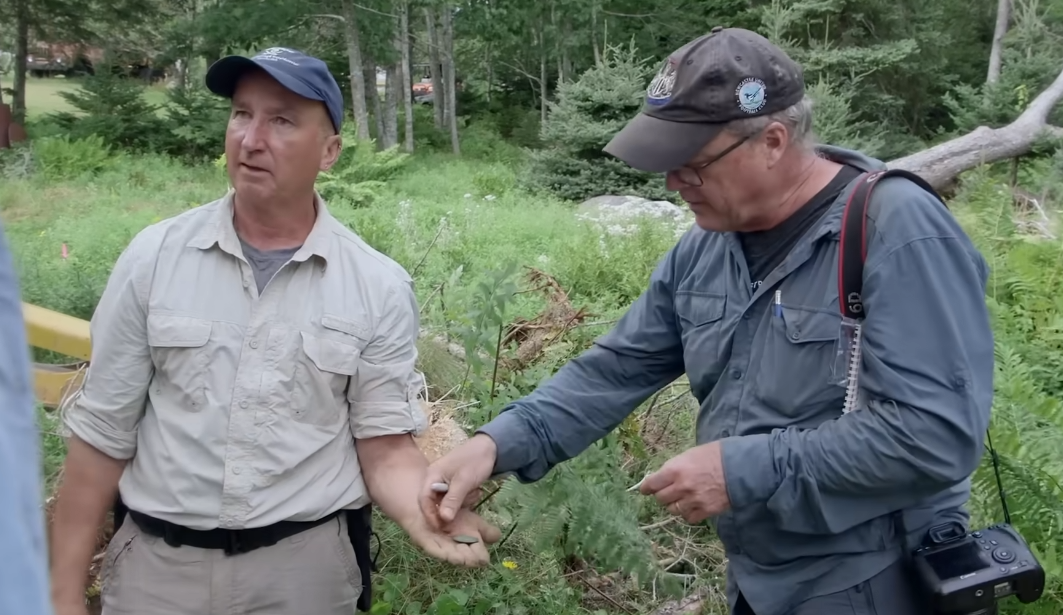
Supervised by archaeologist Laird Niven, Gary Drayton recovered a lead musket ball (or lead splash from a mold) and a fragile metallic item believed to be the back of a 18th-century pocket watch. These items bolster the theory that Ball had access to significant wealth and military-grade supplies during his tenure on the island.
The Road to the Money Pit
In the uplands near the northeastern border of the swamp, archaeologists Miriam Amirault and Dr. Aaron Taylor have made a “leap of faith” that appears to be paying off. After discovering hand-painted pottery with rare pink and blue pigments, the team utilized heavy machinery to peel back the earth, revealing an extension of the island’s mysterious stone pathway.
The cobblestone road, which appears to turn away from the swamp and head directly toward the Money Pit, suggests a massive, coordinated engineering project. “The road has to go somewhere,” Rick Lagina observed. “And right now, it’s headed in the direction of the treasure-associated thoughts.”
A Mystery Within a Mystery
From the hinges of a decorative chest found on Lot 12 to the military hardware on Lot 5, the team is no longer just digging for gold—they are “weaving a story” of human activity that predates the 1795 discovery of the Money Pit.
With the recovery of the ramrod guide, the search has moved from “if” someone was on the island to “who” they were. As the team prepares for a return to the lab to further analyze the “fancy” markings on the copper tube, the shadow of a French or British military operation grows longer over the North Atlantic.