Latest update on Rick and Marty Lagina’s Oak Island: New artifacts found in Stoneshot in the Money Pit.

The mystery of Oak Island continues to captivate treasure hunters and viewers alike, with Rick and Marty Lagina making a groundbreaking new discovery during their ongoing excavation efforts. The team has recently uncovered what appears to be a stoneshot, a hand-carved projectile, in the spoil material from their Peacock-1 caisson operation. This discovery, coupled with the team’s ongoing investigation into the famed “solution channel,” has raised fresh questions about the history of the island and its potential ties to the early explorers of the New World.
A Critical Discovery in the Money Pit Area
For years, the Oak Island team has focused its efforts on unraveling the island’s complex history and uncovering the long-hidden treasure. But as their excavation of the Peacock-1 caisson continues, an unexpected find has caught the attention of Rick Lagina and the team. After digging down to a depth of 170 feet, they encountered something unexpected—pieces of cement that seemed out of place in the geological layers they had encountered. Upon closer inspection, Rick and other team members began to speculate that this could be evidence of the elusive Chappell Vault, the concrete-encased treasure vault that treasure hunters have long believed is buried somewhere on the island.
The team’s hypothesis gained weight after they recalled the 1897 excavation when treasure hunters Frederick Blair and William Chappell reported encountering a seven-foot-high wooden vault encased in concrete at a depth of 153 feet. Blair and Chappell claimed to have found traces of gold and a piece of parchment with the letters “V-I” during their drilling. Could this newly discovered cement be related to the same vault, long considered the key to Oak Island’s buried riches? This discovery may finally provide the concrete evidence the team needs to tie the infamous vault to the island’s long-running treasure hunt.
The Stoneshot: A Piece of History from the Past
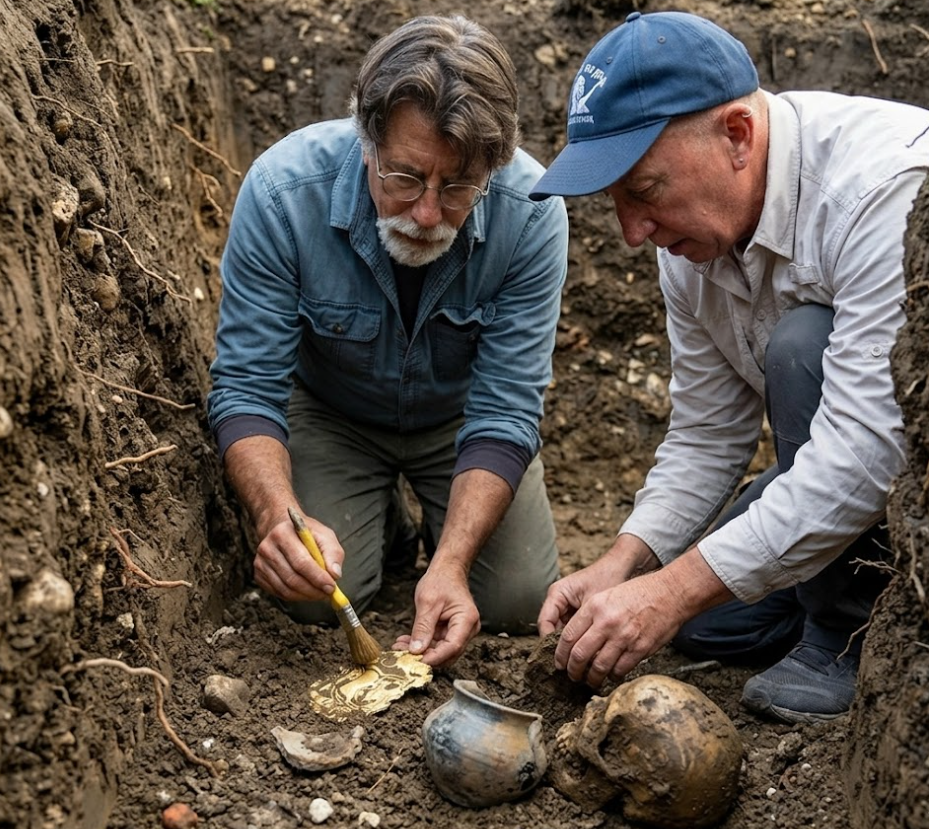
As the team continued to sift through the spoil material, a much more intriguing discovery surfaced—another possible stoneshot. This discovery is particularly significant as it follows two similar finds in recent years, one on Lot 15 and the other deep within the Money Pit area. Stoneshots, small hand-carved projectiles once used in early firearms and cannons, have been dated to as early as the 12th century. These pieces were typically used in the 14th and 15th centuries, making the discovery even more remarkable when linked to the ongoing theories about European involvement in the Oak Island mystery.
The team had previously speculated that the stoneshots could be linked to the Portuguese, particularly given the strong connection between the island and the Azores. After traveling to Portugal in 2021, Rick and his team discovered that the stoneshots found on Oak Island closely matched 15th-century Portuguese cannons. This new find, discovered at a depth of over 100 feet, only adds weight to this theory, suggesting that Portuguese explorers—or others with the ability to navigate to the New World in the 14th or 15th century—might have been involved in the island’s hidden treasure.
“This is incredible,” said Rick Lagina as the new stoneshot was presented to him by the team. “It has the appearance of the other ones. The previous stoneshots we found were consistent with the ones we discovered in Portugal. This one is different in some ways, but it still points to a similar history.” The continued appearance of these stoneshots raises fascinating possibilities about the island’s true origin and what hidden artifacts or treasures it may contain.
Theories Begin to Align: The Solution Channel and Evidence of Early European Presence
As the team delves deeper into the mystery, they are beginning to notice the alignment of several key pieces of evidence. The discovery of the stoneshot in the spoil material from the Peacock-1 operation, combined with the long-held theory of the solution channel beneath the Money Pit, suggests a significant connection between the tunnel systems on Oak Island and the treasure. Rick and his team have long believed that the solution channel—a series of underground waterways that connect to the ocean—may be a key to accessing the treasure. With this new discovery of the stoneshot and the cement-like material, it seems the mystery is slowly but surely coming into focus.
“We believe that the solution channel played a huge role in the treasure’s concealment,” Rick explained during a videoconference with his brother Marty. “We just need to figure out how it all connects. The stoneshots, the vault, the cement—all of it is pointing us in the same direction.” This connection between historical theories and recent discoveries has given the team renewed hope in their search for the treasure, with Rick acknowledging that the evidence is now “more concrete” than ever before.
The Growing Mystery: A Direct Path to the Treasure Chamber?
As they continue to examine the findings, the team is beginning to entertain the possibility that they may be closer to finding the treasure chamber itself. The recent discoveries—including the stoneshot, the cement, and the solution channel—suggest that the treasure may not be far from the location the team has been focused on for years. The possibility that this treasure was hidden by early European explorers, particularly the Portuguese, is becoming more plausible with each discovery. The stoneshots found in the Money Pit area and Lot 15 are strong evidence that these explorers may have had a significant role in burying treasure on Oak Island.
With the addition of the solution channel, which seems to provide an alternate route into the treasure chamber, the team is optimistic about what lies ahead. The newly confirmed path beneath the island is now a primary focus, as it could offer a more direct way into the treasure chamber, bypassing the notoriously difficult flood tunnel system.
“This changes everything,” said Rick. “We’ve spent years fighting against the flood tunnels, but now we have a new direction to go in. The treasure was hidden in a way we never fully understood before, but I think we’re getting closer to uncovering its location.”
What’s Next for the Oak Island Team?
As Oak Island’s mysteries continue to unravel, the team’s next steps are critical in determining whether they are indeed on the cusp of the breakthrough they have been seeking. With the newly discovered tunnel network, the team will focus on determining the location of the coastal entry point—a key factor that could unlock the final path to the treasure. As they move forward with the investigation, a systematic dive survey is expected to be conducted at the shoreline, where the tunnel’s entrance may be accessible.
The excitement surrounding these discoveries has brought a new sense of urgency to the team. With evidence pointing to early European involvement in the treasure hunt, it is clear that Oak Island’s history is far more complex than anyone could have imagined. As Rick and Marty Lagina continue their quest, the future of the Oak Island treasure hunt is now more thrilling than ever before.
Conclusion: A New Era of Exploration on Oak Island
The recent discoveries on Oak Island, including the evidence of a hidden tunnel network and the stoneshot findings, have set the stage for what could be a groundbreaking conclusion to the long-running treasure hunt. With more than 230 years of exploration and investigation behind them, the Oak Island team is closer than ever to unlocking the island’s greatest mystery. The recent evidence points to a well-planned system designed by early European explorers, and with renewed focus, the team is poised to discover what has been hidden beneath Oak Island for centuries.
As the team continues to explore, one question remains: What will they find when they finally reach the end of this incredible journey? The next chapter in the Oak Island mystery is about to unfold, and fans are eagerly awaiting what could be the greatest discovery in the history of treasure hunting.