THE HOLY GRAIL IN SIGHT? Massive Wooden Breakthroughs and Hand-Forged Artifacts Ignite Hope on Oak Island
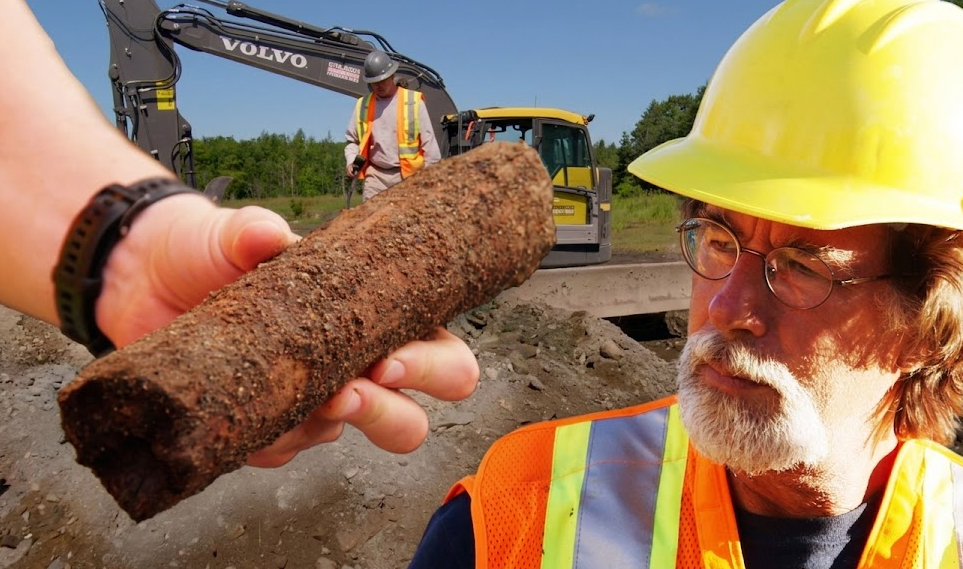
The air of mystery that has shrouded Oak Island for over two centuries grew noticeably thinner this week as the Lagina brothers and their team reported a series of “definitive” breakthroughs. From the recovery of massive timber structures deep within the Money Pit to the discovery of ancient hauling equipment in the swamp, the team believes they are no longer just chasing ghosts—they are mapping a treasure.
A “Crossroads” in the Money Pit
The most dramatic moment of the week occurred at the site of the main excavation, where a massive steel caisson finally reached its target depth. As the hammer grab was lowered, the team held its breath until the first signs of victory emerged from the slurry: wood.
“It’s within a foot of where we believed it to be,” a jubilant team member noted. Rick Lagina and Craig Tester confirmed that the timbers align perfectly with the historical record of a mysterious wooden structure—possibly the fabled “vault”—discovered via drill holes two years ago.
However, the discovery has sparked a tactical divide between the brothers. While Marty Lagina advocated for an aggressive “brute force” excavation to capitalize on the expensive equipment on-site, Rick Lagina called for an “all-stop” moment to preserve the archaeological integrity of the find.
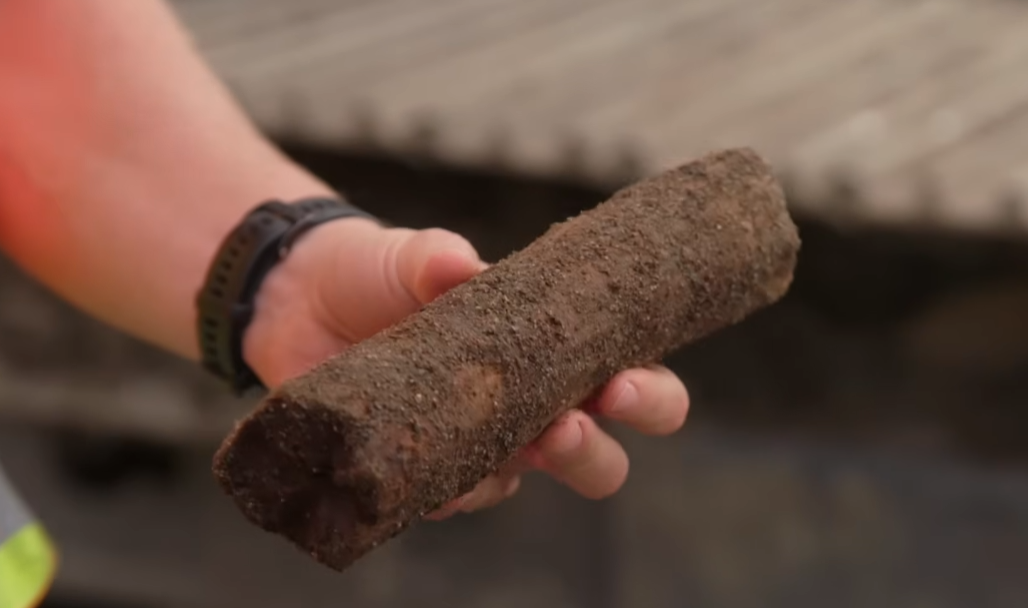
“I believe in my heart of hearts that there’s something very significant here,” Rick stated, opting for a cautious approach to ensure that whatever lies within the wooden breach remains intact.
Breaking Into “Shaft 2” and the 1805 Tunnel
While the main vault remains under deliberation, geologist Terry Matheson and Dave Blankenship reported a major strategic win at borehole F-14. Using a 30-ton sonic drilling rig, the team successfully “punched through” into a void at 100 feet, recovering large chunks of structural beams.
The team is confident they have located the Shaft 2 tunnel, a searcher structure built in 1805 to connect to the original Money Pit. For Rick Lagina, this find is the “Holy Grail” of mapping. By pinpointing the orientation of this tunnel, the team can now mathematically triangulate the exact location of the original treasure shaft, which has been lost since the catastrophic collapse of 1861.
The Swamp’s “Unloading” Zone
The excitement wasn’t limited to the depths of the Money Pit. In the recently drained swamp, metal detection expert Gary Drayton and Billy Gerhardt unearthed artifacts that suggest massive industrial activity occurred on the island centuries ago.
The team recovered a hand-forged iron chain and a crude, heavy-duty hook near the “Stone Road.” Drayton noted that the crude craftsmanship of the iron suggests it predates modern forges, potentially linking it to the 500-year-old road.
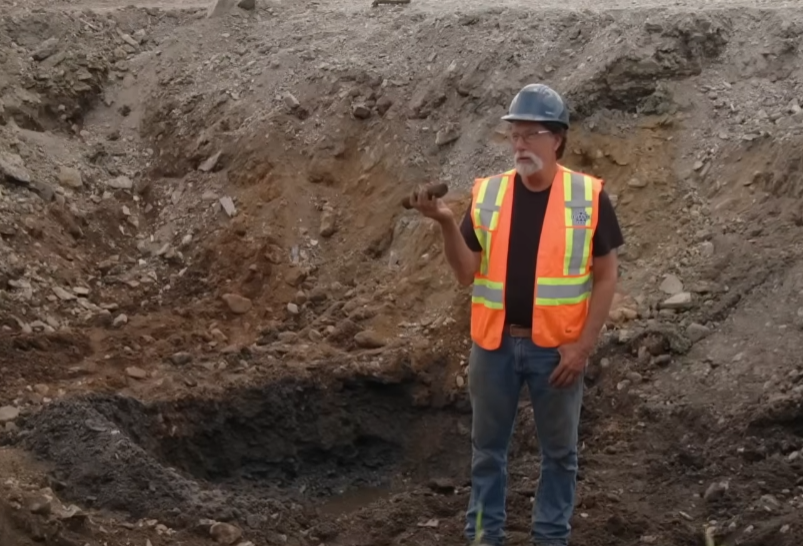
“You’d need a chain like this for unloading,” Drayton remarked, theorizing that the chain may have snapped while hauling heavy cargo from a ship toward the Money Pit. Adding to the intrigue, the team found wooden dowels and pegs that match the “U-shaped structure” found in Smith’s Cove, suggesting a massive, island-wide construction project.
As the team prepares for the next phase of drilling at Borehole F-15, the “puzzle pieces” are finally fitting together. Whether through the surgical precision of the drill or the raw power of the hammer grab, the Laginas are closer than ever to answering the world’s most enduring question: What is buried on Oak Island?