THE PHIPS CONNECTION: Oak Island Team Unearths Gilded Gold and Pure Silver in Lot 5 Archaeological Breakthrough
The long-standing mystery of Oak Island has taken a metallic and potentially revolutionary turn. In the latest developments from the western side of the island, archaeologists and metallurgists have confirmed the discovery of high-value relics on Lot 5, providing the most concrete evidence yet of a coordinated, high-level effort to conceal vast wealth.
The Science of “Hi Ho Silver”
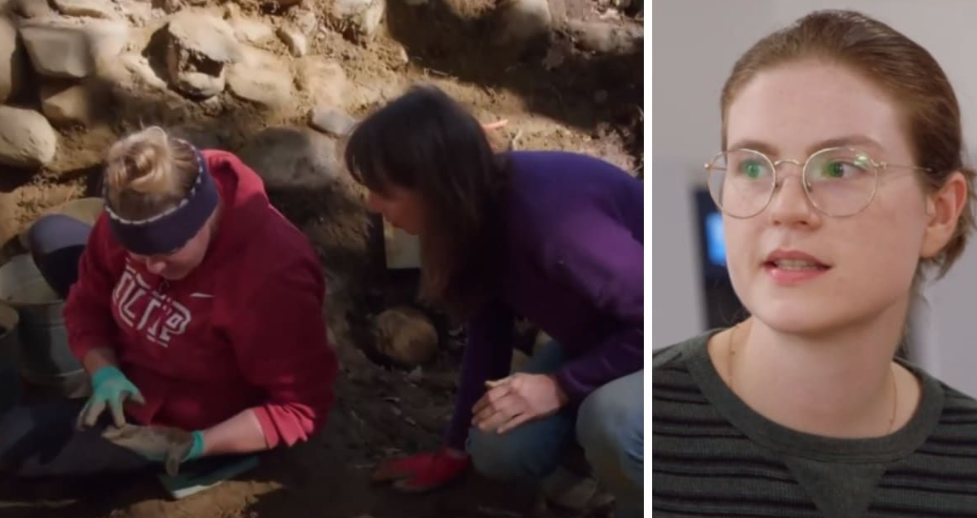
In a high-stakes analysis conducted at the Oak Island laboratory, archaeometallurgist Emma Culligan presented scientific findings that have sent shockwaves through the Fellowship of the Dig. The focus of the investigation was two artifacts recently unearthed by archaeologists Jamie Kouba and Fiona Steele along a strange stone foundation on the Lot 5 coastline.
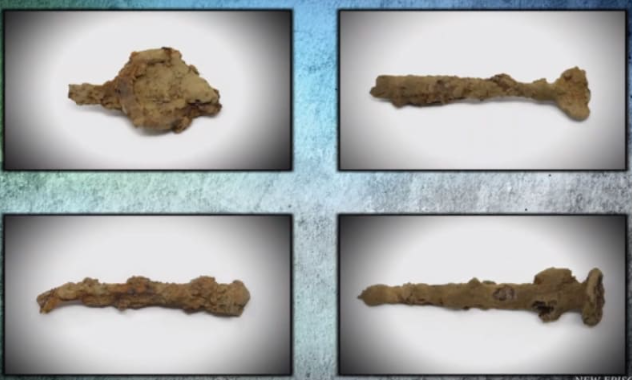
The first item, initially suspected to be solid gold, was confirmed by Culligan to be a copper alloy button with a 3% gold surface gilding. According to the team, the quality of the piece suggests it belonged to a military commander—someone with the authority and resources to oversee a massive engineering project.
Even more startling was the second find: a relic confirmed to be 40% pure silver. The presence of near-pure silver in a shoreline foundation has intensified speculation that the team is closing in on a cache of discarded or lost loot from a much larger haul.
The Phips-Freemason Conspiracy
The metallurgical signature of these finds has allowed Rick Lagina and his team to revisit a compelling historical theory involving Sir William Phips. A 17th-century English naval officer and privateer, Phips famously salvaged over 30 tons of silver and gold from the Spanish wreck Concepción in 1687.
The theory, championed by 32nd-degree Freemason Scott Clarke, suggests that Phips did not report his full findings to the English Crown. Instead, he is believed to have worked with Captain Andrew Belcher—a high-ranking Freemason in Nova Scotia—to secret away a significant portion of the Spanish gold and silver on Oak Island.
The “smoking gun” for this connection may be a man-made, cement-like material discovered by Jamie Kouba within the Lot 5 foundation. This exact substance was recently detected in the enigmatic tunnel deep beneath the Garden Shaft, suggesting that the surface structures on Lot 5 and the deep-earth works in the Money Pit are part of a singular, master-planned treasure vault.
The Templar Shadow and the “Holy Ark”
While the Phips theory offers a 17th-century explanation, the team is not discounting an older, more ancient origin. New astronomical data suggests that Nolan’s Cross and other stone features were constructed in the 1200s, aligned with celestial movements—a level of sophistication attributed almost exclusively to the Knights Templar.
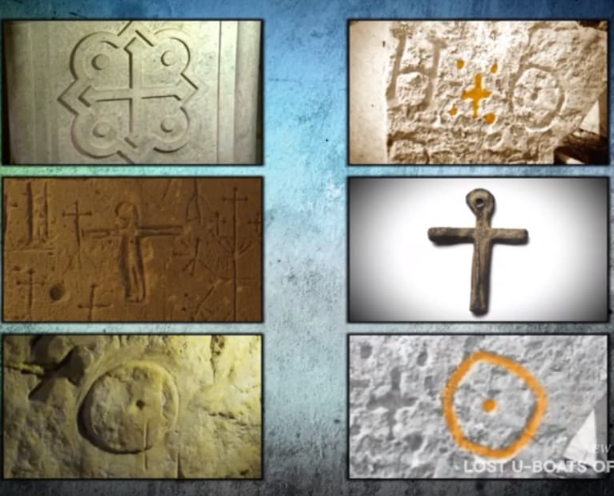
A new scholar has presented the team with a “hidden code” that purports to mark the exact location of the Ark of the Covenant. Citing ancient texts that describe a “sacred mark” acting as a “holy ark,” the researcher claims he can place an “X” on the map where the Templars may have deposited their most sacred relic.
The X-Factor
As the search intensifies, the intersection of Templar skill, Freemason secrecy, and Phips’ stolen silver has turned Lot 5 into the island’s most critical archaeological site. For Rick Lagina, the data is beginning to converge. “The story corroborates the science, and the science corroborates the story,” he noted.
With the laboratory confirming precious metals and the ground revealing matching construction materials across the island, the “X” on the map has never looked more promising.