Exploring Oak Island: Ancient Templar Knights’ Tombs Reveal Many Mysteries.
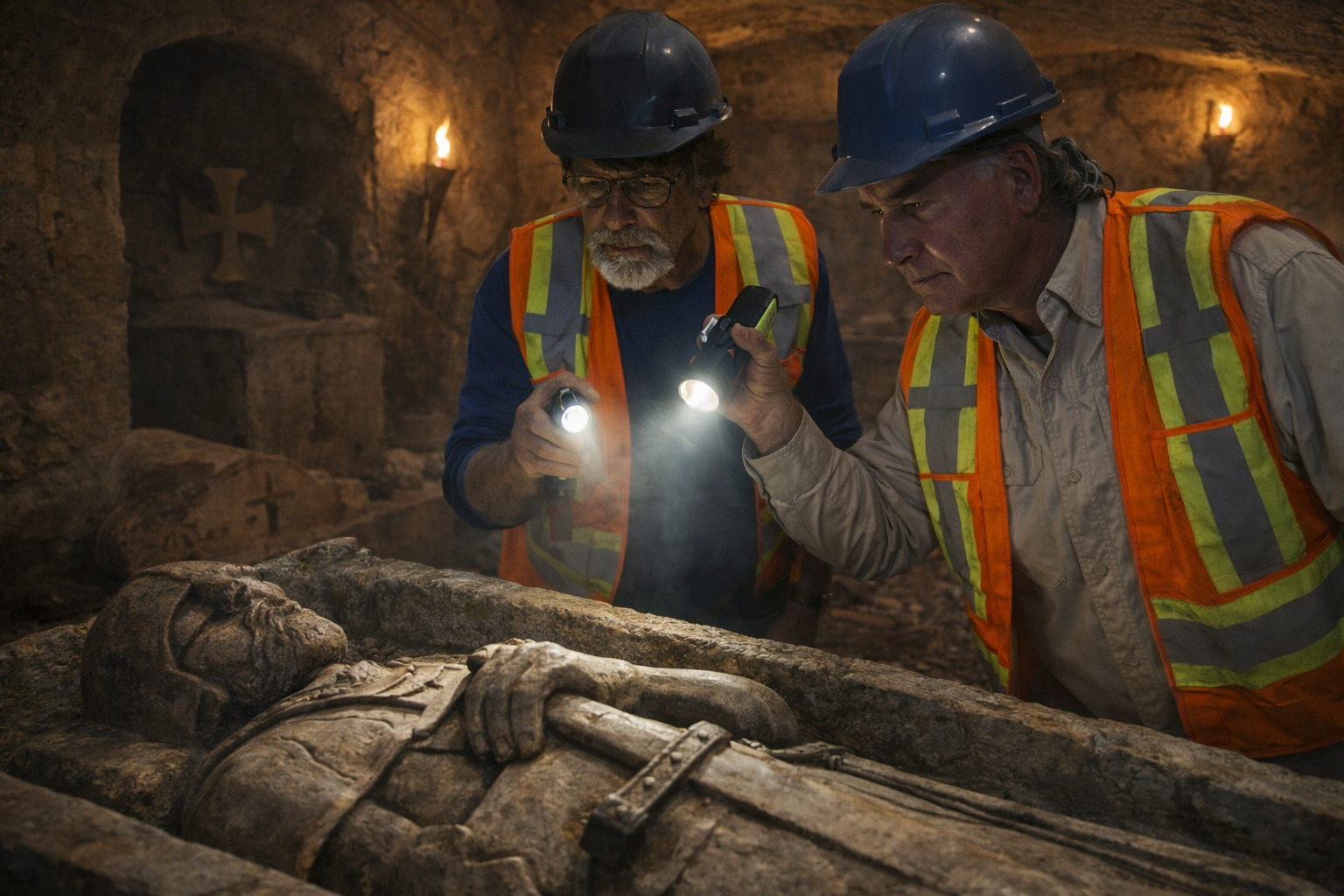
For over two centuries, Oak Island has captivated treasure hunters, conspiracy theorists, and historians alike. The island’s Money Pit, a mysterious shaft thought to hold unimaginable riches, has long been the center of the search. However, the latest developments, which have recently leaked online, suggest that the true secret of Oak Island may not lie in the Money Pit itself but in an entirely different, much older discovery—one that could radically rewrite history. According to the leak, a team of researchers has uncovered what may be a preserved Roman-style chamber buried deep beneath the island, raising new questions about its origins, its purpose, and the forces that have kept it hidden for centuries.
A Stunning Discovery: A Chamber Beneath Oak Island
The story begins with a remarkable sonar scan that reportedly revealed a rectangular chamber over 140 feet underground. The structure, which measures approximately 10 feet wide and 15 feet long, is said to have been buried so deep that it’s comparable to hiding an entire room beneath a 14-story building. This discovery is unlike anything the team has encountered in over a decade of searching. Unlike the usual debris, collapsed tunnels, or rusted artifacts, this chamber appears to have been purposefully constructed and preserved, raising immediate questions about who would have built it and why.
What makes the discovery even more shocking is the seemingly advanced engineering that would have been required to create such a structure in centuries past. The reports suggest that the chamber is lined with a thin metallic coating, which some researchers believe may have been used to protect the chamber from collapsing and from the corrosive effects of seawater that have destroyed nearby tunnels. In a world where most people still associate Oak Island with pirate treasure and Templar legends, this revelation suggests the island’s true secrets may be far more complex and far older than anyone had anticipated.

The Mysterious Alloy: A Link to Roman Engineering?
The most significant detail in the discovery is the composition of the material lining the chamber’s walls. Early analysis suggests that the metallic coating is a lead-silver alloy, a material associated with ancient Roman engineering. This alloy was used in Roman aqueduct systems, protective containers for important records, and even burial chambers for elite figures. The idea that such advanced technology could have reached Oak Island centuries before Columbus is a theory that challenges mainstream history.
Historians and archaeologists who have studied the materials used in Roman infrastructure are now reevaluating the significance of the Oak Island discovery. If the alloy does indeed match that of Roman origin, it would suggest that the island was visited by individuals with access to ancient Roman knowledge—potentially much earlier than previously thought. Could this link point to an ancient group, possibly a precursor to the Knights Templar, that secretly preserved and passed down Roman-era technology and knowledge?
The Templar Connection: A Hidden Legacy?
The Knights Templar, a secretive and powerful medieval order, have long been associated with Oak Island, largely due to the mysterious symbols, coded messages, and the labyrinthine tunnels found on the island. Now, some researchers are considering a new theory: that the Templars, or a group with ties to them, used Roman knowledge to construct an elaborate vault beneath Oak Island. Theories suggest that the chamber may be part of a much larger network of tunnels, vaults, and sacred spaces, designed to protect something far more significant than mere treasure.
What if the Money Pit was never the true treasure vault at all? What if it was a decoy—an elaborate ruse designed to mislead treasure hunters for generations, while the real secret remained hidden in plain sight? The recent discovery of the chamber, aligned with specific geometric points linked to Nolan’s Cross, adds weight to this theory. The cross, an infamous feature of Oak Island’s layout, could be a key to unlocking the island’s deepest secrets. Some experts now believe the chamber could be a ceremonial space, a decoy vault, or even a tomb designed to protect something sacred—perhaps a priceless relic like the Holy Grail or the Ark of the Covenant.
The Growing Influence of Online Communities in the Search
The discovery has sent shockwaves through the Oak Island fanbase, which has evolved from a group of casual viewers to a dedicated, global network of amateur investigators. Online forums and social media platforms are abuzz with discussions, theories, and analyses of the leaked information. Enthusiasts from around the world have begun to connect the dots, using advanced technology such as satellite imagery, ancient map overlays, and detailed research into Templar symbols and Roman engineering to piece together the puzzle.
Some theories, once dismissed as fringe or overly speculative, are now being taken more seriously. For example, the theory connecting Oak Island to ancient European landmarks via geometric patterns, originally proposed by online researchers, is gaining traction. The idea that the island’s layout mirrors that of ancient structures in Europe suggests a deliberate connection that could trace back to Roman or early Templar explorers.
In fact, some fans have even identified correlations between the dimensions of the chamber and ancient numerology associated with the Templars, further bolstering the belief that the Knights may have played a significant role in the island’s mystery. The digital community’s contribution has become so valuable that reports suggest Oak Island’s research team is closely monitoring these fan theories, potentially using them to guide the next phase of their investigation.

A New Era of Discovery?
As the latest season of The Curse of Oak Island progresses, it’s clear that the hunt for treasure has shifted gears. The discovery of the Roman-style chamber is not just another exciting find—it could be the key to unlocking the island’s true history. While many remain skeptical, dismissing the reports as exaggerated or sensationalized, the growing evidence suggests that Oak Island may be hiding something much more profound than mere pirate gold.
For Rick and Marty Lagina, the discovery marks the beginning of a new chapter in their long-running quest. With the location and depth of the chamber now identified, the real challenge begins. Extracting what lies within the chamber—if it is even accessible—will require a level of skill, precision, and resources not yet seen in the history of Oak Island excavation.
As the theories continue to pile up and the mystery deepens, one thing is certain: Oak Island is no longer just about treasure. It’s a riddle that spans centuries, filled with secrets and stories that could forever change our understanding of history. Whether or not the team will uncover the ultimate prize remains to be seen, but for now, the journey continues.