Gary Drayton’s discovery of a button in Lot 32 raises new questions about Oak Island
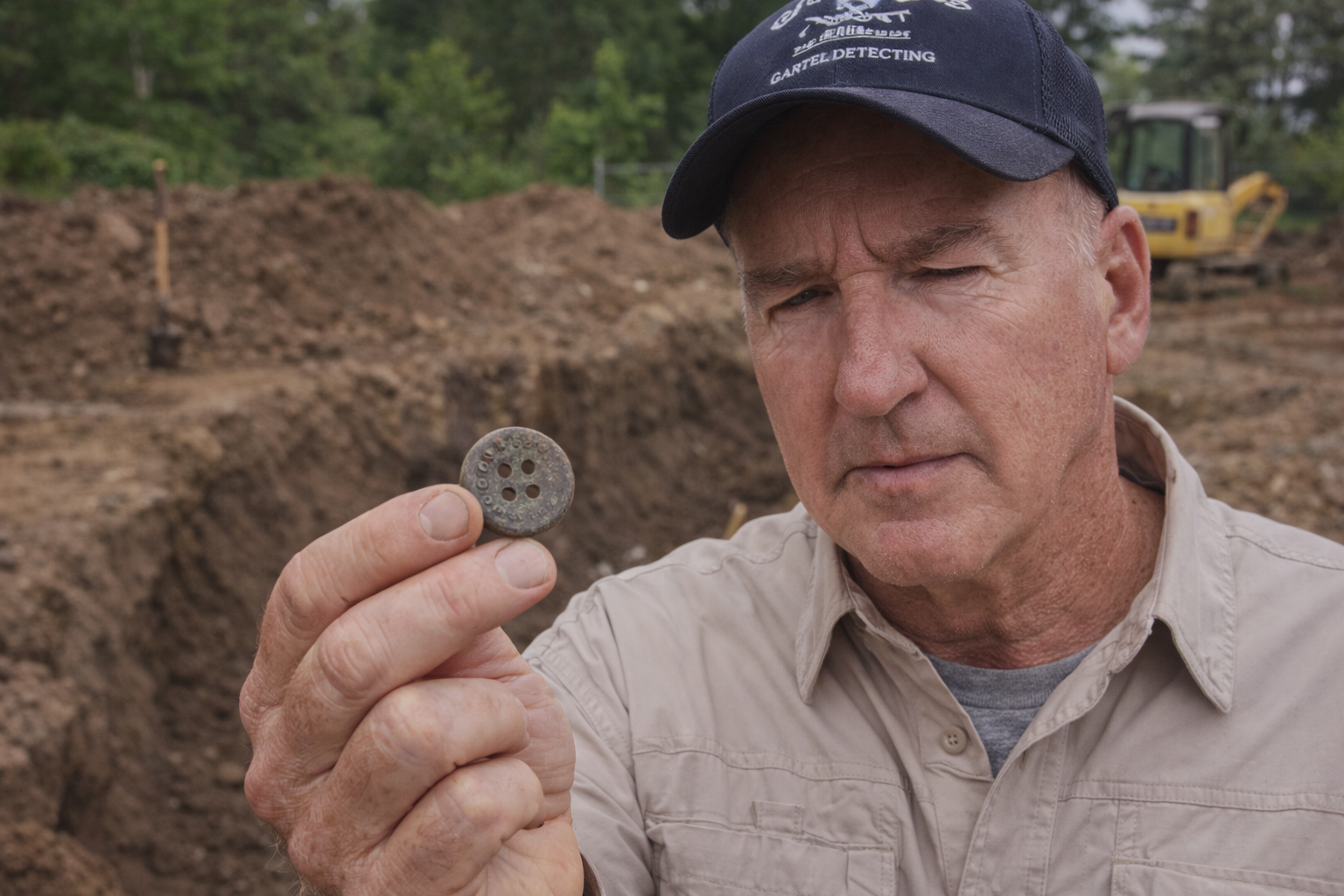
The latest investigation on The Curse of Oak Island brings the team back to one of the show’s strongest storytelling patterns: small artifacts that may carry large historical consequences. Across Lot 32, the swamp road, and the mysterious stone foundation on Lot 5, the team uncovers a series of finds that appear to point toward activity on the island long before the famous Money Pit discovery of 1795.
From an analyst’s perspective, the importance of this sequence is not one single object. It is the pattern. A possible old British coin, an 18th-century English wine bottle, a non-ferrous signal inside a protected archaeological feature, and an ornate copper-alloy button all suggest that Oak Island was not an empty landscape waiting to be discovered by treasure hunters. It may have been a working site, a landing place, or a concealed storage zone used by people moving valuable goods.
The episode begins on Lot 32, where metal detection expert Gary Drayton and treasure hunter Michael John return to ground that has already produced promising clues. Lot 32 matters because of its proximity to the ocean and because previous finds in the area have suggested maritime activity. A large spike found with Marty Lagina was interpreted by blacksmithing expert Carmen Legge as possibly being used to anchor ships to large rocks near shore. One year earlier, the team had also found a large wharf spike and a lead cargo bag seal.
That combination raises an important question: if ships were being secured in this area, what were they unloading?

Gary and Michael’s coin discovery adds another layer. The object is recovered from depth, and Gary immediately notes that deeper targets often indicate older finds. He suspects it may be an old British copper, possibly from the 1700s. That matters because the team has previously found 17th-century British coins on the opposite side of the swamp. If this new coin belongs to the same general period, it could strengthen the theory that British activity on Oak Island occurred decades before the Money Pit was officially found.
The coin alone cannot prove a treasure operation. Coins can travel through trade, settlement, military activity, or ordinary loss. But when a coin appears near possible wharf features, cargo seals, spikes and a route leading toward the interior, its meaning becomes more interesting. It may not be just a lost object. It may be a marker of movement.
The swamp investigation pushes that idea further. Rick Lagina and the team continue examining the stone road or possible wharf feature in the southeastern corner of the swamp. The road has already drawn serious attention because Terry Deveau compared it to road-building styles seen in Europe in the 1500s. If that assessment holds, it suggests the feature may be far older and more deliberate than ordinary farm or searcher activity.
Miriam Amirault’s discovery of black glass and pottery near the stone road is especially useful because ceramics and bottle glass can often help date a site. The bubbly black glass suggests an older manufacturing process, and the eventual identification of a bottle finish pointing to the 1770s or 1780s places activity in the area before the 1795 Money Pit story. That is one of the key themes of the episode: evidence continues to appear from the decades before the search officially began.
An English wine bottle from that period could have several interpretations. It may have belonged to early settlers, military personnel, sailors, or people connected to a loading operation. It could also be linked to searchers working before the story became widely documented. The team will need context to know which explanation fits best. But its location near the stone road makes it hard to ignore.
The most intriguing moment, however, comes on Lot 5. This site has become increasingly important because it contains a rounded stone foundation and nearby test pit that have produced artifacts possibly tied to much older activity. Previous finds include trade beads, mortar-like material similar to samples from deep in the Money Pit area, and iron tools that some interpretations have linked to Sir William Phips.
That theory is bold. Phips, a 17th-century English figure, recovered treasure from the Spanish galleon Concepción in the Caribbean in 1687. Some Oak Island theorists suggest that he and Captain Andrew Belcher may have hidden part of the recovered treasure on Oak Island. It remains speculative, but Lot 5 keeps producing objects that make the team revisit the possibility.
Gary Drayton’s scan identifies a non-ferrous target in the archaeological feature. Because the site has protected status, archaeologists must uncover the object carefully. The next day, the team recovers what appears to be an ornate copper-alloy button. At first glance, it looks unusual. After XRF mapping and imaging by Emma Culligan, its details become clearer: a floral design, decorative outer ring and craftsmanship that Gary believes may be English.
The possible dating is the key. The team discusses a safe range in the 1700s, with the possibility that it could date to the late 1600s. If the button truly belongs to the 17th century, it becomes highly relevant to the Phips theory. A fine jacket button is not a random work tool. It suggests a person of some status, someone wearing more formal clothing, may have been present at or near the Lot 5 structure.
Still, caution is needed. A button cannot identify William Phips by itself. It can only support a time period and cultural connection. To move from “English-style button” to “Phips-related artifact,” the team would need more evidence: matching dates, associated objects, documentary support, or a stronger link between Lot 5 and other features on the island.
My prediction is that Lot 5 will become an even larger focus in future episodes. The non-ferrous signal, the ornate button, and the earlier artifacts suggest the stone foundation may be older and more purposeful than initially believed. The team will likely expand the excavation carefully, return Gary to scan additional sections, and ask Emma to conduct deeper material analysis on any new finds.
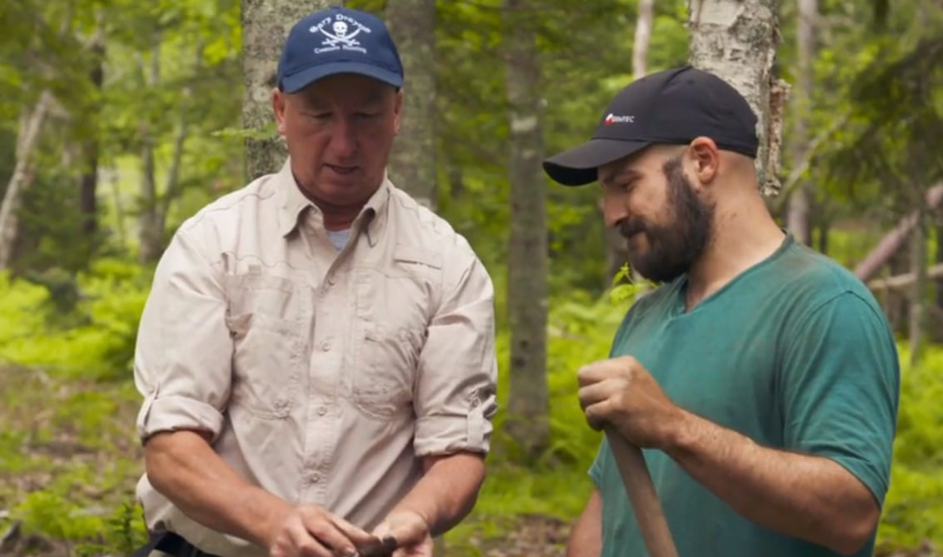
The swamp road will also remain important. If the road, bottle fragments, wharf spikes, cargo seal and ship-related materials can be connected, the team may begin building a stronger argument for a transport corridor from shore toward the Money Pit area. That would be a major development because it would turn scattered finds into a working landscape: ships arrived, cargo moved inland, and certain areas were deliberately used.
The episode’s strongest implication is that Oak Island’s story may not begin in 1795. The artifacts suggest earlier activity, possibly British, possibly maritime, and possibly tied to valuables being moved or concealed. Whether that activity involved Phips, military logistics, trade, or another group remains unresolved.
For Rick and Marty Lagina, the path forward is clear. The island is not giving them one final answer. It is giving them a pattern. Lot 32 points to landing and unloading. The swamp points to movement and infrastructure. Lot 5 points to status, occupation, and possible concealment.
If those three areas continue to connect, the Oak Island mystery may become less about a single treasure pit and more about an organized operation that used the island long before the first searchers arrived.