Oak Island Season 13 Special Episode: The $400 Million Treasure Mine Has Finally Been Found!

The Oak Island mystery has always moved between hope, science and uncertainty. For more than two centuries, the Money Pit has drawn treasure hunters into one of the most persistent searches in North American history. But the reported events of Season 13, Episode 29 suggest that Rick and Marty Lagina may have reached one of the most important moments in the modern investigation.
The episode centres on a massive underground target detected beneath the Money Pit area. According to the account, the team identified unusual signals between 100 and 120 feet below the surface, pointing to a dense underground mass that did not behave like ordinary soil, clay or natural rock. For a search that has often relied on scattered artifacts and uncertain historical clues, this would represent a more focused and data-driven phase.
From an analytical perspective, the most important change is the team’s method. This was not presented as another random dig. Before the main excavation began, the Lagina brothers and their team reportedly spent months reviewing old maps, drilling records, survey documents and previous search data. Their goal was to identify an area that had never been properly explored at extreme depth.
That shift matters. Oak Island has been damaged and confused by centuries of digging. Old shafts, collapsed tunnels, flooded voids and backfilled material make every discovery difficult to interpret. The only way forward is to narrow the search using overlapping evidence. In this case, muon scanning, seismic imaging and computer-assisted analysis reportedly pointed toward the same target zone.
The scans suggested a concentrated area of unusual density, possibly around 30 by 30 feet. That alone does not prove the existence of treasure, but it does justify investigation. When the same reading appears again and again from different angles, the team has reason to believe the target may be more than a natural anomaly.
Once drilling began, the operation initially moved smoothly. The first 60 to 70 feet reportedly presented no major issue. But as the drill passed roughly 90 feet, the situation changed. Operators encountered heavy resistance, increased pressure and equipment overheating. Progress slowed sharply, turning what had been a controlled operation into a difficult technical challenge.
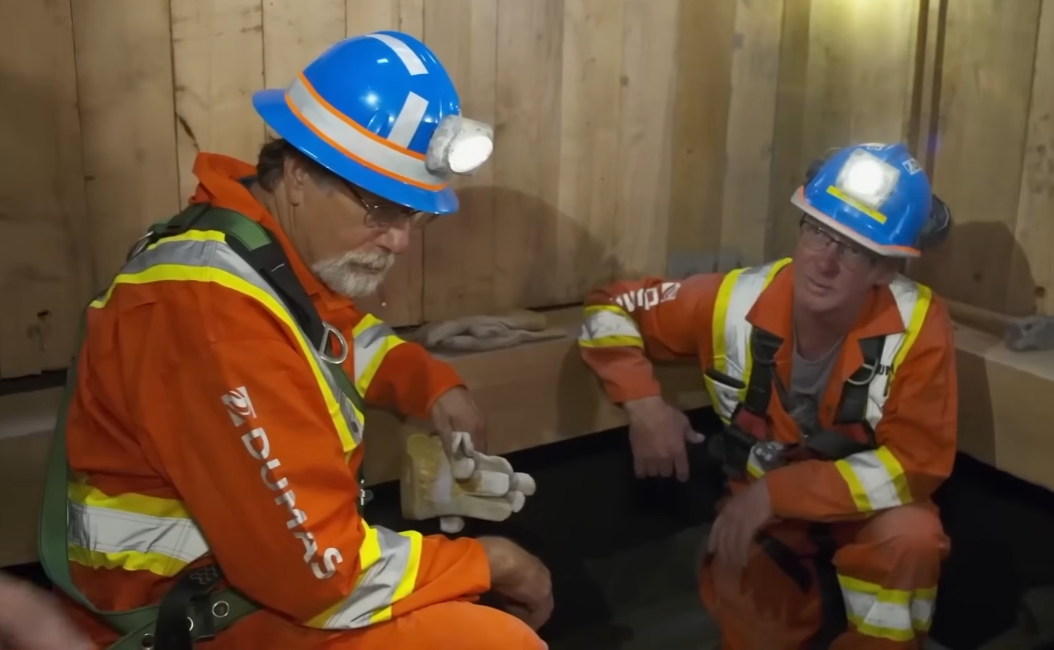
For the Oak Island team, such resistance can be both a warning and an encouragement. On one hand, it increases the cost and danger of the operation. On the other, unusual resistance may indicate that the drill has reached compacted material, a structural barrier or a buried object. Oak Island’s history is filled with stories of wood platforms, clay layers and strange underground features. Any hard obstruction near the Money Pit immediately attracts attention.
The first core samples may be the clearest turning point. Material pulled from depths between 95 and 105 feet reportedly looked very different from normal ground. Instead of loose sediment, the samples appeared dense, layered and tightly compacted. Most importantly, fine traces of gold were said to be visible in the material.
Gold traces have appeared in Oak Island discussions before, but context is everything. If gold appears randomly, it can be dismissed as contamination, natural movement or an isolated trace. If it appears repeatedly in specific layers, the meaning becomes more serious. The reported samples suggested that gold particles were not scattered evenly through the soil, but concentrated in certain bands.
That pattern raises several possibilities. The material could have been deliberately placed. It could have settled through an unusual process connected to water movement. Or it could be connected to a man-made structure that once contained or protected valuable material. None of those explanations can be accepted without testing, but all would justify further excavation.
The discovery of wood fragments, dense clay and metallic residue in the same core samples adds another important layer. Oak Island researchers have long paid close attention to wood because it can sometimes be dated through scientific methods. If the wood is worked rather than natural, and if it can be dated to a period earlier than known searcher activity, it could become crucial evidence.
The clay is also significant. Dense clay has often been discussed in relation to sealing, waterproofing or construction activity on Oak Island. If clay was deliberately packed around a structure, it may suggest someone was trying to protect or hide something underground. Metallic residue, meanwhile, could point to tools, hardware, containers or a larger object below the drill path.
The reported discovery of non-local stone fragments may be just as important. If laboratory tests confirm that the stone does not match the island’s natural geology, the team would need to explain how it arrived at that depth. Imported stone, worked wood, compacted layers and gold traces together form a stronger case for human activity than any single clue alone.
The biggest question is whether this target is part of the original Money Pit system or belongs to later searchers. This is always the central problem on Oak Island. So much work has been done over the centuries that later activity can easily be mistaken for original construction. The team would need to date the wood, test the metal, compare the stone and map the layers carefully before drawing firm conclusions.
If the structure proves to be older than known searcher activity, the implications would be enormous. It could mean the team has found part of the original shaft, a sealed chamber or a protective system built around something valuable. If it dates to the 19th century, the find would still matter, but it would more likely connect to earlier search efforts rather than the original deposit.
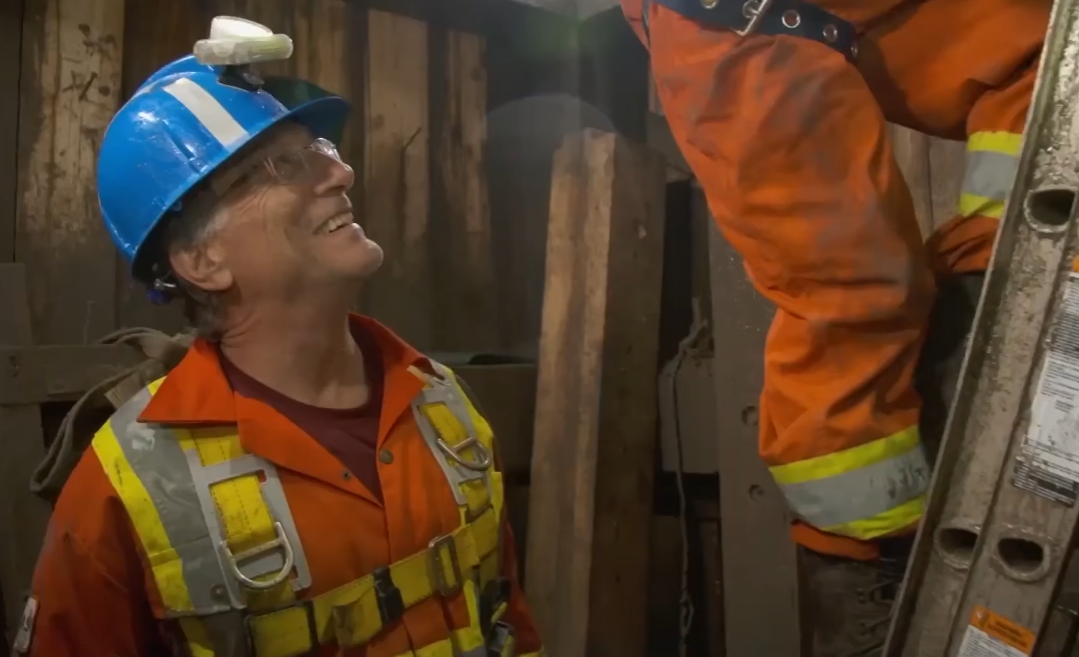
For Rick Lagina, this kind of discovery would be deeply meaningful. Rick has always treated Oak Island as a search for truth, not merely treasure. A hidden shaft or engineered structure beneath the Money Pit would support his belief that the island contains a larger story still waiting to be understood.
For Marty Lagina, the discovery would likely raise practical questions. How stable is the ground? Can the team safely access the target? How much will the next phase cost? And most importantly, does the evidence justify a major recovery effort?
My prediction is that this discovery will not produce a simple ending. Oak Island rarely works that way. Instead, it will likely open a new investigative phase built around deeper drilling, more core samples, structural mapping and laboratory testing. The team may be closer to the clearest target they have had in years, but reaching it will require patience and precision.
If the gold traces continue and the structural evidence strengthens, the pressure to excavate will grow. But the team must move carefully. A chamber or shaft at that depth could be fragile, flooded or historically important. One careless move could destroy evidence that has survived for centuries.
The Season 13 finale, as described, does not solve the Oak Island mystery outright. But it may narrow the search more than ever before. After generations of speculation, the Lagina brothers may finally be following a target shaped not by legend, but by data, material evidence and a deep underground pattern that refuses to be ignored.