Rick Lagina’s findings at Smith’s Cove could bring the research team closer to discovering a flood drainage tunnel.
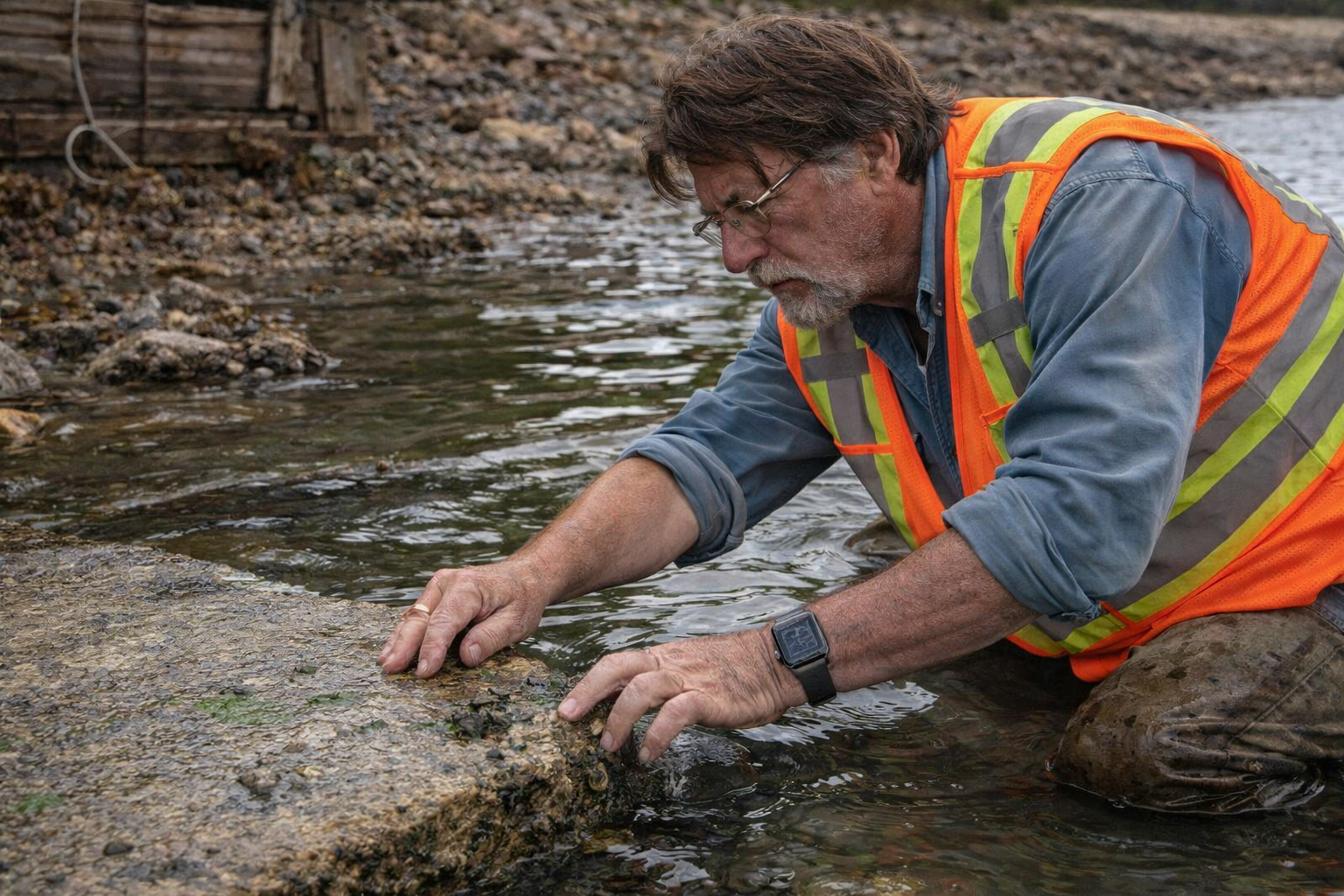
Smith’s Cove has always been one of the most important locations in The Curse of Oak Island. While the Money Pit receives most of the attention, the shoreline at Smith’s Cove may hold the key to understanding how the original underground system was built, protected, and perhaps deliberately hidden. In the latest sequence, Rick and Marty Lagina’s team return to this crucial area with renewed excitement, uncovering a series of finds that could help connect the beach, the flood tunnel, and the long-lost route to the treasure zone.
The operation begins with the team working inside a massive 525-foot-wide steel cofferdam. This is not a small exploratory dig. It is a major engineering effort designed to expose nearly 12,000 square feet of Smith’s Cove, allowing the team to investigate features that previous searchers could only partially document. For Rick Lagina, the emotional importance is obvious. Dan Blankenship explored this same area in 1971, and the current team now has a chance to reveal the U-shaped structure in full and finally understand what it was built to do.
From an analyst’s perspective, the cofferdam changes everything. Smith’s Cove has been affected by tides, storms, erosion, earlier excavations, and decades of searcher activity. By holding back the water, the team can examine the area with far more control. That is essential because the evidence here is layered. Some structures may belong to original builders, while others may have been created by searchers trying to stop flooding or locate the flood tunnel.
Gary Drayton’s first major find adds excitement immediately. Working through spoil material, he detects a non-ferrous target and recovers a gold-coloured object that appears coin-like. The team is cautious, as they should be. It may not be solid gold, and it may not even be a coin once cleaned. But the absence of a clear milled edge raises interest because older coins often lack the machine-made edges associated with later minting.
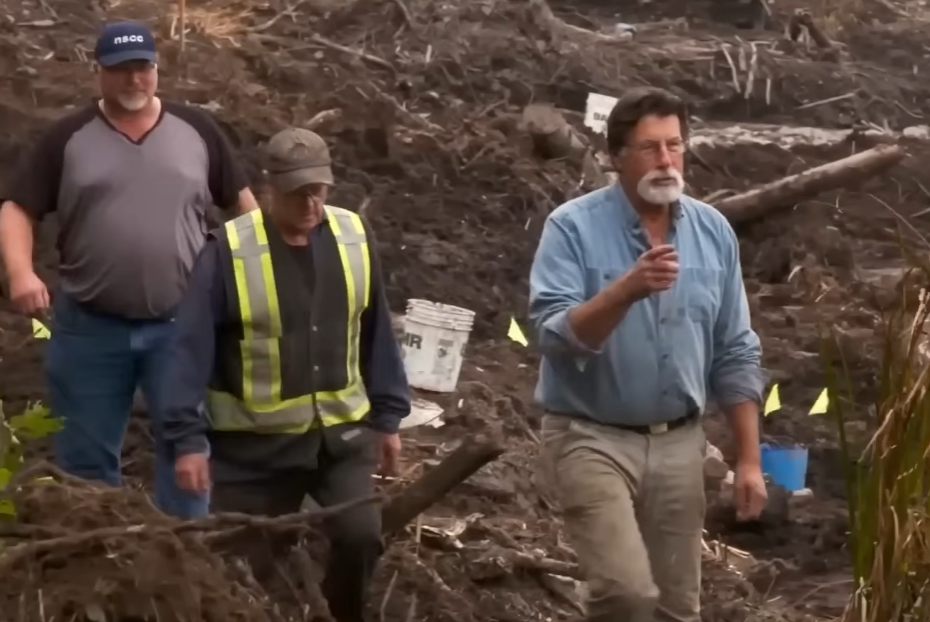
If the object is confirmed as an older coin or gold-plated artifact, it could become one of the more valuable clues from Smith’s Cove. The location matters. A coin found near a suspected landing area, wooden structures, and possible flood tunnel infrastructure could suggest human activity predating the Money Pit discovery in 1795. But the team will need lab work before drawing any firm conclusion.
The next discovery may be even more important structurally. Billy Gerhardt identifies water emerging beneath the crane pad, along with buried timbers. As the team digs slowly, they expose planks and cross pieces that appear to form part of a man-made structure. The water flow behind the wood raises a central question: was this an attempt to block water, redirect water, or access something deeper?
This is where Smith’s Cove becomes complex. Rick notes the difficulty of understanding why so many structures appear in such a confined area. That is the heart of the problem. The cove may contain original flood-control works, later searcher structures, repair attempts, and natural beach movement all mixed together. Interpreting the site requires not just discovery, but sequencing. The team must determine what came first, what came later, and what each feature was meant to do.
The search near the earlier lead cross location adds another historical layer. Gary and Rick return to the rock pools, believing the cross is unlikely to be a solitary object. That logic is sound. Artifacts often cluster because they reflect human activity zones: where people worked, unloaded cargo, repaired equipment, lost personal items, or moved between land and water.
Gary recovers what appears to be a lead spoon or spoon handle, followed by a decorative brass object that may have come from a boat. Neither find solves the mystery on its own, but both support the idea that Smith’s Cove was a busy shoreline. Lead, brass, ship spikes, and other metal objects all point toward repeated activity around the beach. Whether that activity belonged to original depositors, later searchers, or ordinary maritime visitors remains the key question.
A larger metal target discovered by Gary, Alex Lagina, and later Rick proves to be especially intriguing. Buried several feet beneath the shoreline, the object is heavily encrusted and initially difficult to identify. The team suspects it may be part of a wreck or an old iron plate. Once Emma Culligan and Laird Niven clean and examine it in the lab, however, the object is identified as a cast-iron stove door.
At first, that may seem less exciting than a treasure object. But in Oak Island terms, it still matters. Cast-iron stoves can date back centuries, though Emma’s analysis suggests the manganese content may point toward the mid-1800s. If so, the stove door may relate to searcher activity rather than original depositors. That does not make it irrelevant. The searcher history of Oak Island is itself part of the puzzle, especially at Smith’s Cove, where multiple generations tried to understand and control the flood system.
The starburst design on the stove door also catches attention because a similar motif was noted on a button found on Lot 5. This may be coincidence, but Oak Island thrives on repeated symbols. The team will likely investigate whether the stove design can be traced to a particular manufacturer, date range, or region. If identified, it could help establish which searcher period the object belongs to.
The final phase of the sequence brings the team back to the possible vertical shaft connected to the Restall family’s 1961 work. This is one of the most important practical leads at Smith’s Cove. The Restalls reportedly found or pursued a shaft that may have led toward the flood tunnel. If Rick and Craig can confirm its location, they may be able to follow the path toward the system that has frustrated searchers for generations.
Gary’s metal detecting turns up modern nails and bolts, which may indicate that the team is close to Restall-era construction or concrete forms. Again, modern material is not disappointing here. In this context, modern nails may act as markers. If they confirm the Restall shaft location, they help orient the team in a historically documented search zone. That could bring them closer to the original flood tunnel.
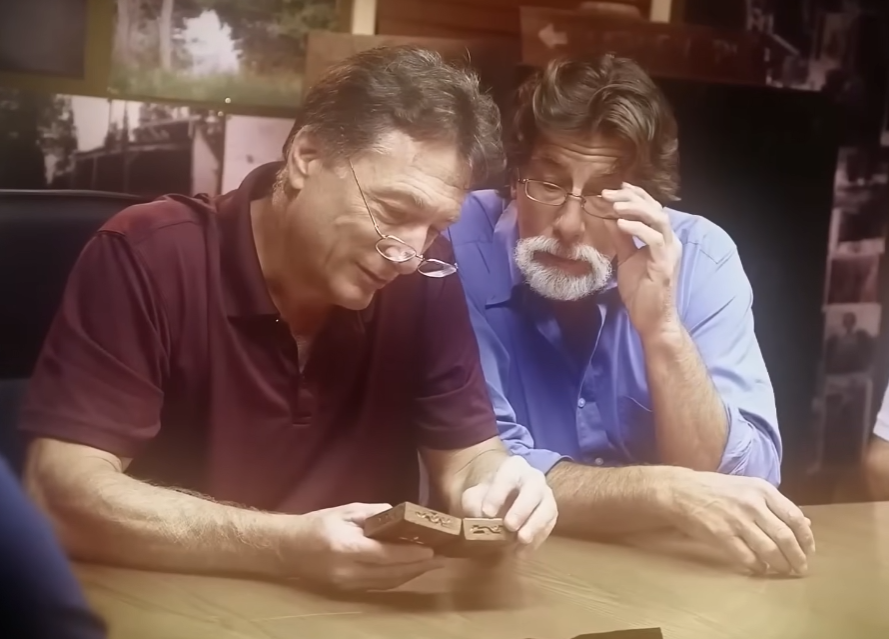
The discovery of a broken spike with a rounded, beveled point adds one more question. If testing shows it is older than the modern nails, it could suggest that searcher activity overlapped with earlier construction. If it is modern, it may simply reinforce the Restall connection. Either way, the next several feet of excavation may be critical.
My prediction is that Smith’s Cove will remain central to the investigation because it offers something the Money Pit often does not: a physical trail. The team may not immediately find a treasure vault, but they are uncovering structures, water movement, nails, timbers, and shoreline artifacts that can be mapped. If they can identify the vertical shaft and connect it to a flood tunnel, they may finally understand how seawater was used to protect the Money Pit.
The most likely next development is careful excavation around the water source beneath the crane pad and the suspected Restall shaft. Emma’s lab work will continue to separate searcher artifacts from potentially older objects. Gary will keep scanning the shoreline for clustered finds. Rick will push for structural understanding, while Marty will focus on whether the evidence justifies further expensive excavation.
Smith’s Cove may not provide one simple answer. But it may provide the missing mechanism. If the team can prove how water moved from the cove toward the Money Pit, they may finally explain why the island has resisted searchers for more than two centuries. That would be a breakthrough in itself — not a chest of treasure, but the engineering key to the entire mystery.