From Myth to Reality: Rick Lagina Finds the Most Advanced Vault Yet on Oak Island

After centuries of speculation, decades of searches, and countless near misses, Oak Island has finally surrendered one of its most closely guarded secrets. Rick Lagina and his team have unearthed what is being called the most sophisticated treasure hoard ever discovered on the island—a $98 million Templar vault, preserved with precision and engineering that has stunned historians and treasure enthusiasts alike .
The breakthrough came quietly. Months of sonar mapping and unsuccessful boreholes had all but exhausted previous leads, until the team identified a void 180 feet below the swamp zone—an anomaly that defied all geological expectations. This hidden chamber, cut directly beneath a tunnel aligned with the original Money Pit, was unlike anything documented in previous excavations. Initial scans revealed metallic density far beyond natural formations, indicating a layered and purposeful design, rather than mere debris. Rick’s first reaction, captured on camera, was immediate and profound: this could very well be the original vault .
Upon breaking through the outer seal, the team discovered a hand-carved limestone slab bearing a cross pate symbol identical to that of the Knights Templar. Carbon dating confirmed that the stone predated any colonial settlement in Nova Scotia, suggesting origins far earlier than previously thought. Even more remarkable was the method of preservation—marine clay sealed the chamber, protecting the artifacts from saltwater corrosion for centuries. Near the slab lay etched symbols, which experts later matched to patterns found in Scotland’s Rossin Chapel, establishing a tangible connection to Templar practices .
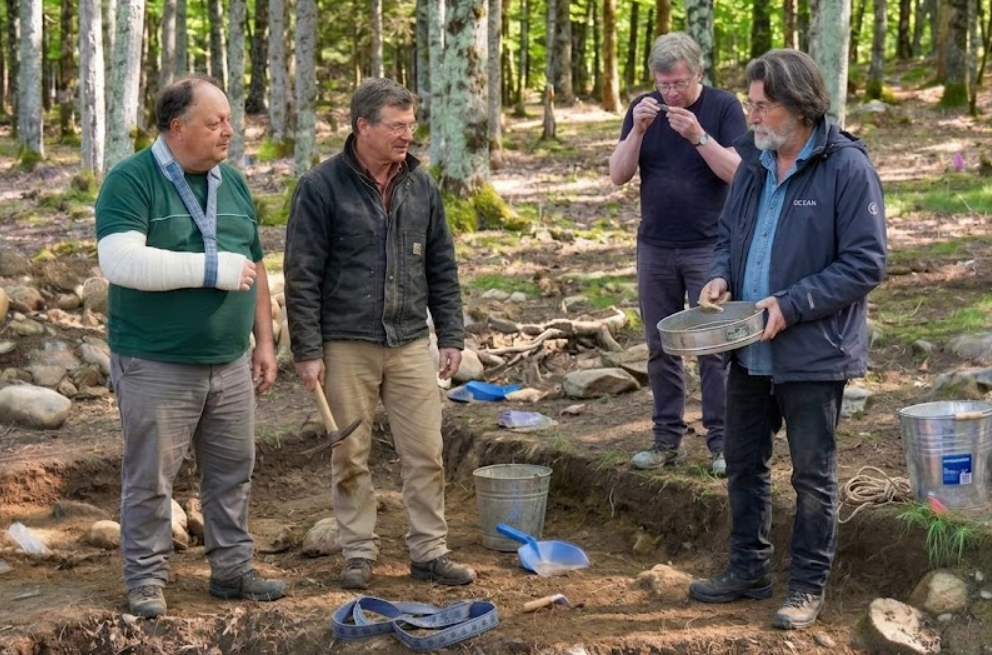
The contents of the vault expanded the narrative further. A small brass chain, with intricate Templar cross engravings, was unearthed, along with a lead container holding a wax-sealed parchment. Analysis revealed that the chain was medieval French, predating European settlement in North America by over 150 years. The parchment, written in 14th-century French, included Templar code phrases referencing a “great ark” and “secret beneath the rose.” These inscriptions, traced to clerical sources active until the Templar dissolution in 1307, confirmed that the items were not mere treasure but part of a sophisticated network of protected knowledge and artifacts .
The discovery suggests that the vault was deliberately constructed as a defensive stronghold. Lidar and borehole data revealed an intricate system of wooden and brass lattices, pulleys, and counterweights designed to prevent unauthorized access. This “guardian mechanism,” as the team has called it, demonstrates engineering skill far beyond what had previously been assumed for 14th-century European mariners. The sophisticated design aligns with ship-based pulley systems, suggesting that Templars fleeing Europe repurposed naval engineering knowledge to safeguard their most sacred treasures on North American soil .
Adding further depth to the discovery, the team identified a series of carved stone markers on the surface, forming a geometric cross that aligned with previously dismissed excavation sites. When correlated with celestial coordinates, the layout mirrored the Orion constellation, indicating that the Templars had encoded astronomical knowledge into the landscape itself. This revelation suggests that Oak Island was not merely a hiding place for wealth but a physical manifestation of ritualistic precision and navigational foresight .
The crowning artifact of the vault, a chalice crafted from Byzantine gold and Frankish silver, bore inscriptions of “Veritas sub rosa”—Truth beneath the rose—a hallmark of Templar secrecy. This chalice, confirmed through metallurgical testing, likely held religious significance and possibly relics from the Holy Land. Its discovery has drawn attention from the Vatican, prompting international cooperation to preserve the find under cultural heritage law. The chalice alone could rewrite our understanding of Templar reach and influence, suggesting that their presence in North America was both deliberate and highly organized .
From a historical analysis perspective, the implications of the find are staggering. Not only does it validate long-held theories about Templar activity beyond Europe, but it also provides a timeline and a methodical framework for understanding the construction of Oak Island’s subterranean systems. If the vault aligns with other man-made features such as the Eye of the Swamp, it suggests that the island was designed as part of a broader strategic network for hiding and transporting valuable artifacts, combining both engineering and celestial knowledge to ensure secrecy .
Looking forward, the Oak Island team faces several challenges. Extracting the remaining treasure without triggering the defensive mechanisms requires extreme caution, as the interlocking wooden and brass counterweights could flood or collapse the chamber. Experts in conservation and archaeology are already preparing for non-destructive methods to preserve the artifacts while fully documenting the engineering and historical significance. Meanwhile, additional surface and subsurface mapping may uncover further chambers or clues, potentially revealing even more about the Templars’ transatlantic operations .
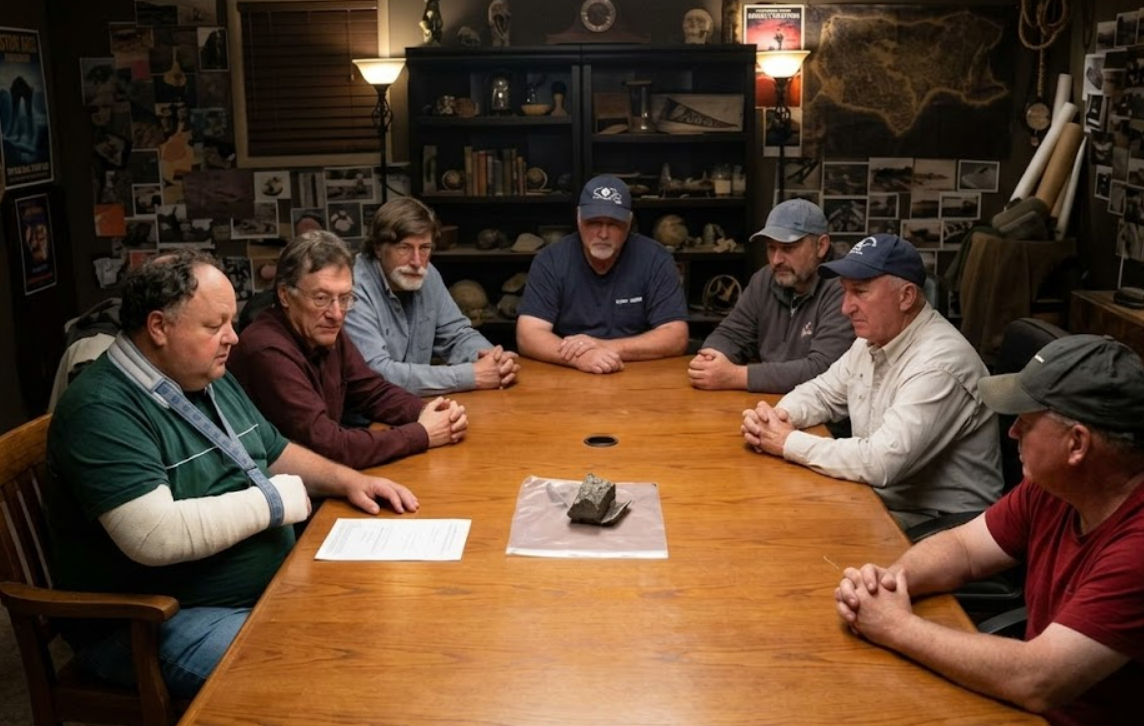
For fans and analysts of The Curse of Oak Island, this discovery represents a dramatic shift in the series’ narrative. What began as speculation and folklore is now grounded in tangible evidence of historical sophistication. Future episodes will likely explore the painstaking preservation efforts, the international collaboration surrounding the find, and the potential links to other Templar artifacts. There is every reason to expect that the vault may contain documents or materials that could finally answer long-standing questions about the Templars’ activities, alliances, and strategic objectives in the New World .
In conclusion, the $98 million Templar vault discovered by Rick Lagina and his team is more than a trove of gold and artifacts—it is a revelation that merges history, engineering, astronomy, and faith into a single, preserved site. As researchers continue to study the contents and mechanisms of the vault, Oak Island’s legacy transforms from a tale of elusive treasure to a story of deliberate, sophisticated preservation, potentially rewriting centuries of Templar history for a global audience. The stakes, now clear, extend far beyond wealth—they involve the very understanding of medieval European navigation, cryptography, and religious artifact preservation in North America .