The most surprising discovery ever: Fossilized footprints of prehistoric humans found on Oak Island
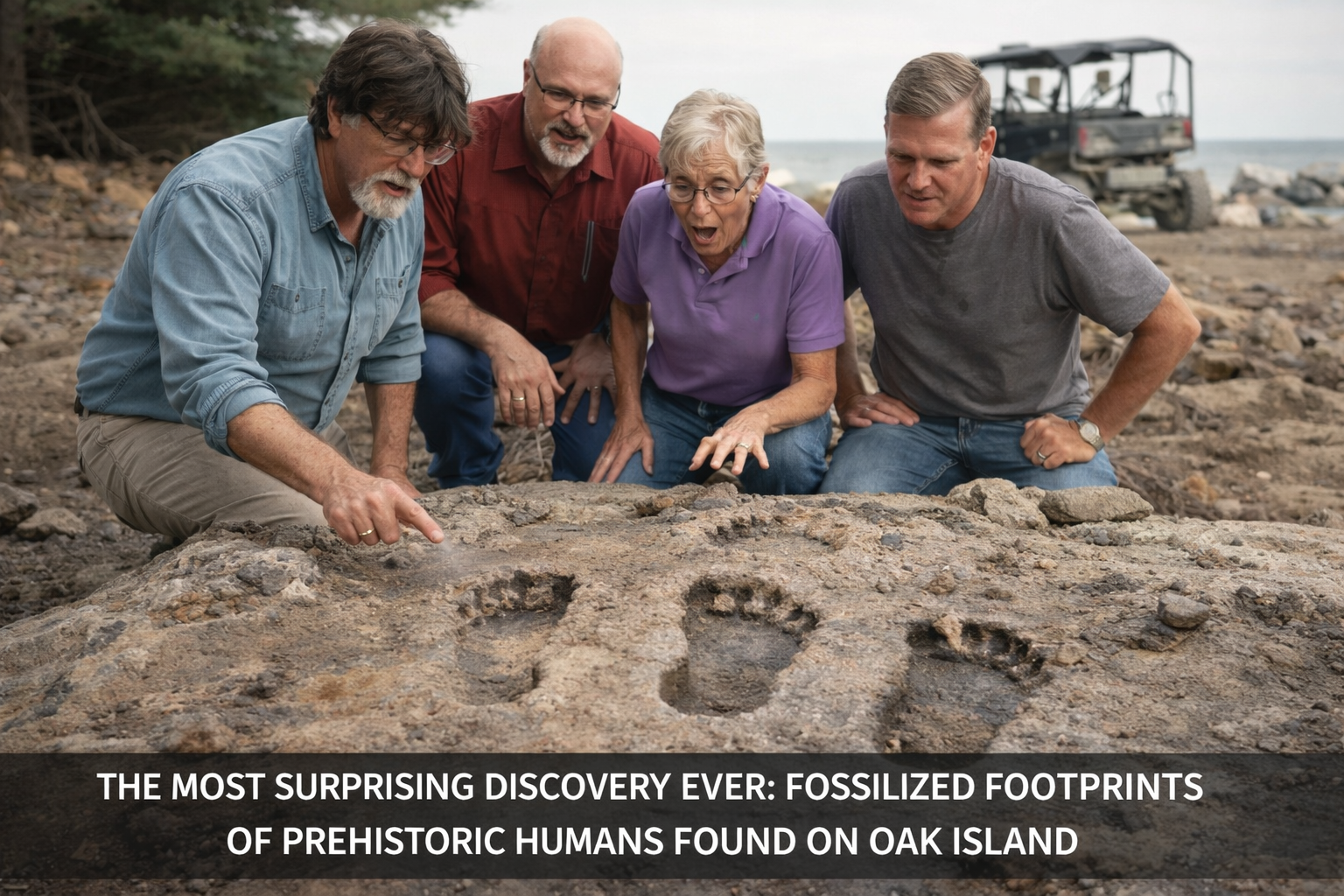
Oak Island has long been shrouded in mystery, drawing treasure hunters and historians alike to its foggy shores in the hopes of unearthing secrets buried beneath centuries of earth and stone. From the legendary Money Pit to a series of engineered swamp systems, the island has teased explorers with tantalizing clues. But in a discovery that may surpass all previous finds, the Lagina team, led by Rick Lagina, has unearthed what appears to be fossilized human footprints—evidence suggesting prehistoric human activity on Oak Island far earlier than anyone imagined.
The footprints were found on a previously overlooked section of the island, partially embedded in clay and sandstone near the northern forested ridge. Dr. Emma Culligan, the team’s archaeologist, was quick to identify the impressions as human in origin, noting anatomical details consistent with hominid morphology. The size and depth of the prints suggest they could be tens of thousands of years old, predating the known European and Indigenous presence in the region. Radiocarbon and sediment analysis is underway, but preliminary estimates place the prints in the late Pleistocene, offering a potential glimpse of a human footprint thousands of years old.
What makes this discovery so significant is not merely the age of the footprints, but the context in which they were found. Unlike previous artifacts on Oak Island—coins, tools, or architectural remains—these footprints represent direct evidence of human presence. This is the first time a tangible imprint of prehistoric inhabitants has been identified on the island, forcing researchers to reconsider long-held assumptions about the timeline of human activity in the North Atlantic. It raises profound questions about migration patterns, the extent of early exploration, and the reasons these ancient visitors may have frequented an otherwise isolated and challenging environment.

Analysts of The Curse of Oak Island are already speculating on the potential ramifications. If the prints can be definitively dated and authenticated, they may indicate that Oak Island was inhabited or at least visited long before the formation of complex European structures associated with the Money Pit or Nolan’s Cross. Some theorists suggest that the island may have served as a temporary campsite or waypoint for migratory groups moving along coastal routes. Others are considering the possibility of a forgotten prehistoric settlement whose traces have been obscured by centuries of construction and natural sedimentation.
The implications for the series are equally dramatic. Throughout its 15-season run, The Curse of Oak Island has primarily focused on treasures of European origin—Spanish, French, and even Templar-related artifacts. The discovery of ancient footprints could pivot the narrative in a new direction, allowing the team to explore layers of the island’s history that predate colonial activity. Episodes may shift from examining engineered booby traps and treasure shafts to broader archaeological studies, integrating geology, paleontology, and anthropological analysis. This discovery may also attract new expert collaborators, from paleoanthropologists to ice-age climate specialists, who can provide insights into how and why humans reached such a remote location.
Predictions for upcoming investigations on Oak Island are now evolving around these prints. One immediate focus is mapping the surrounding area to determine whether the footprints are part of a trail or isolated impressions. This could reveal a path leading to other artifacts, such as stone tools, hearths, or burial sites, which may have survived centuries of environmental changes. Additionally, the team will likely employ ground-penetrating radar (GPR) to detect subsurface anomalies, searching for structures or pits contemporaneous with the footprints. Given the island’s history of hidden chambers, there is a tantalizing possibility that these ancient visitors might have interacted with, or even influenced, later constructions on the island.
Another area of interest is comparative analysis. Researchers will examine the prints in relation to similar Pleistocene finds across North America and Europe, exploring whether these individuals belonged to known human species or represent a previously undocumented population. Any correlations with ancient migration patterns could significantly alter prevailing models of human settlement in the Atlantic regions. For fans of the show, these revelations add a new layer of intrigue—Oak Island is not just a repository of European treasure, but potentially a witness to human history spanning thousands of years.
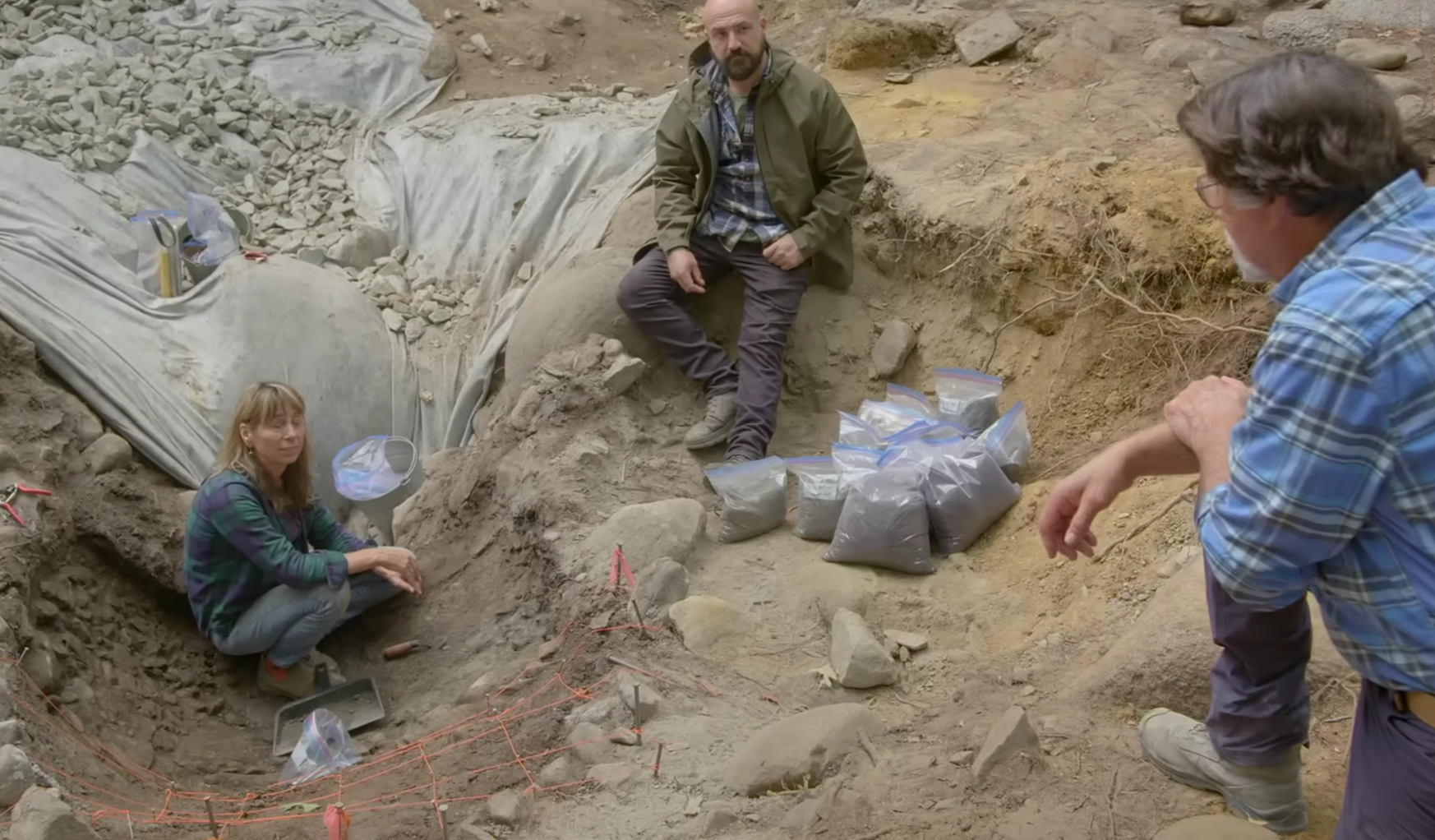
Challenges remain, however. Preservation of the prints is fragile, and exposure to weather or foot traffic could destroy critical details. Additionally, rigorous dating and peer-reviewed analysis are necessary before conclusions can be drawn. Skeptics caution against hasty interpretations, noting that sediment deformation and natural processes can sometimes mimic footprints. The Oak Island team must tread carefully, balancing the excitement of discovery with scientific accuracy.
Nevertheless, the find has energized the fan community and renewed interest in the series. Social media and fan forums are abuzz with speculation: Were these ancient visitors the original engineers of some of Oak Island’s mysterious underground works? Did they leave symbolic markings or treasures that later generations would encounter? How does this shape the ongoing hunt for the Money Pit and the supposed Templar or Spanish treasure?
In summary, Rick Lagina’s team has stumbled upon a discovery that could transform the scope of Oak Island investigations. The prehistoric footprints offer a direct link to humans long before European explorers set foot in the New World, potentially rewriting the history of the island. Analysts predict that future episodes of The Curse of Oak Island will increasingly focus on these early inhabitants, integrating archaeological and paleoanthropological research alongside the ongoing search for legendary treasure. If verified, this discovery may stand as the most significant find in the show’s history, revealing that Oak Island’s mysteries extend far beyond gold and coins—it may be a chronicle of human presence spanning millennia.